



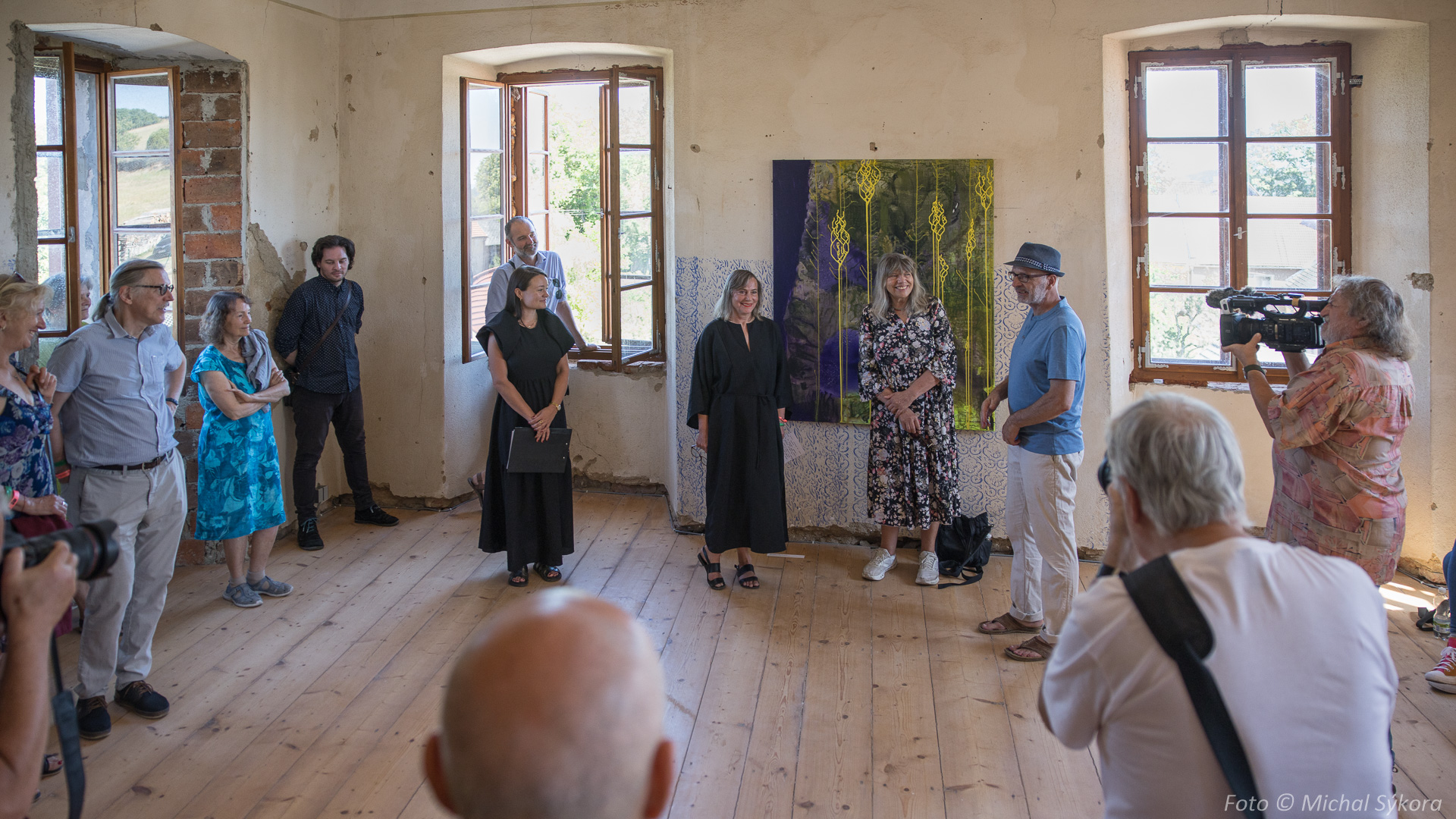
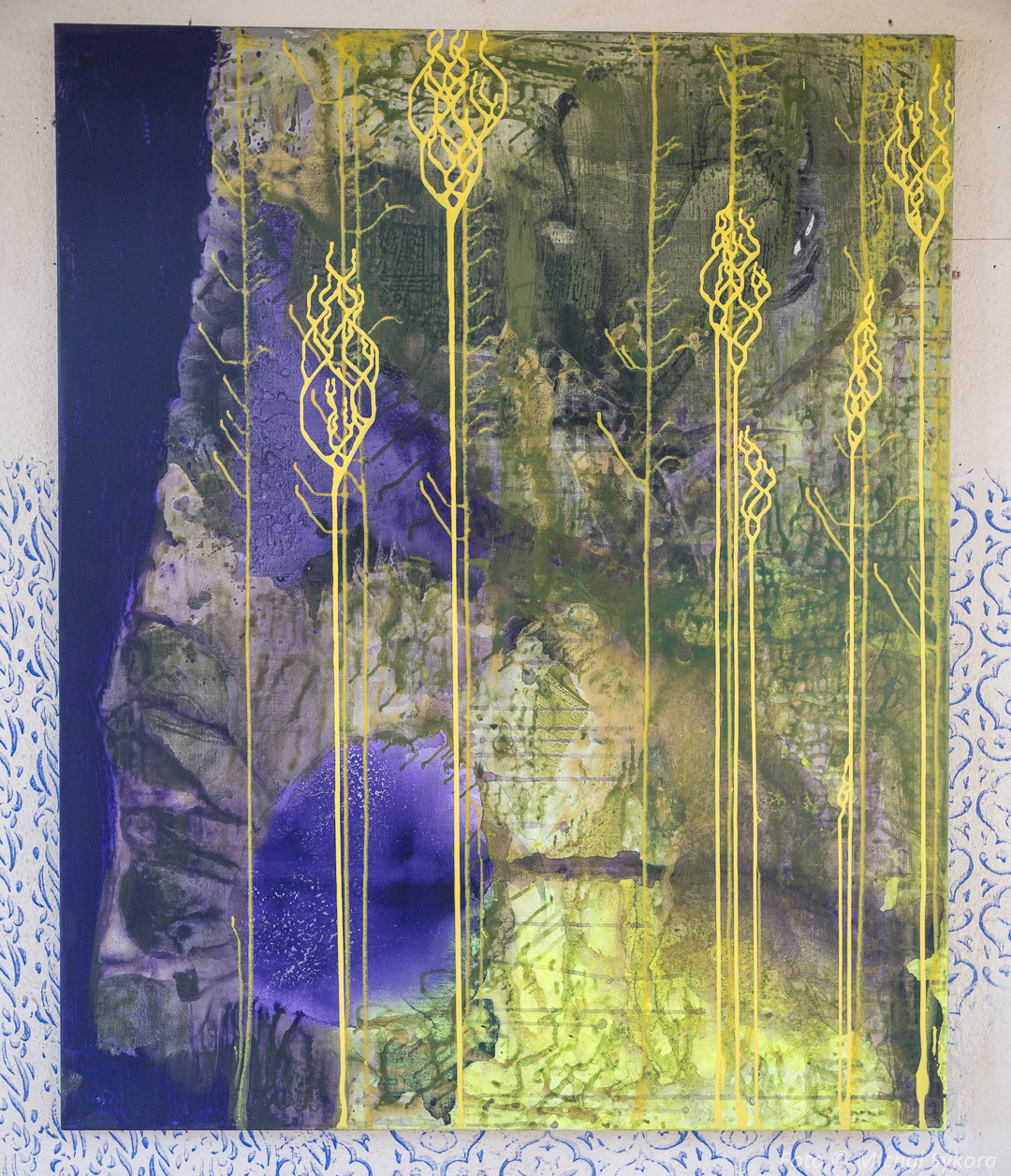
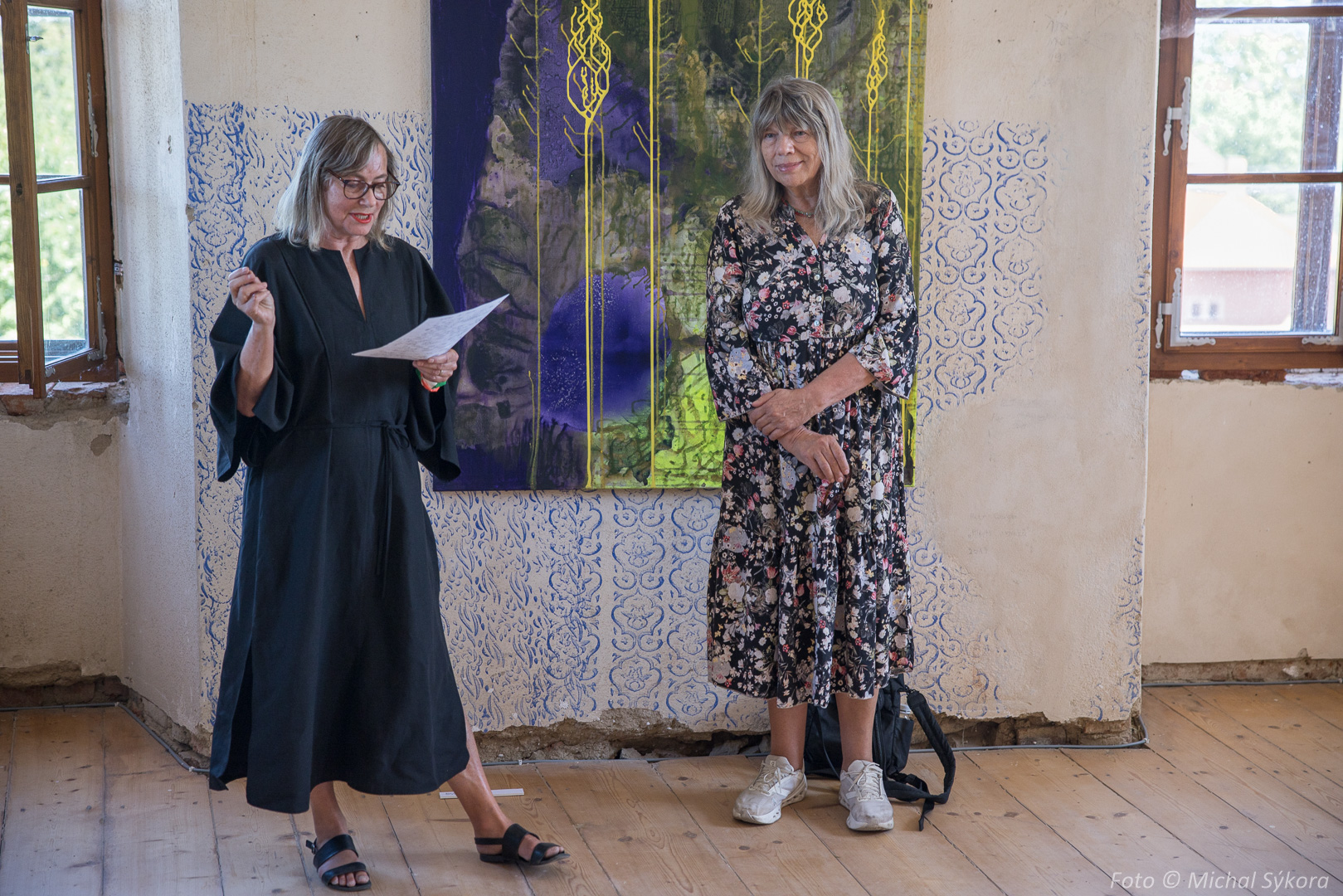
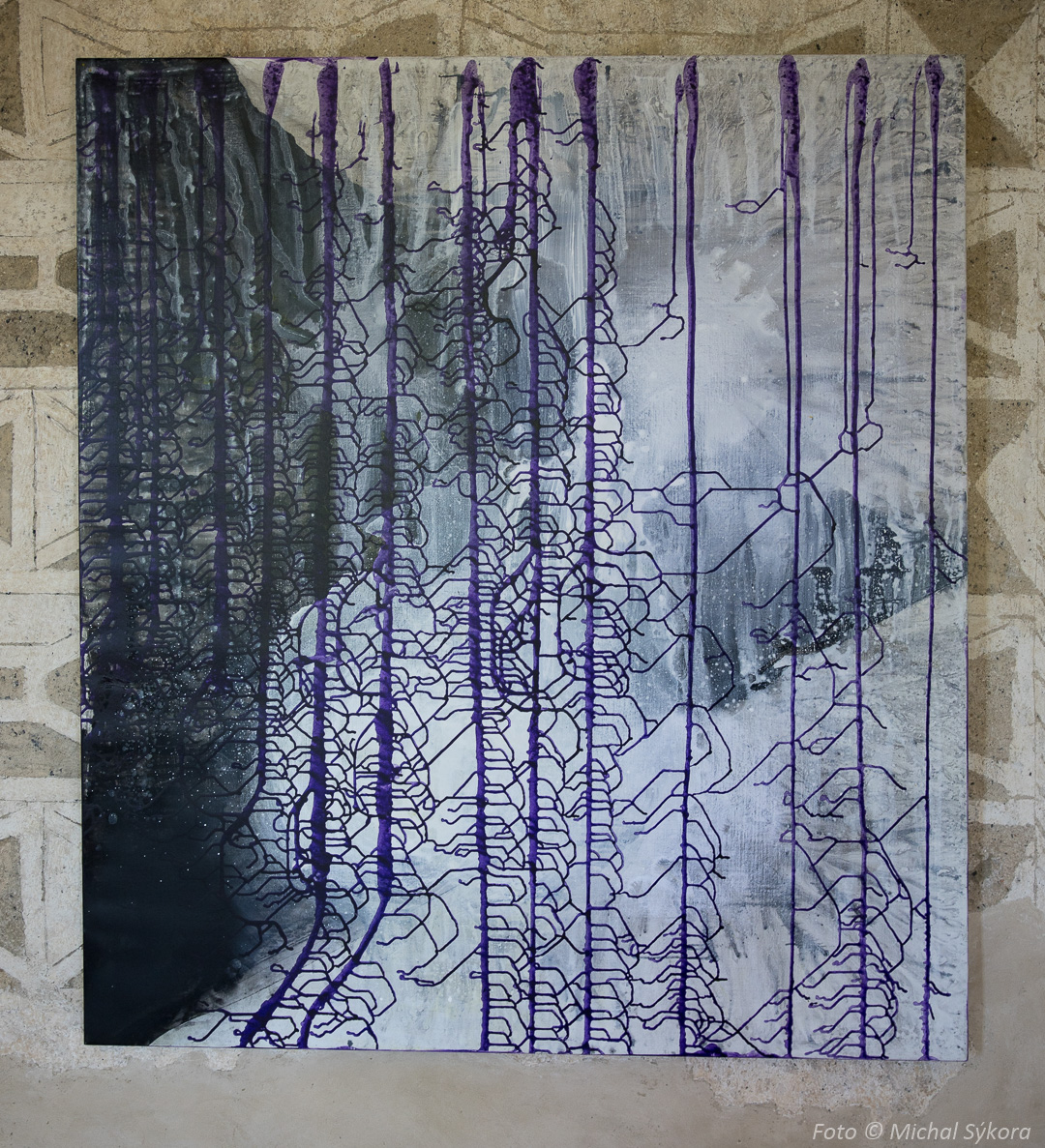
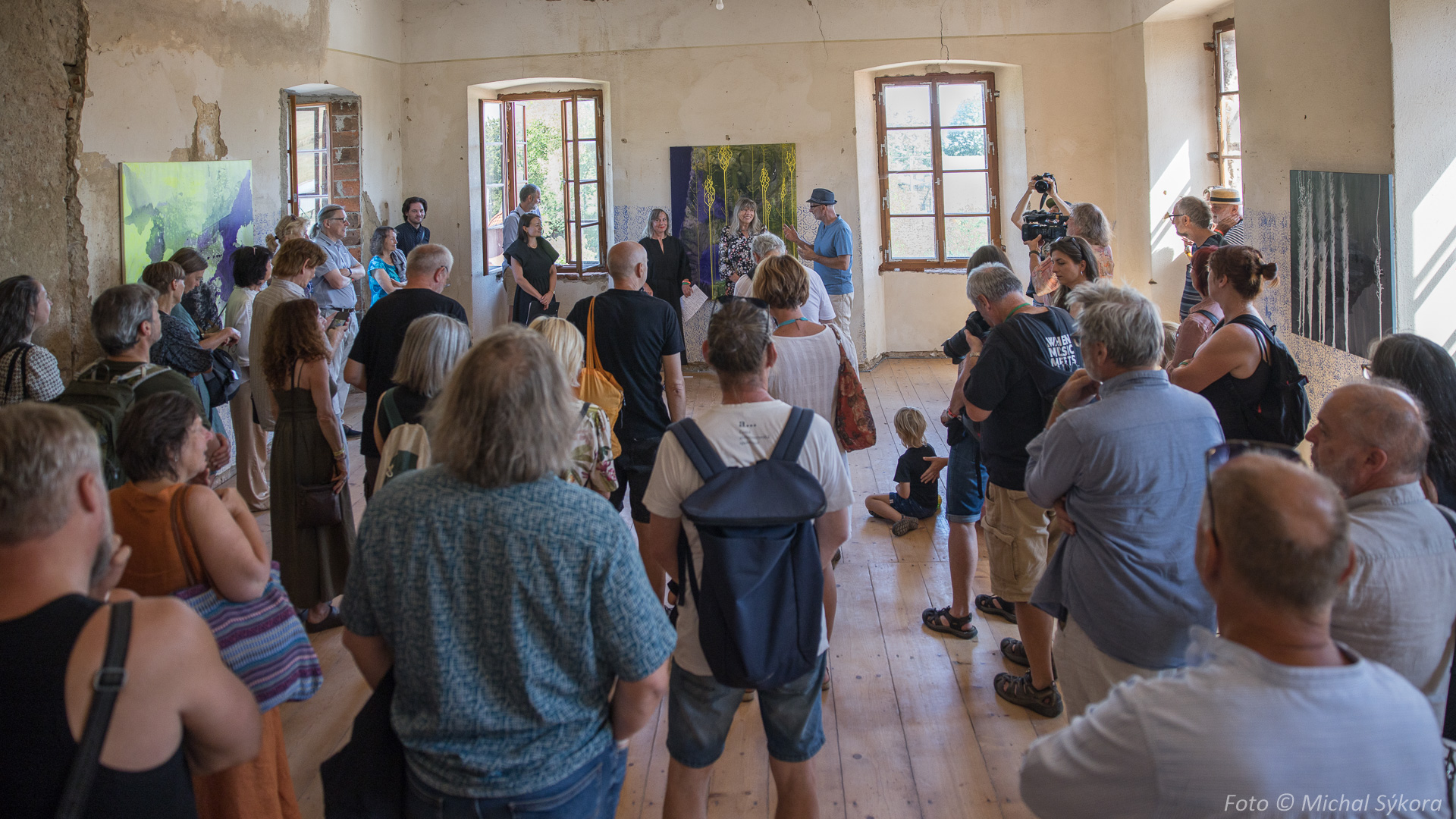
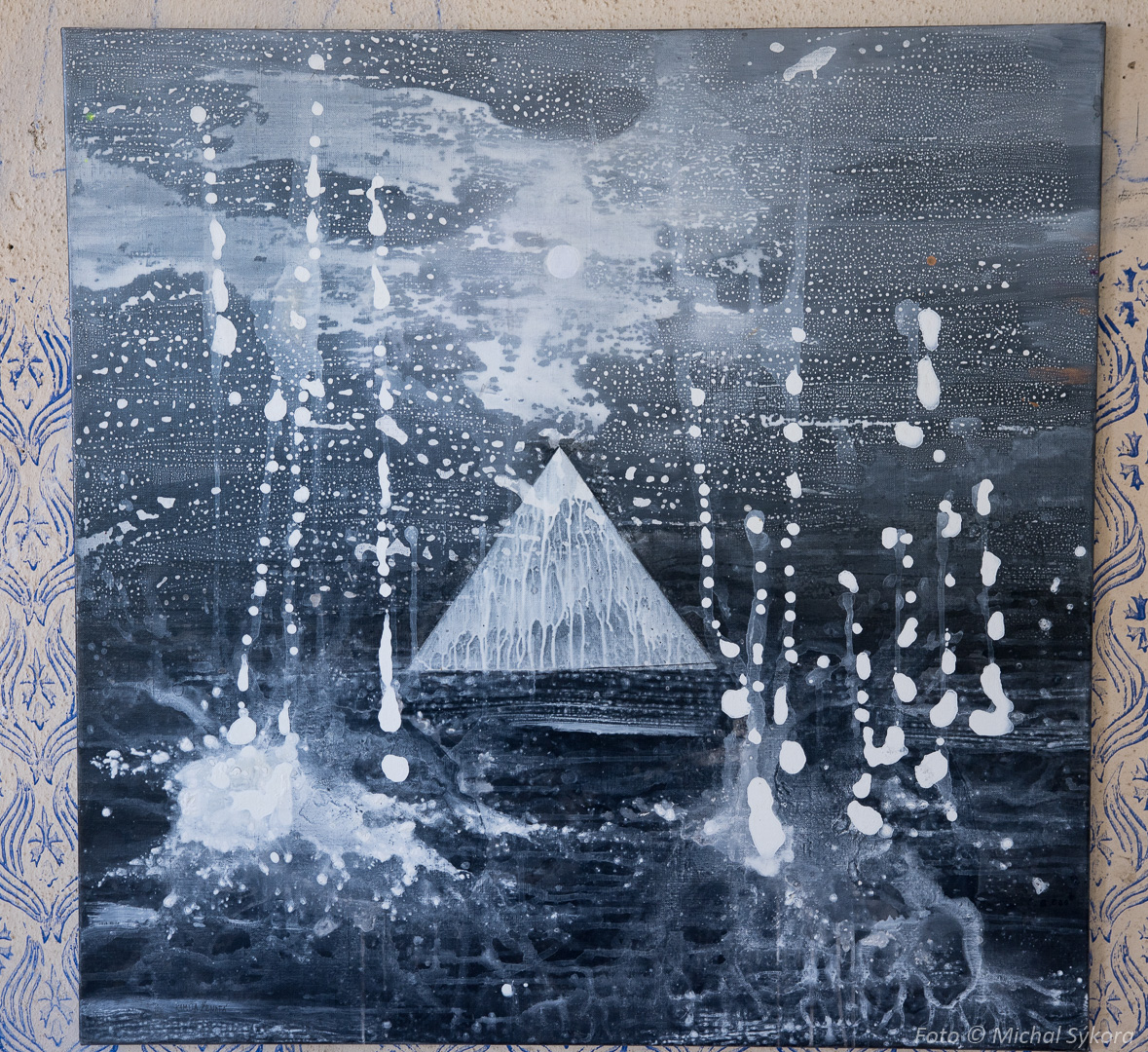
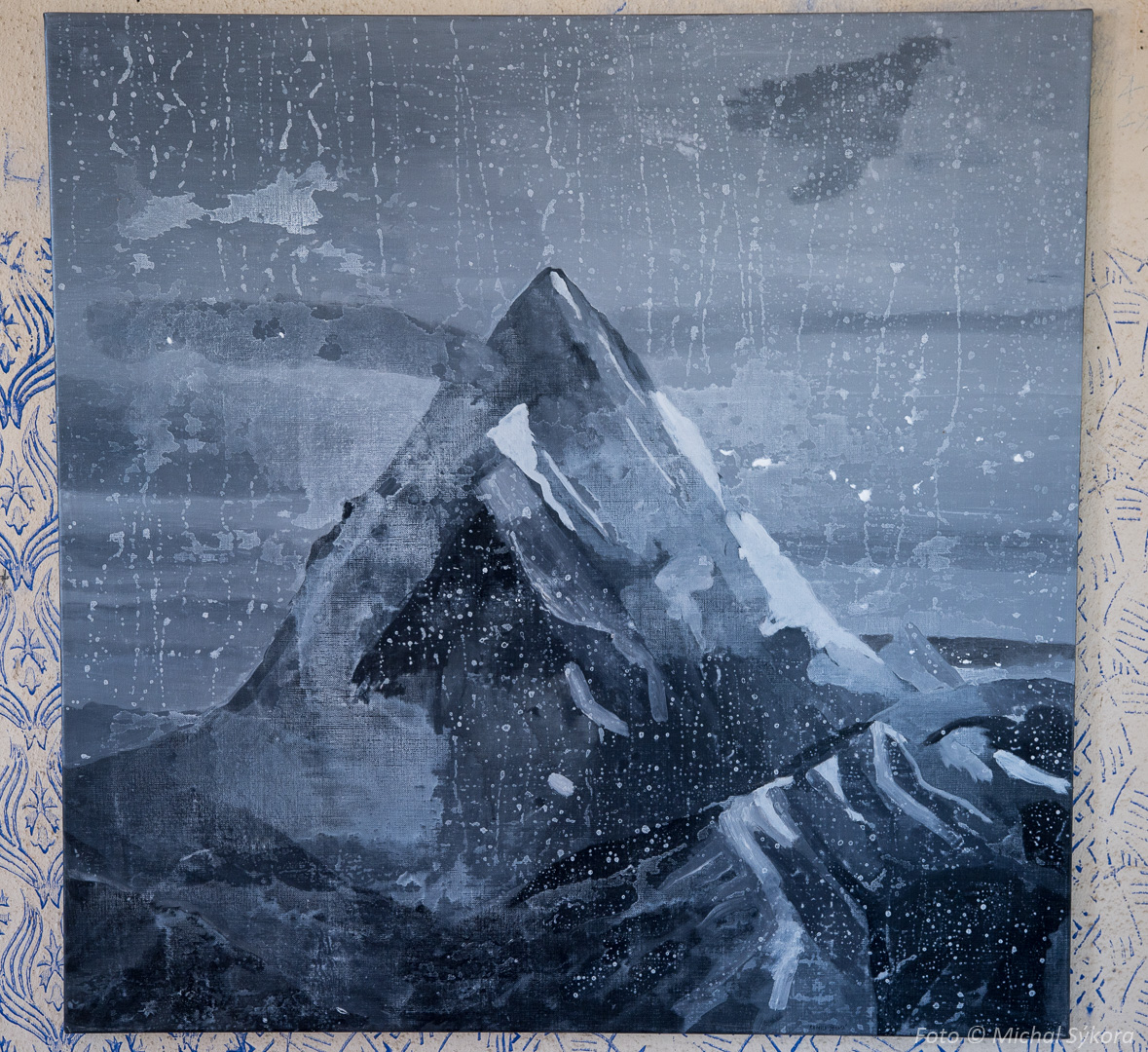
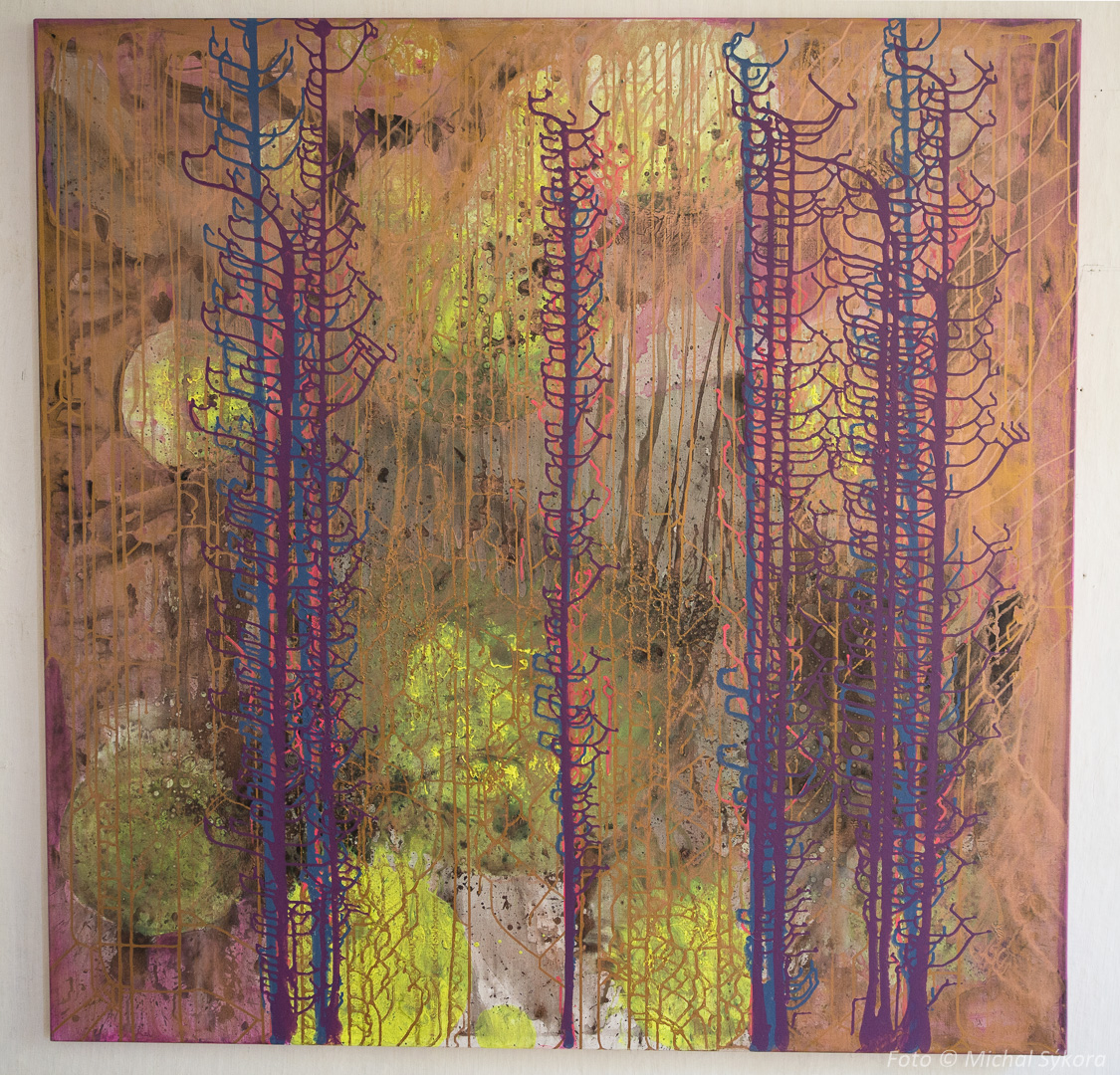
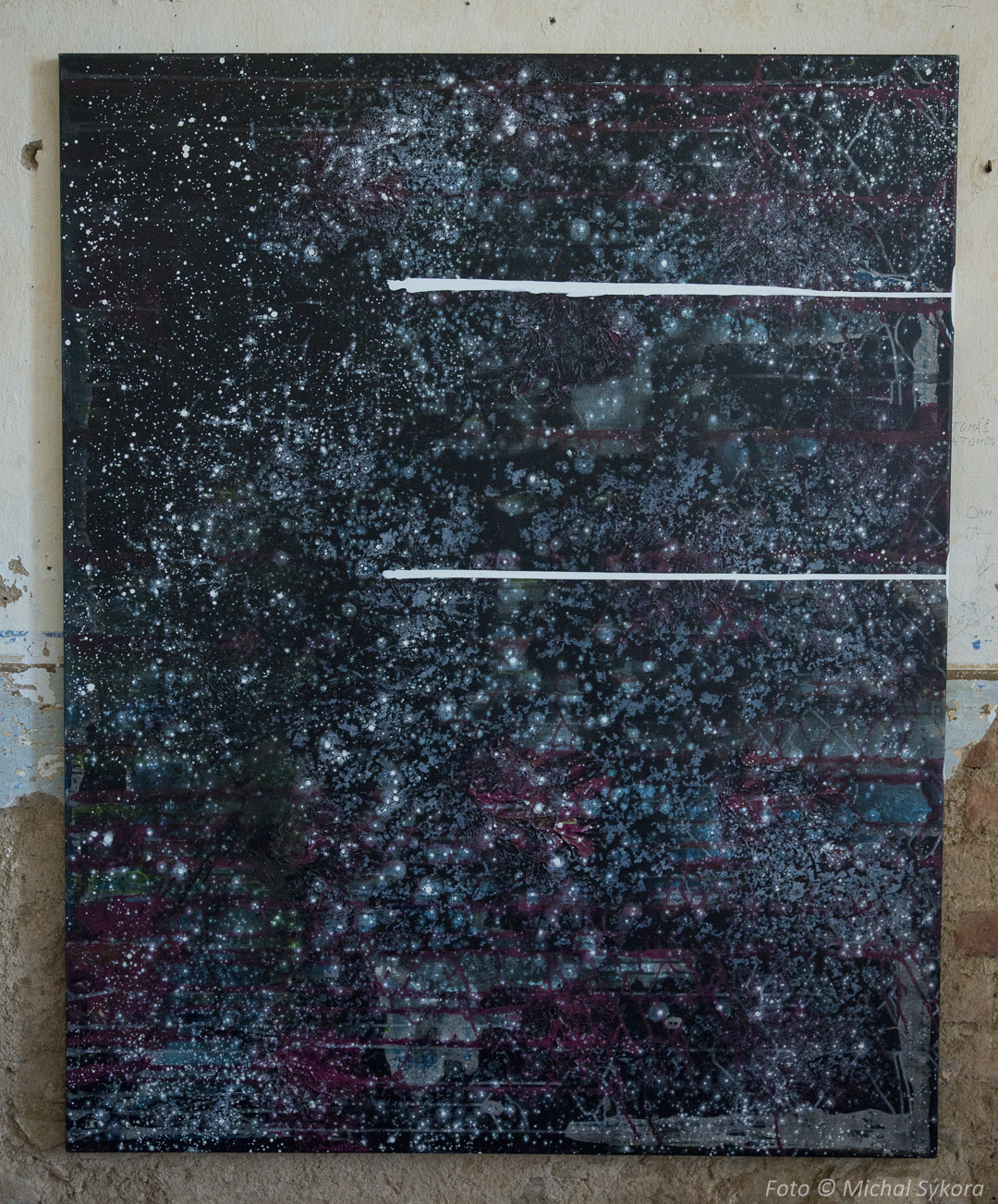
Saturday’s festival programme kicked off with the traditional opening at the CoCo Gallery. Kamila Ženatá launched her solo exhibition there (organised in collaboration with curator Lucie Barvínek Šiklová). Her straddling of the worlds of art and music, psychoanalysis and psychedelic experience was reflected in her large-scale canvases, which explore themes such as memory, dreams and mycelium.
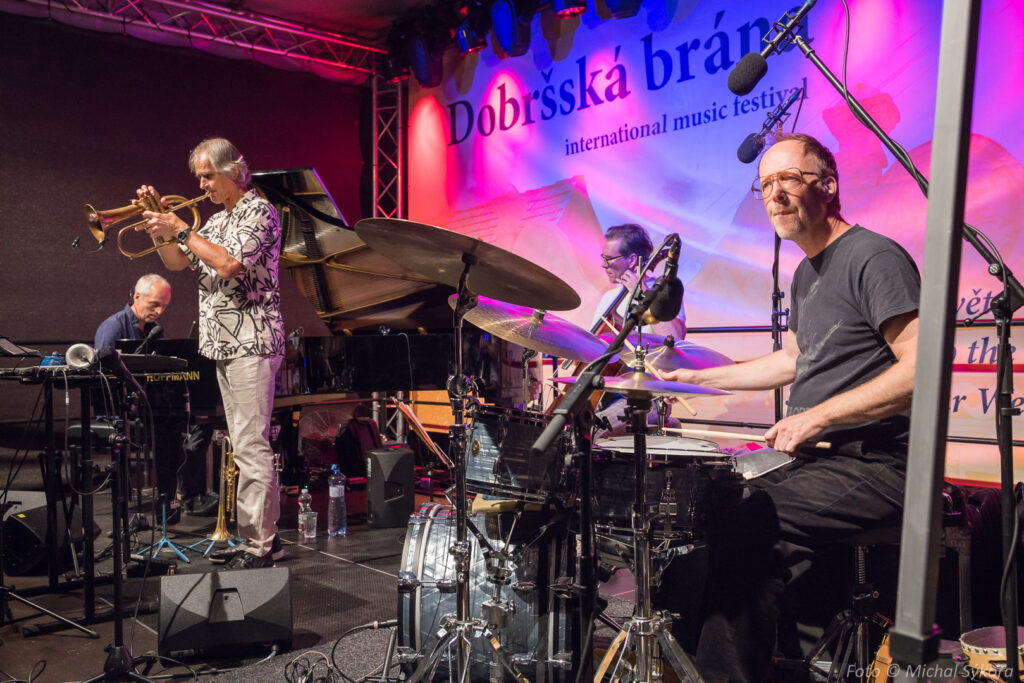
We gathered on the music stage in front of the castle just after midday, sheltering in the shade beneath the plum trees from the scorching sun, to savour the supremely delicate fusion of Norwegian and Czech jazz imagination in the chamber duo of Helge Lien (piano) and Štěpánka Balcarová (trumpet). The local colour of Dobrš once again wove its way into the concert in a distinctive manner, when a local cockerel decided to loudly announce its presence during the quietest solo passages on the piano.
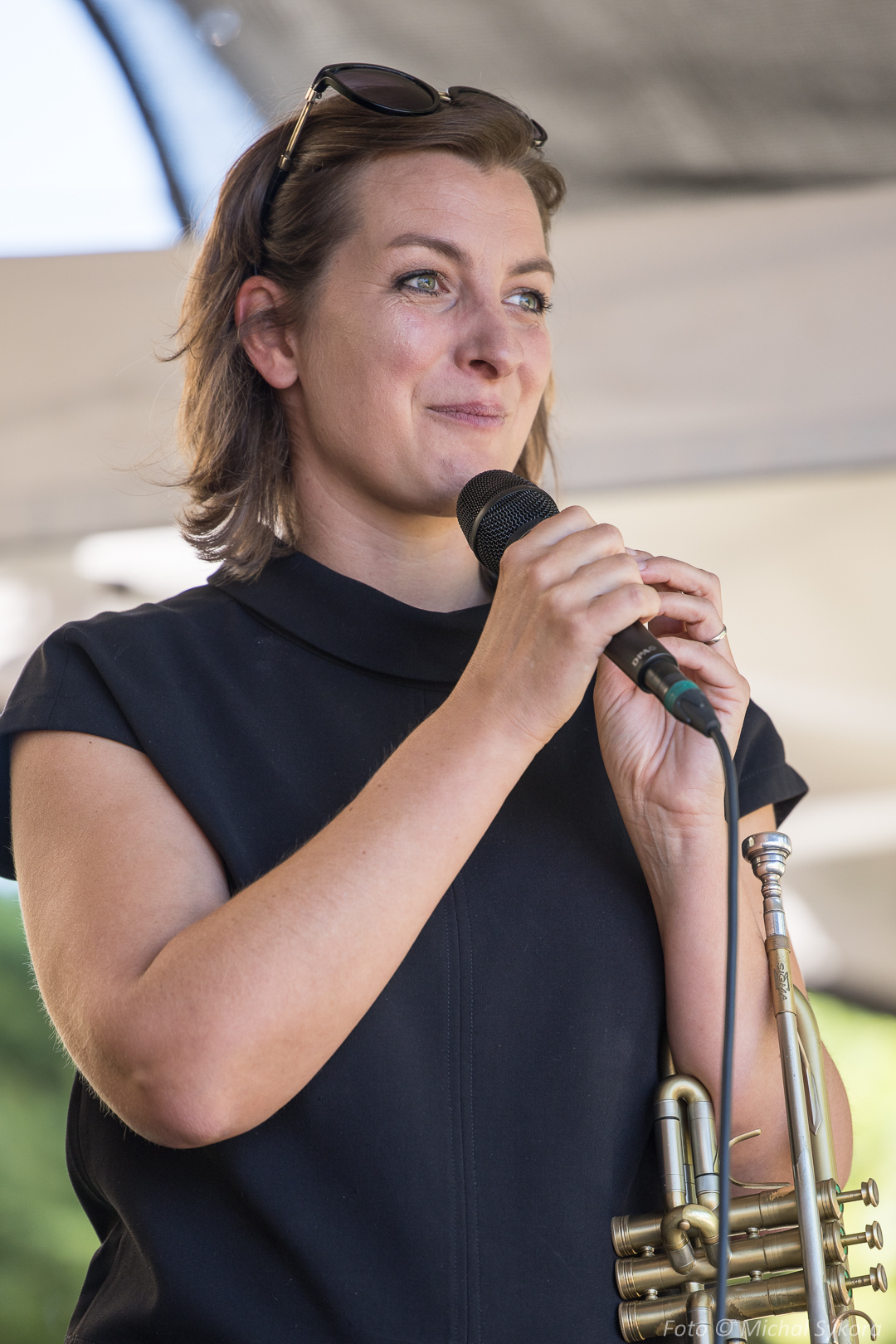
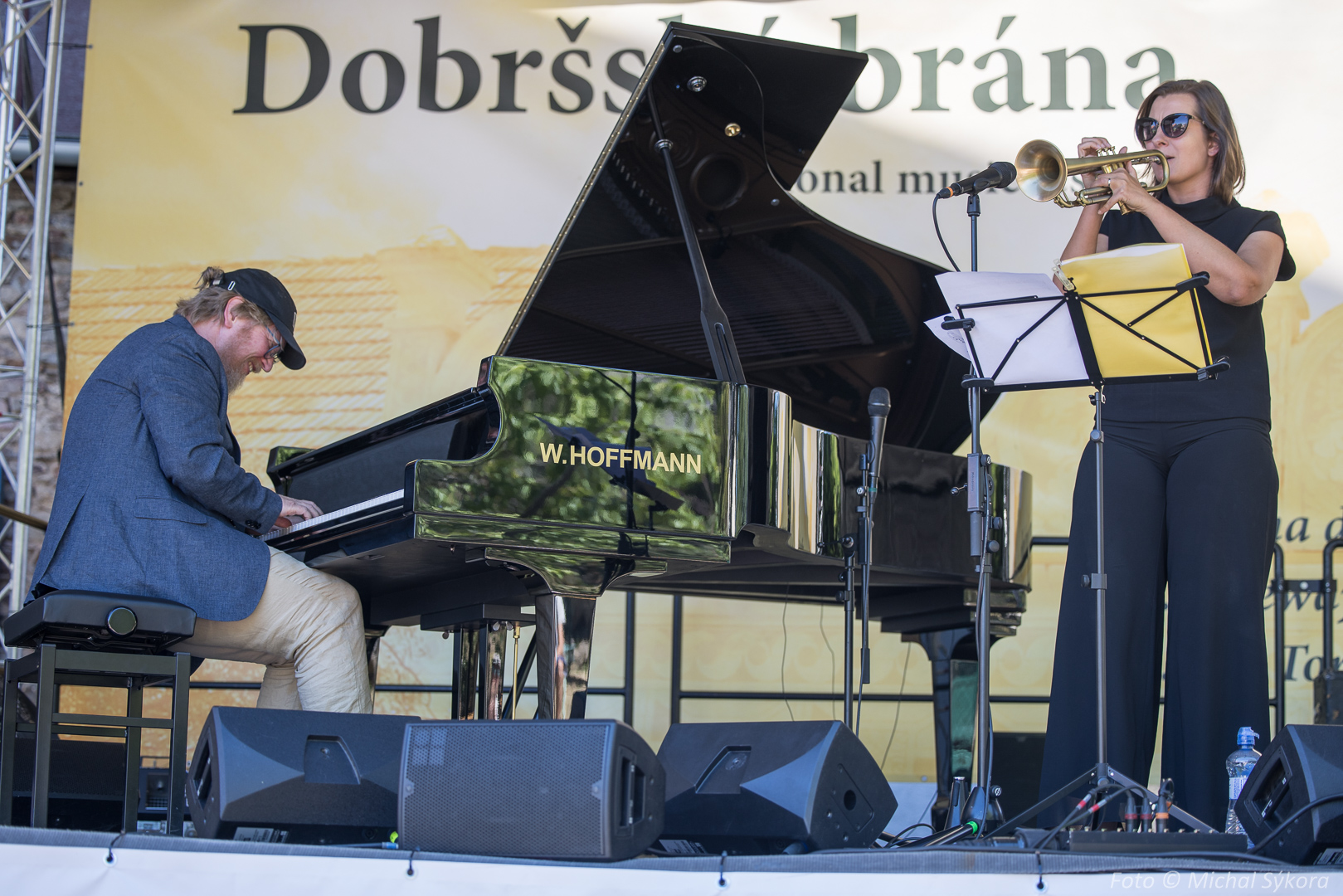
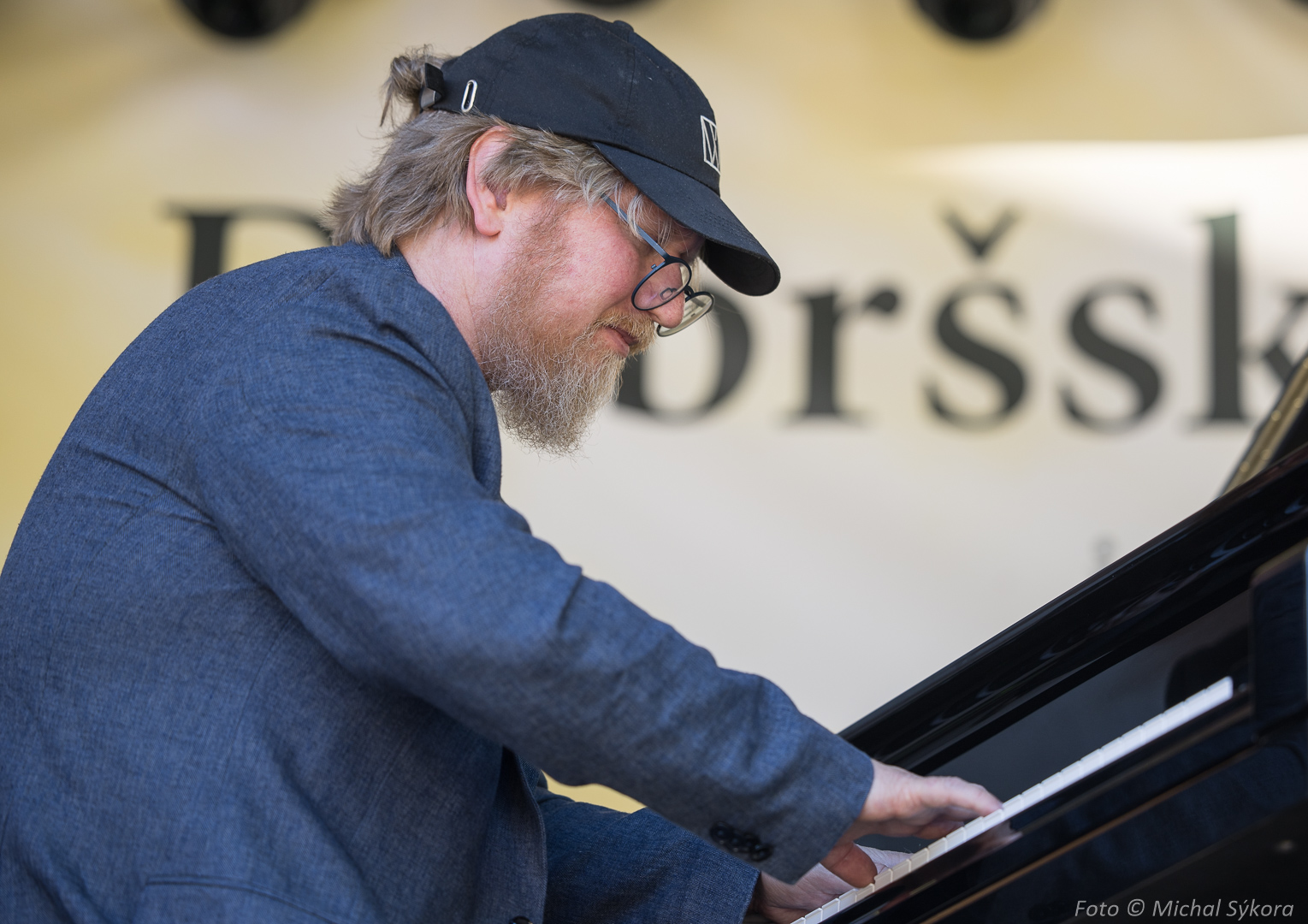
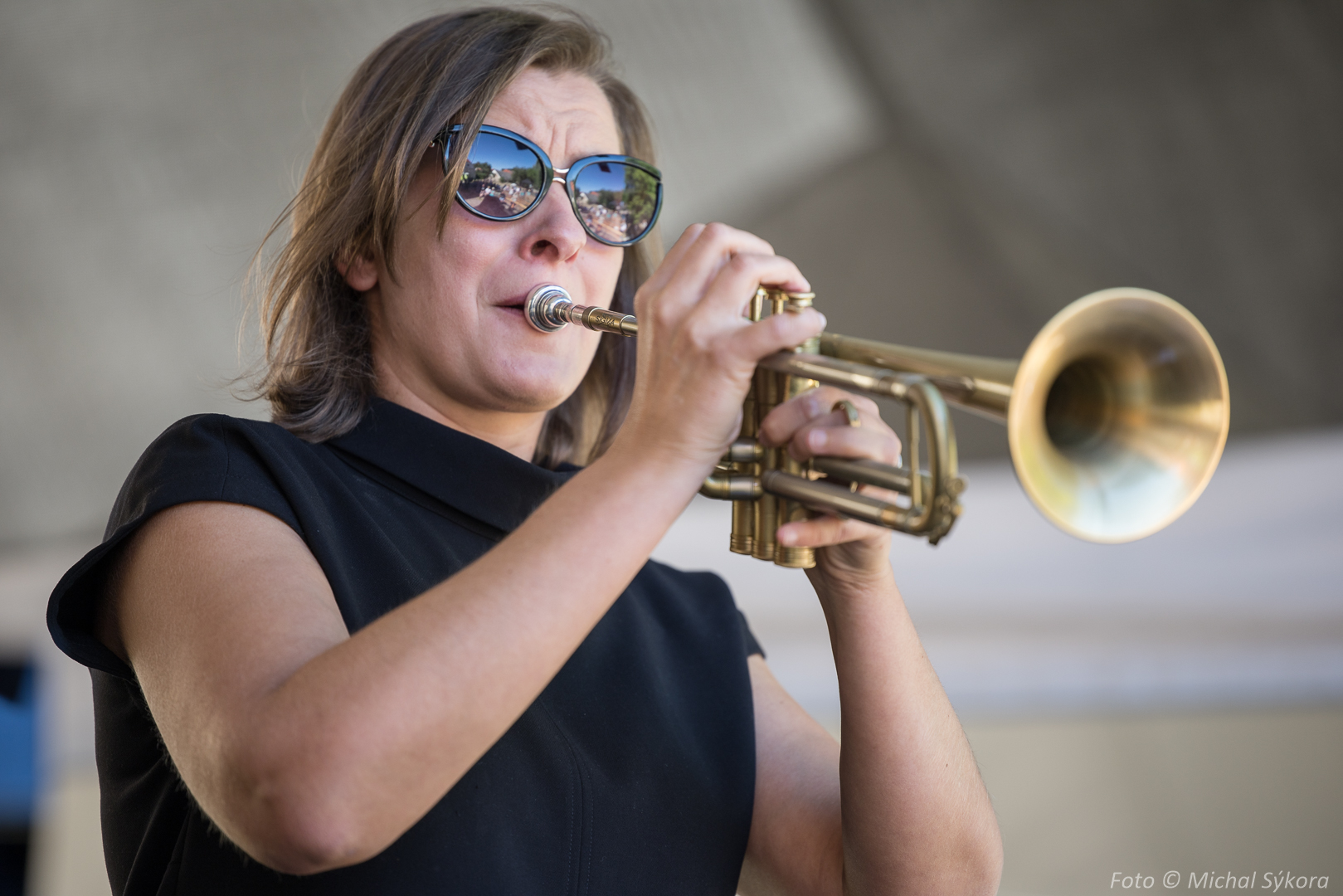
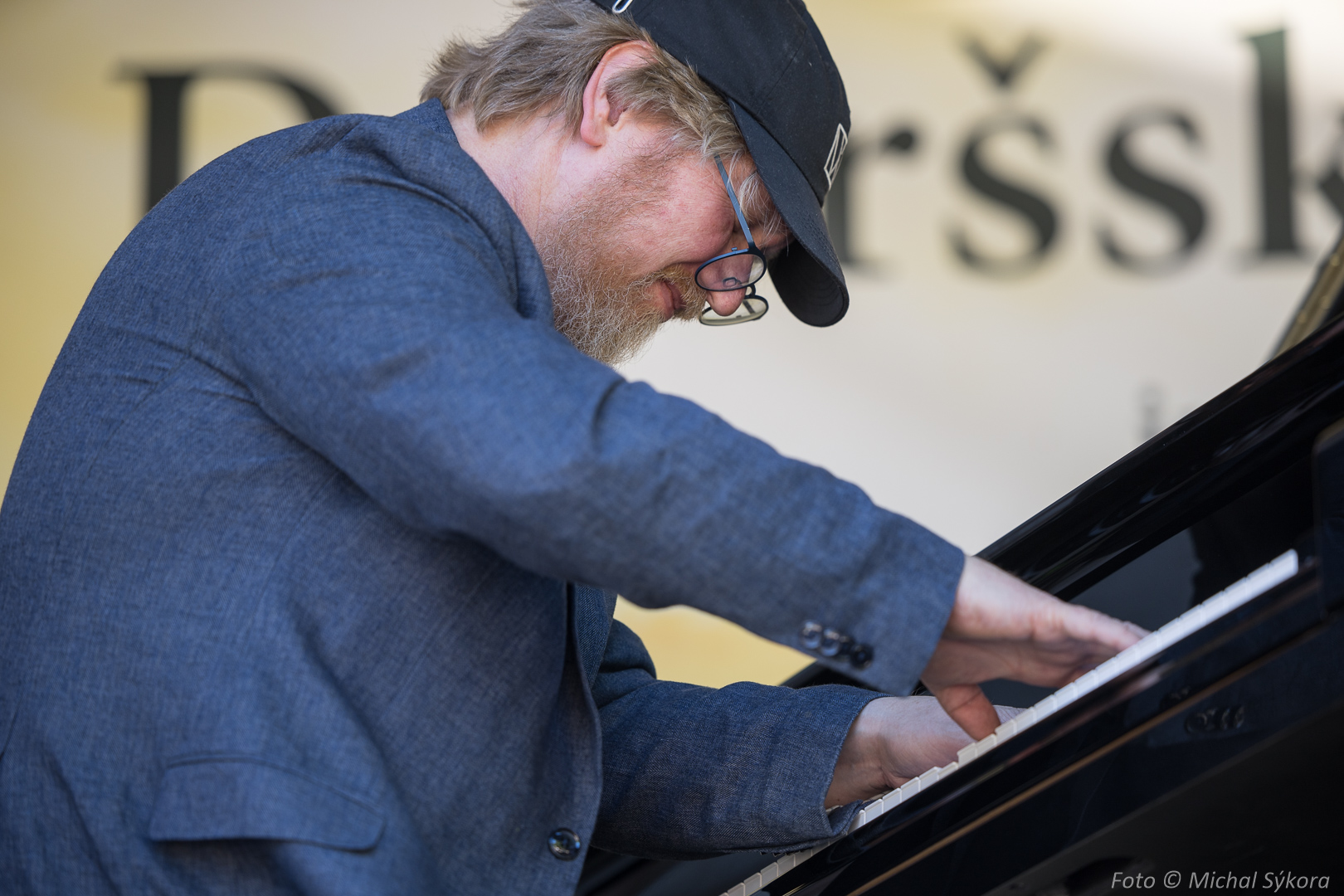
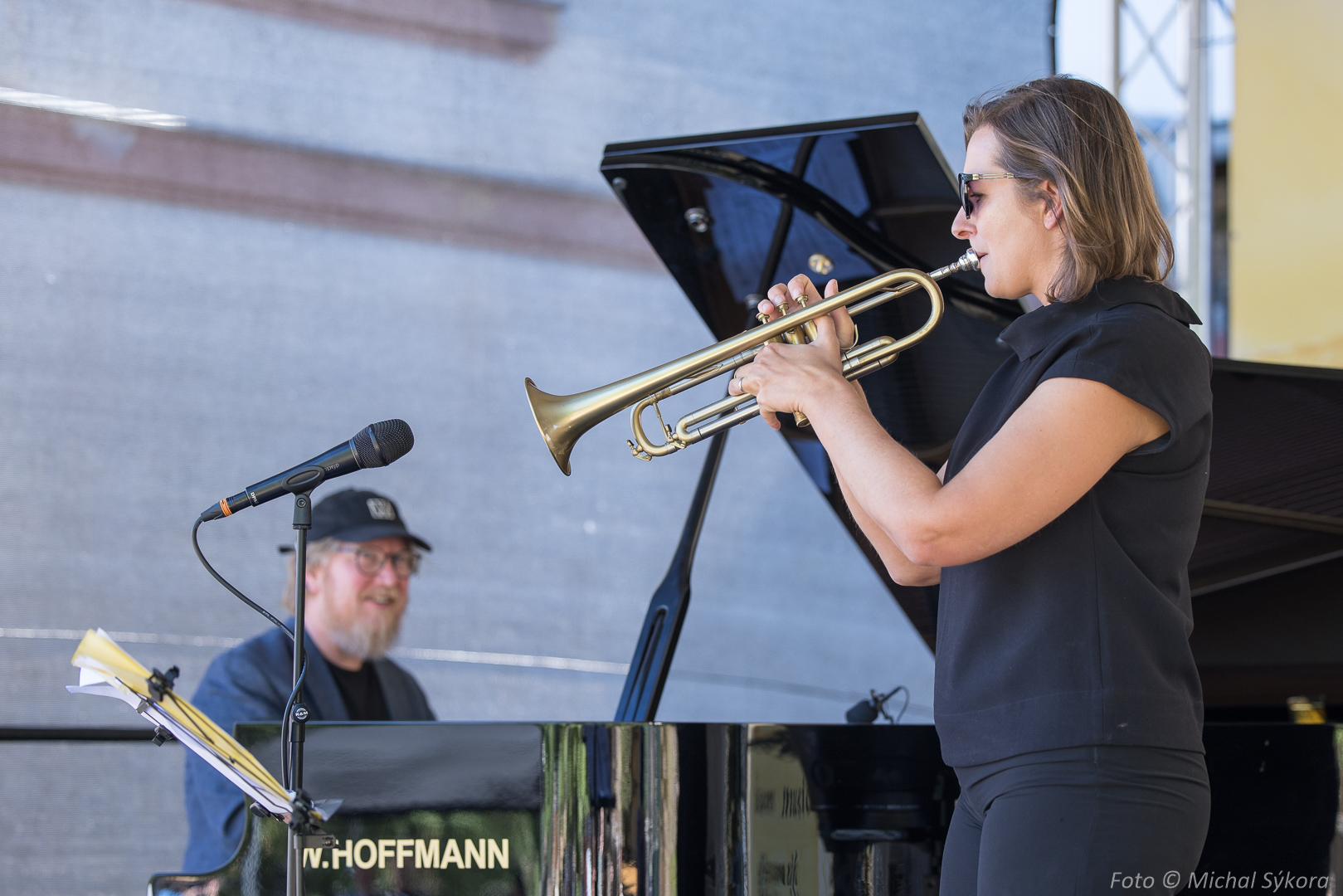
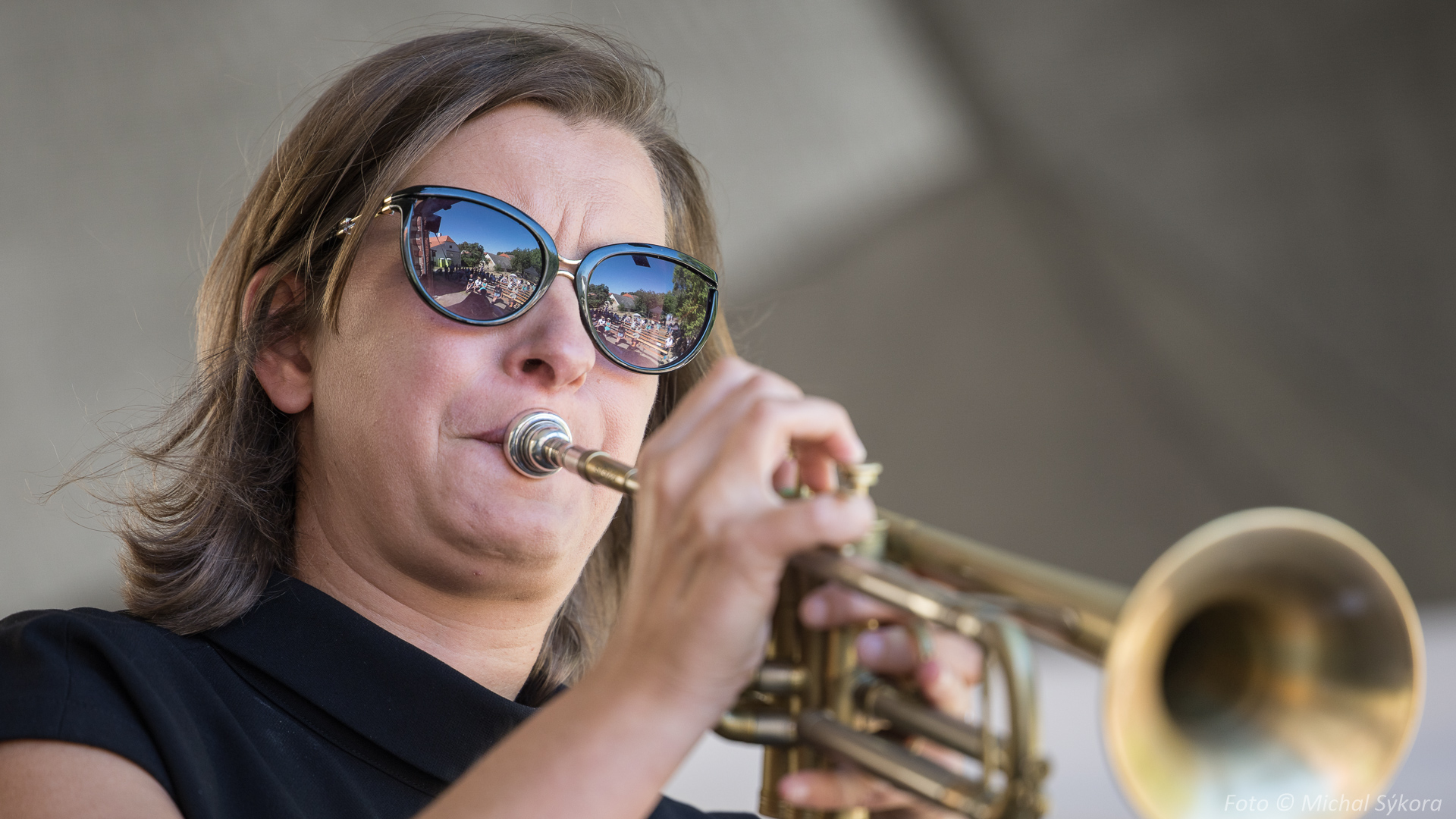
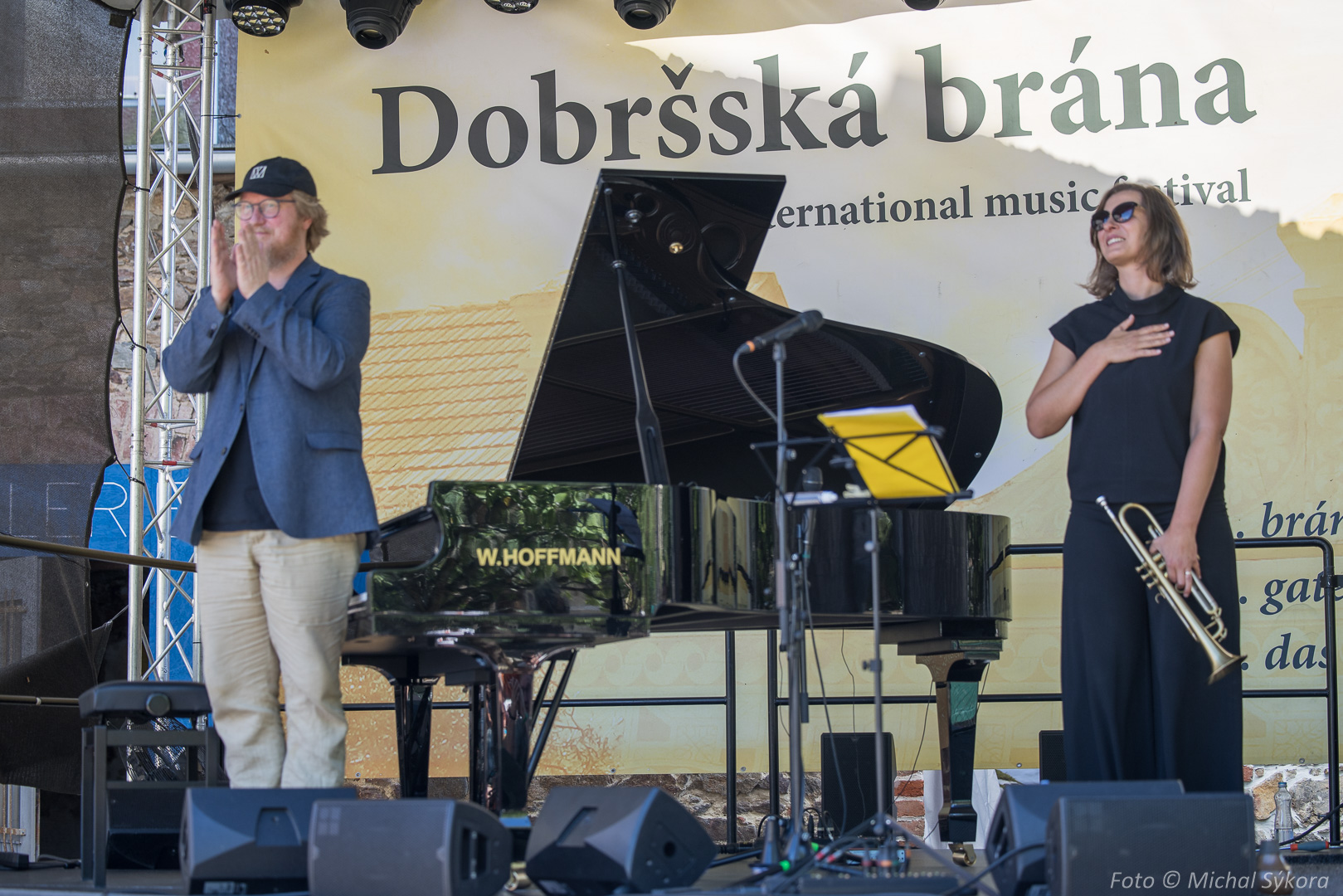
Štěpánka wrote the opening piece, Dobrš, specifically for this festival, and they seamlessly linked it to her earlier piece, Sadness. This was followed by Lien’s pieces such as A Little Of This and Hypothèque, and Štěpánka’s Fear and Anger, which roused us somewhat from our lovely afternoon reverie. The finale belonged to Lien’s Natsukashii. A successful collaboration that is sure to be repeated in the future!

The move to the church was brought about by the Resonant Grounds / After Silence project, in which Karin Nakagawa (25-string koto, vocals) and Simon Zöchbauer (zither, electronics, trumpet, flugelhorn) joined forces. It was meditative, deeply contemplative music with immense dynamism.
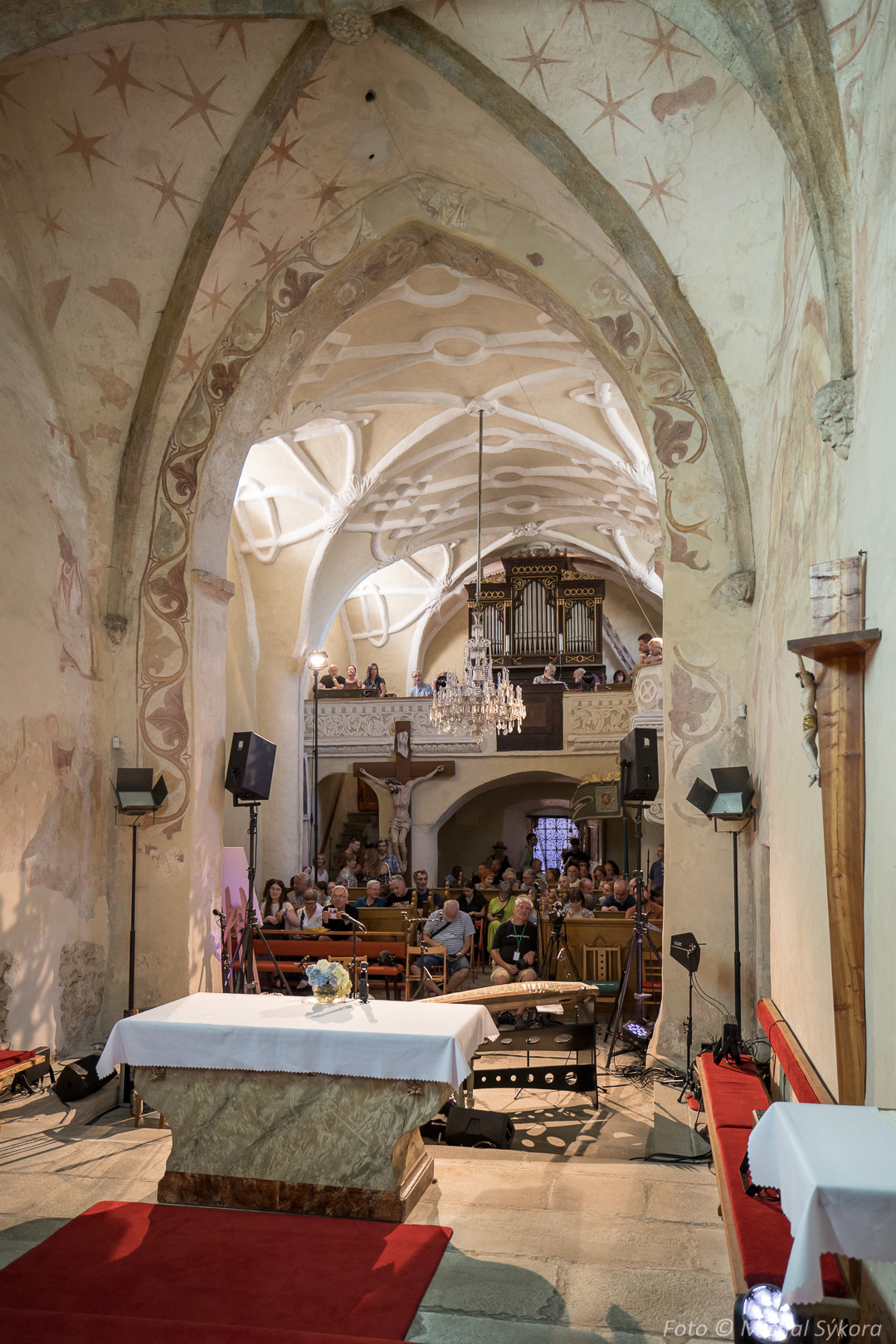
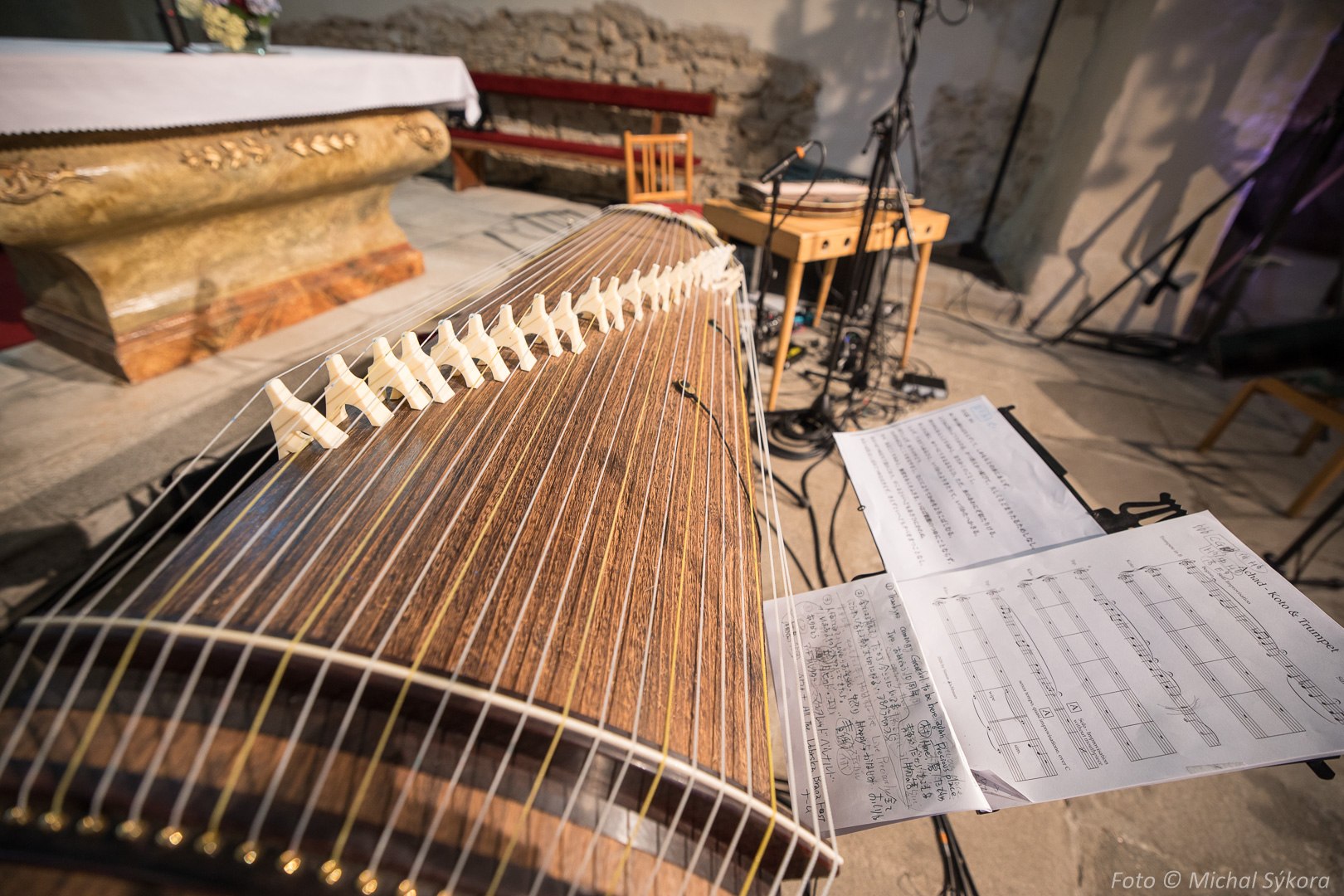
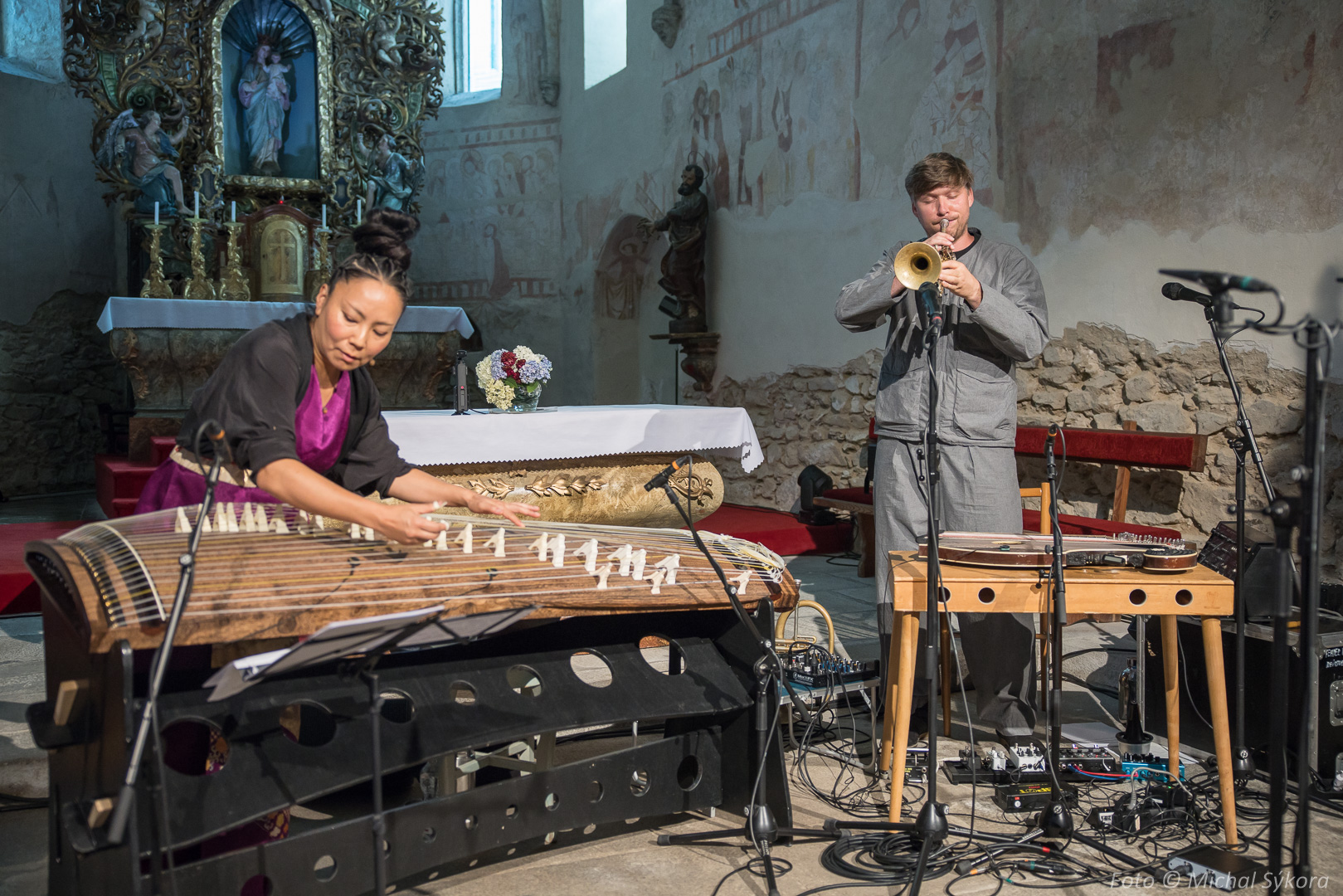
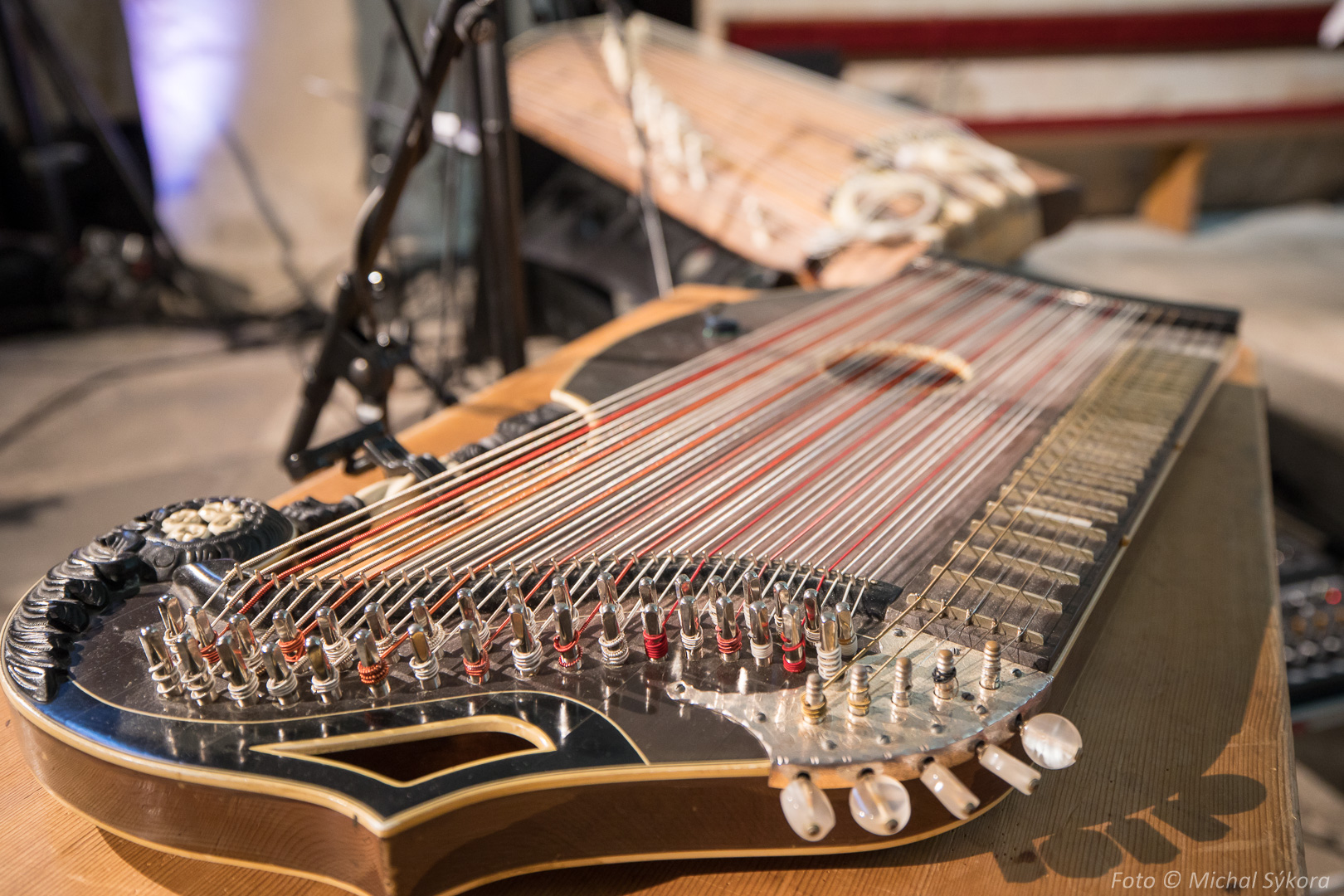
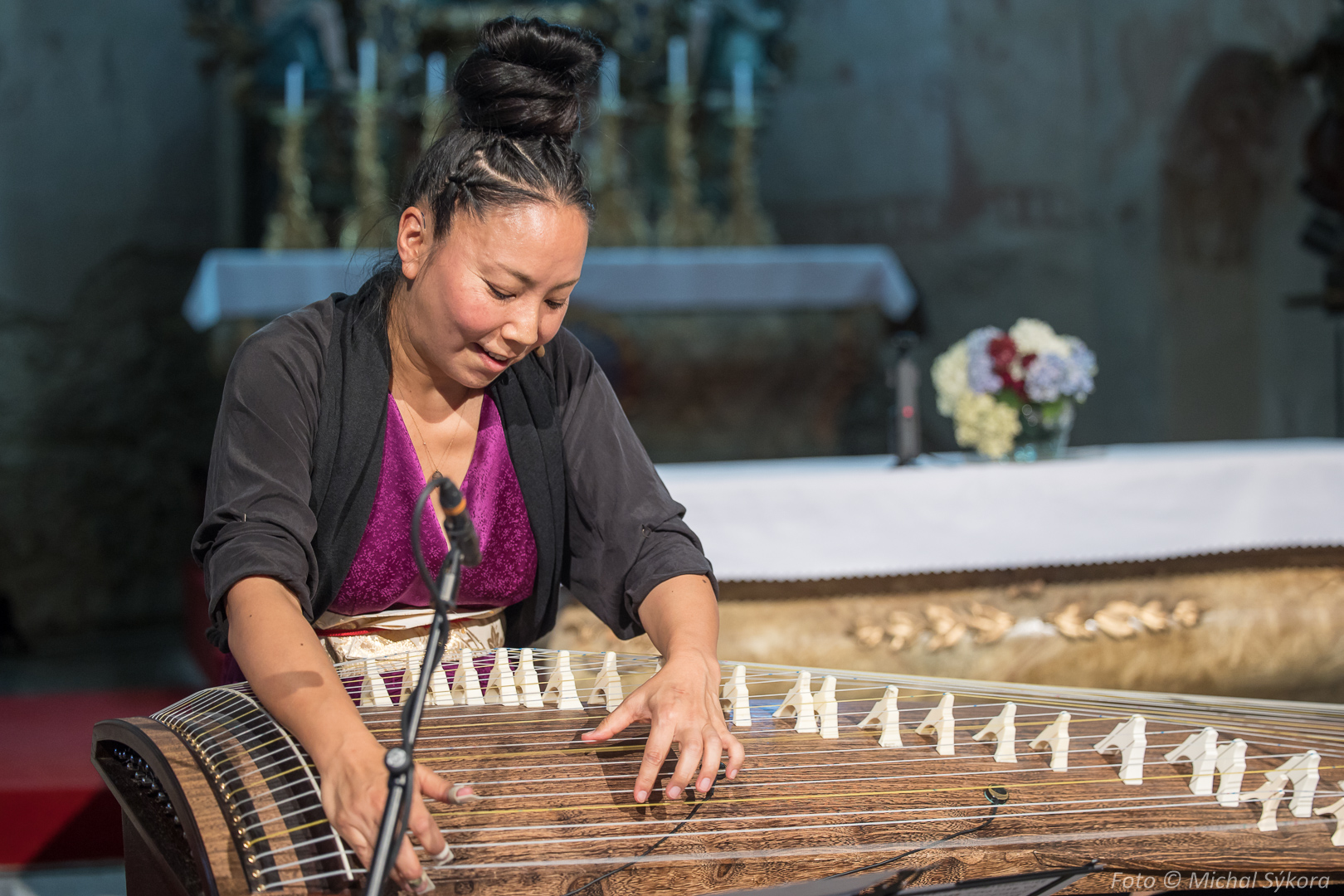
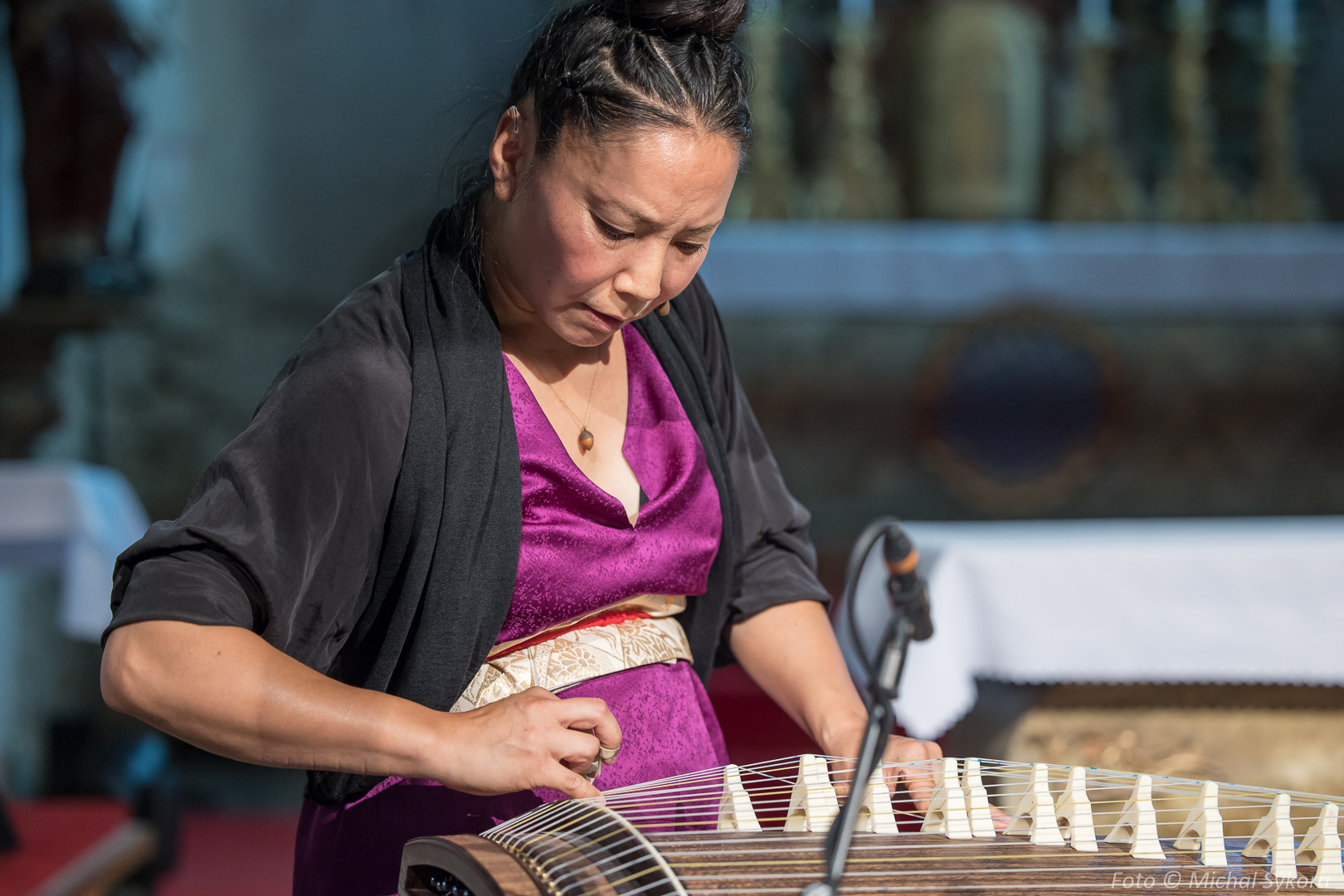
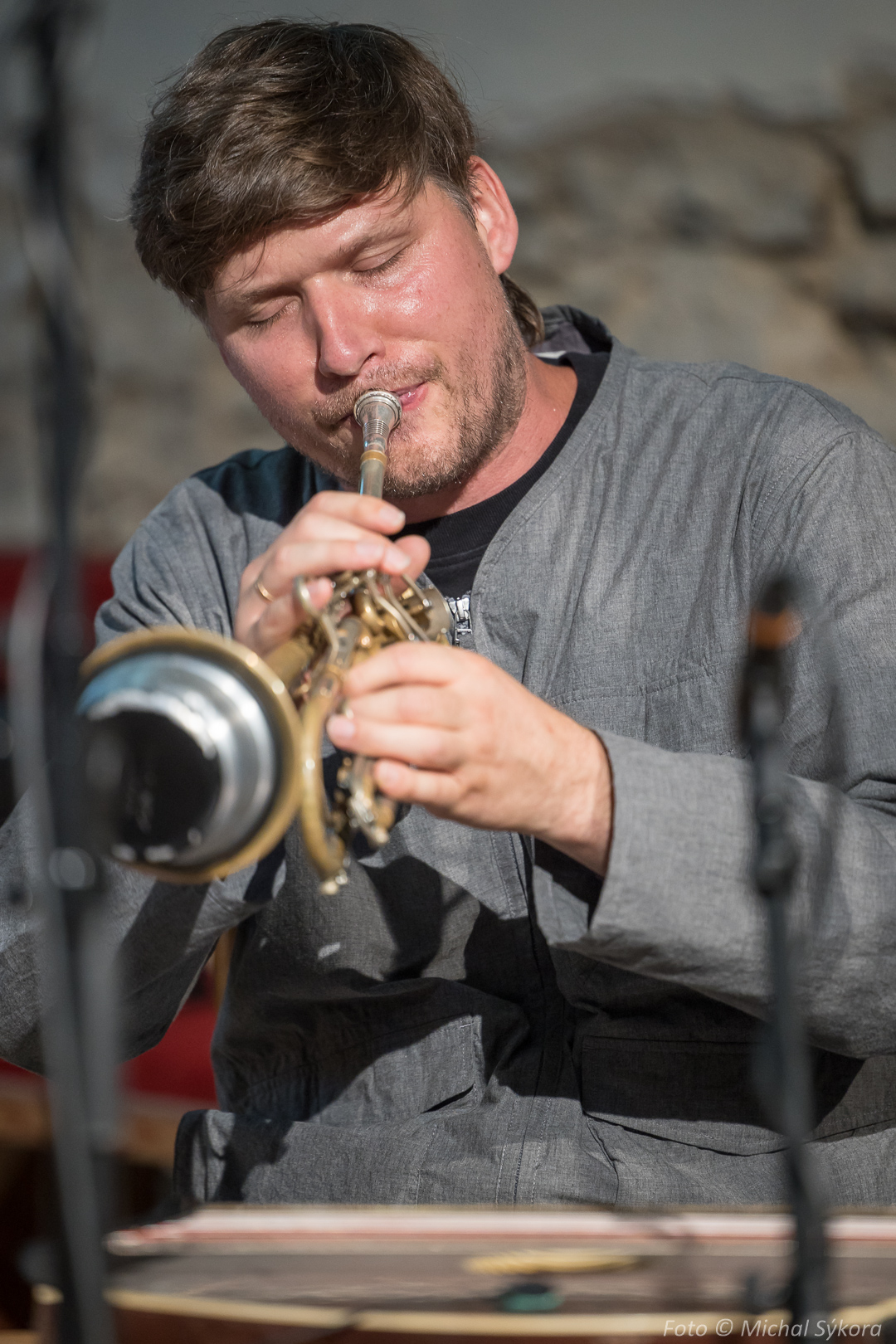
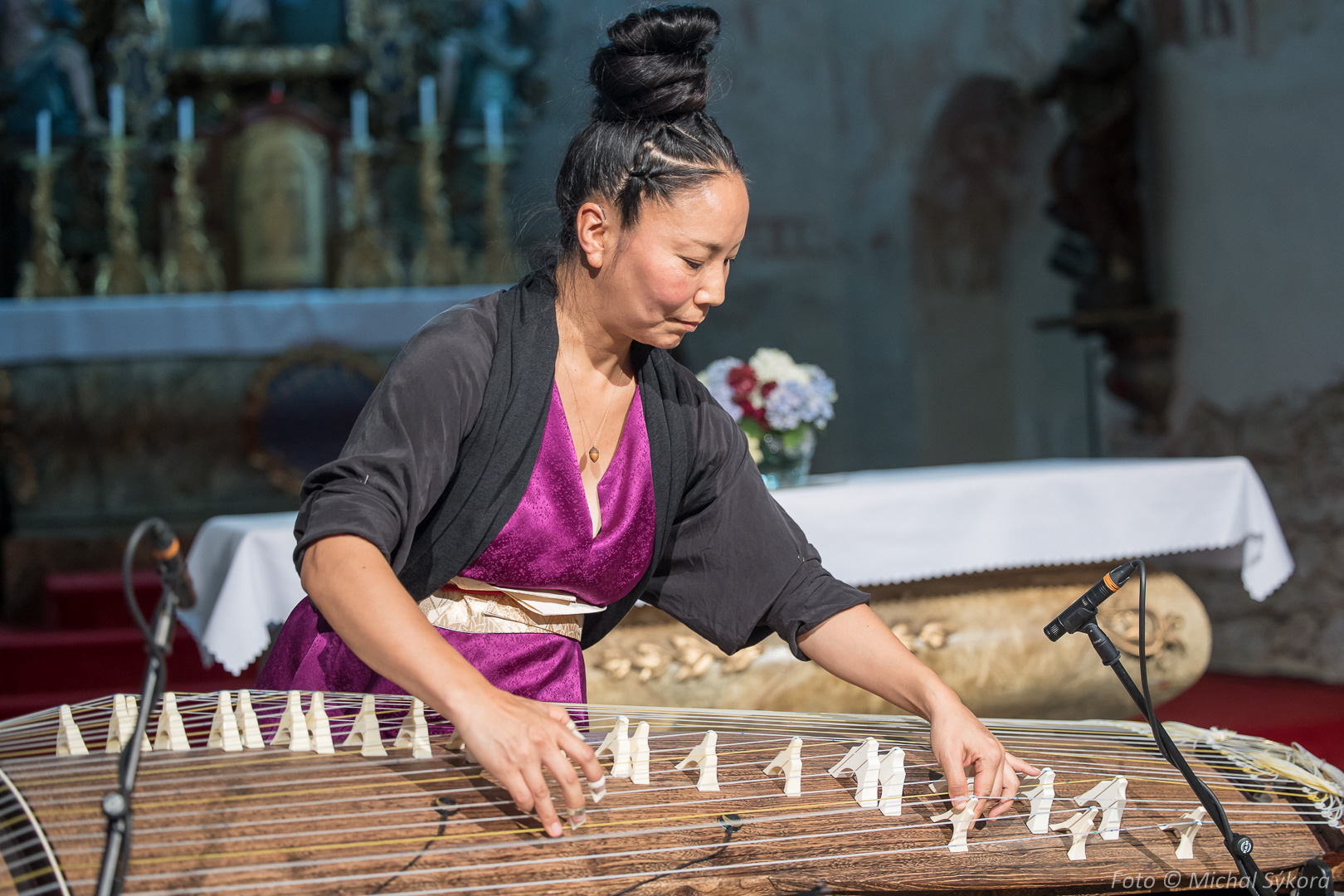
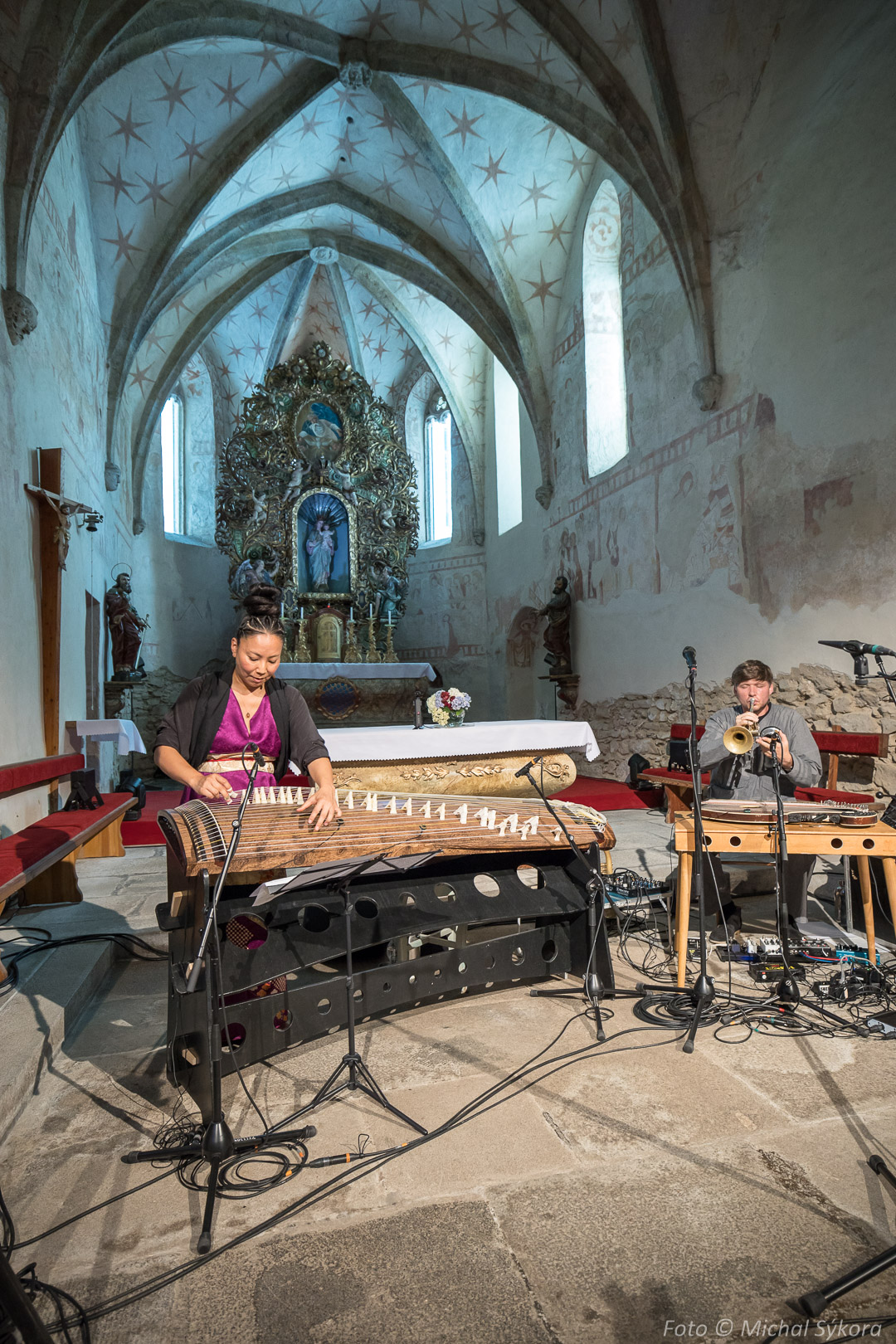
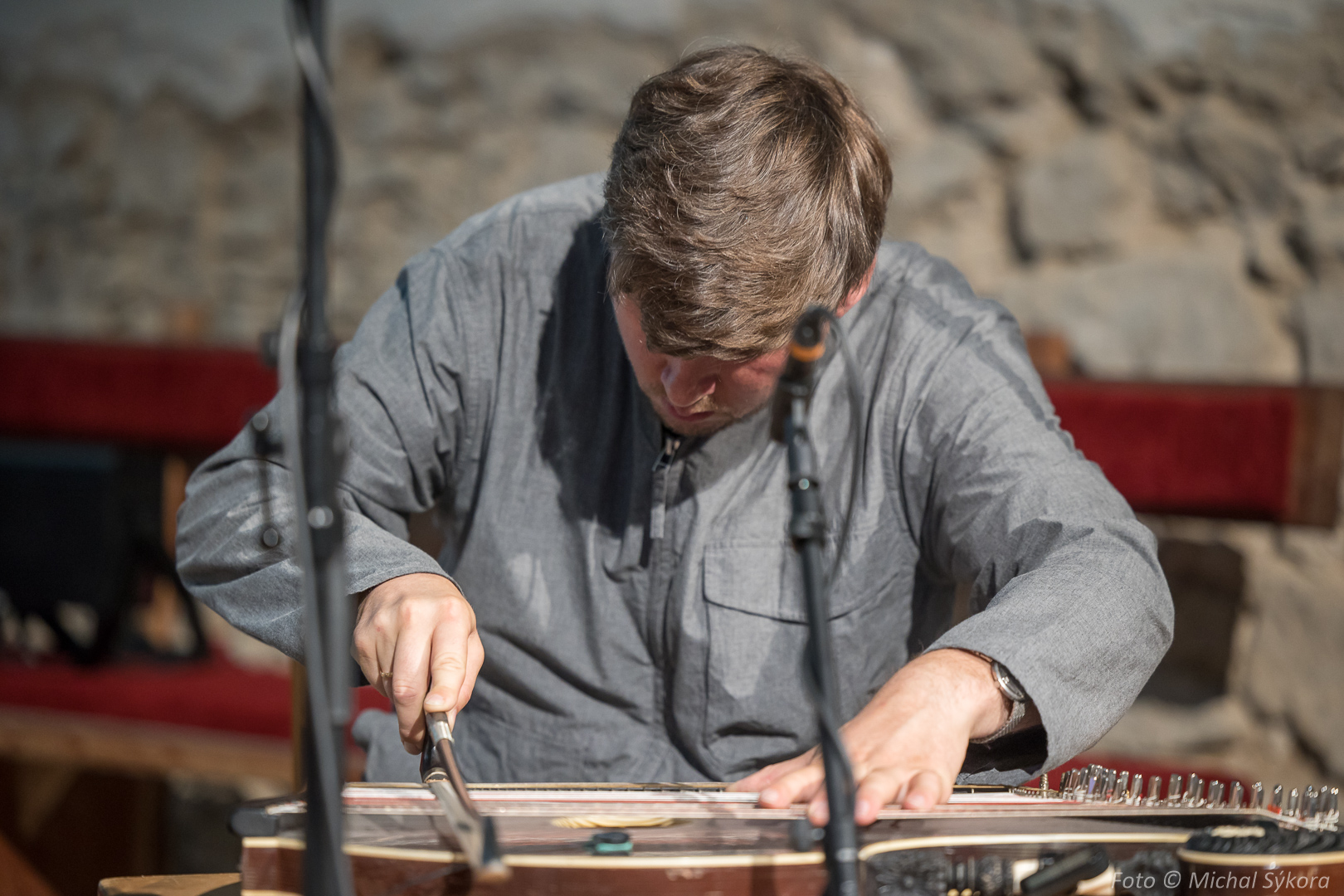
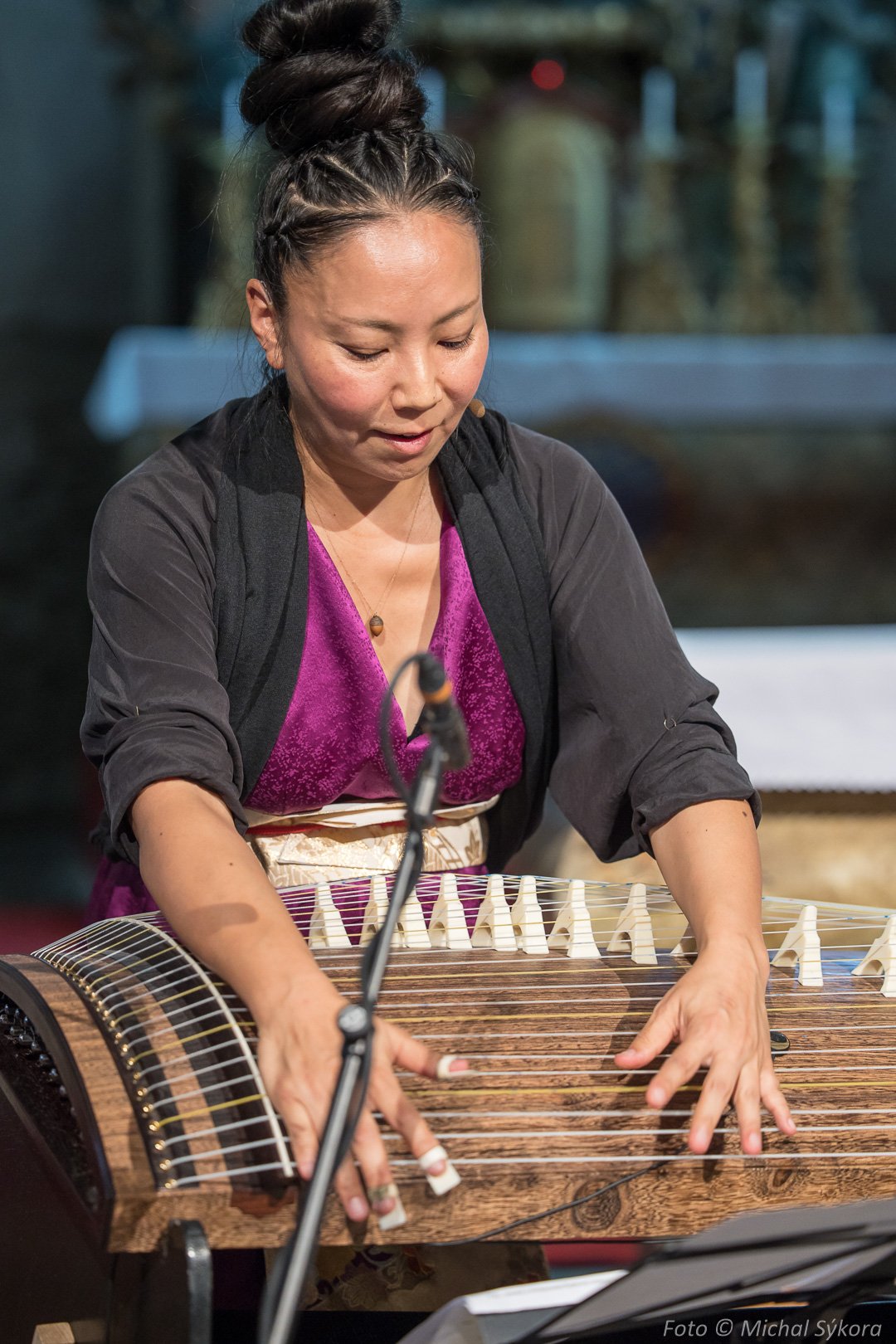
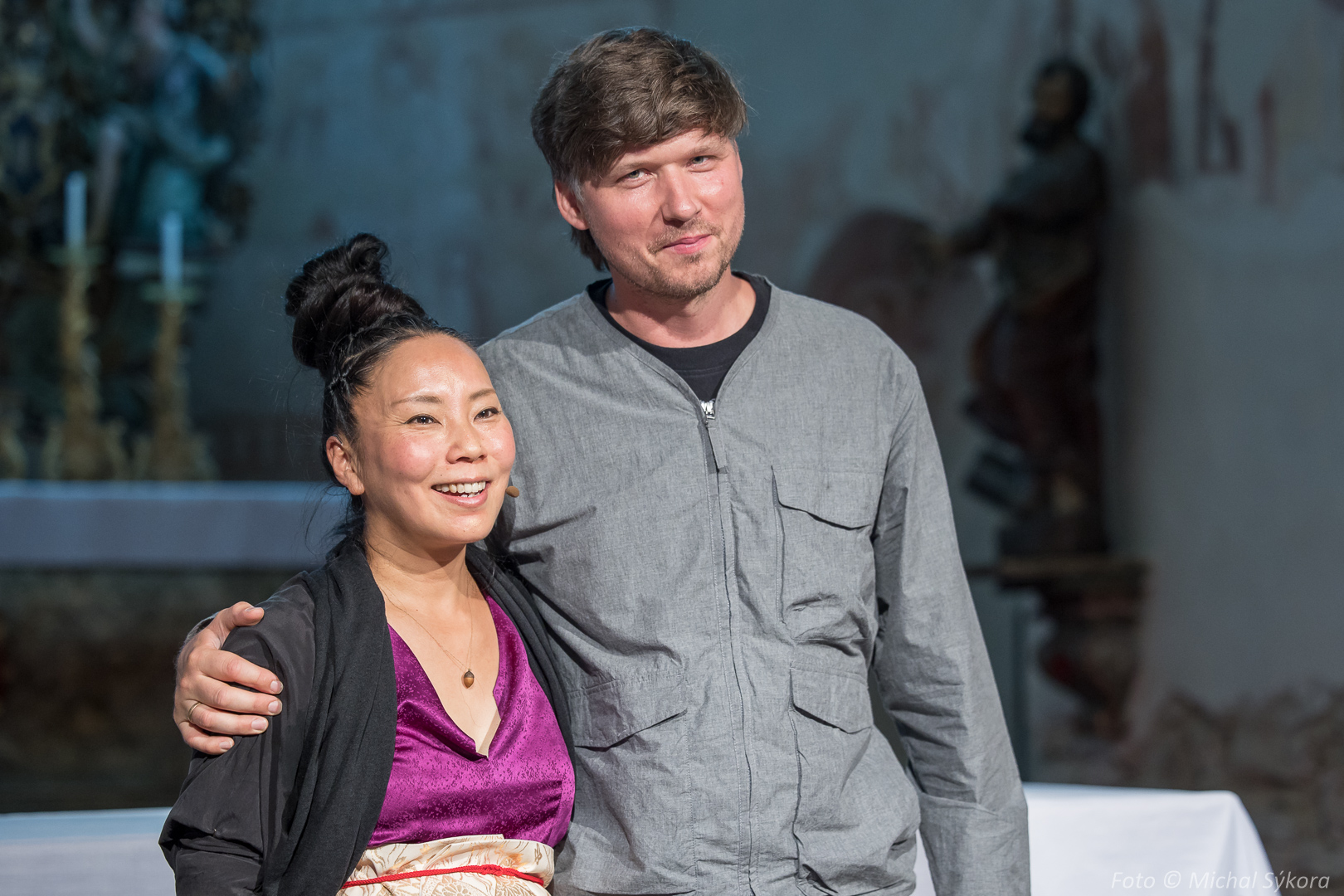
In the coolness of the church on such a hot day, I found it hard not to succumb to a sense of presence that verged on drowsiness. However, the concert in the church once again served as a pleasant highlight of the programme. Judge for yourselves from the video clips…
From the church back to the castle, and this time the festival was really reaching its climax. The Scott Tixier Quartet (Scott Tixier – violin; Tony Tixier – piano; Ameen Saleem – double bass; Pierre Eden Guilbaud – drums) performed modern jazz exactly as we like it. The strong influence of Jean-Luc Ponty (Scott’s mentor) was, of course, evident in the music, and that was by no means a bad thing. Following an opening solo and improvisation by Tixier, the whole band joined in and launched into tracks such as Mess Walker, Z, Digit and a reworked tribute to Miles Davis and Marcus Miller in the form of their famous track Tutu.
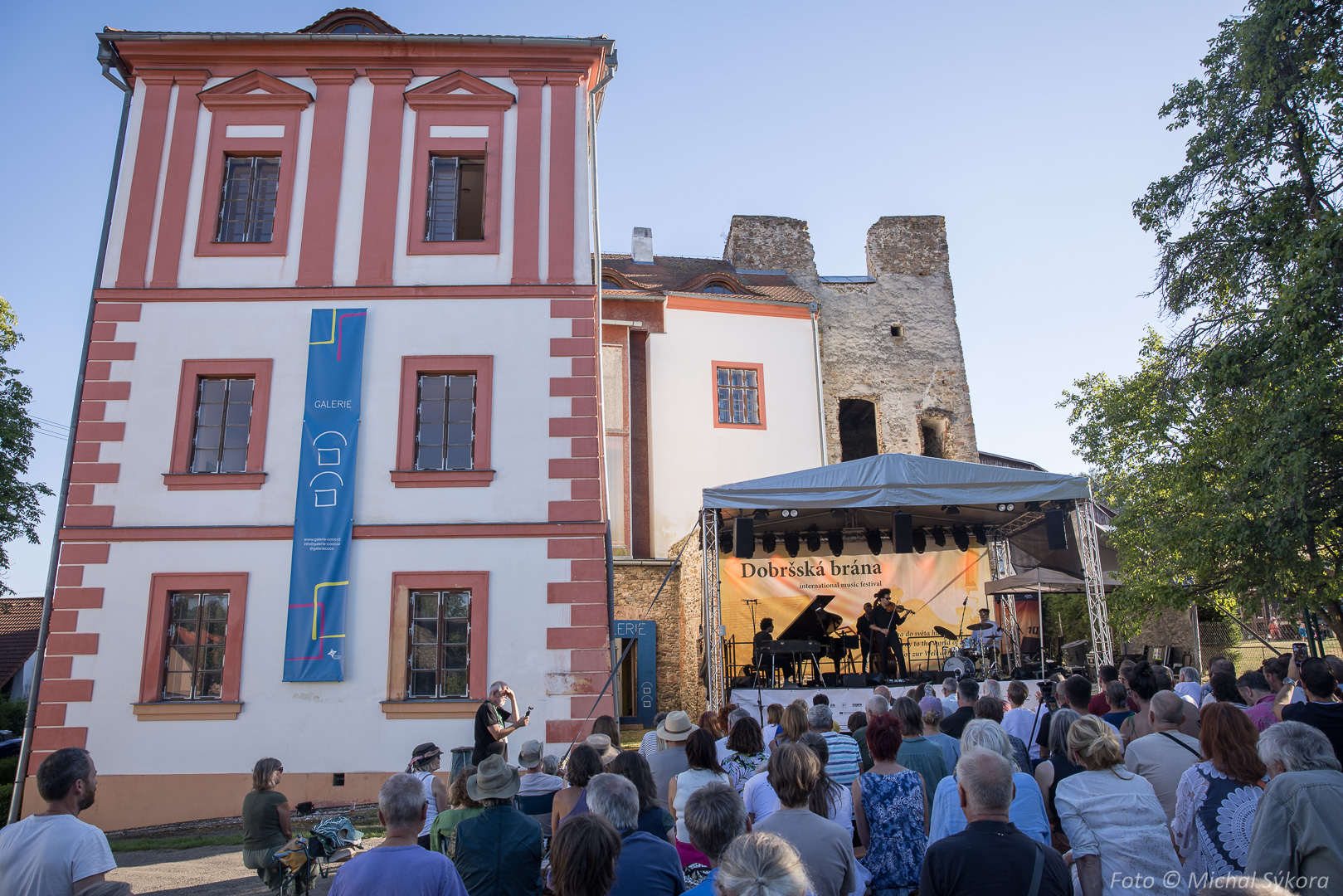
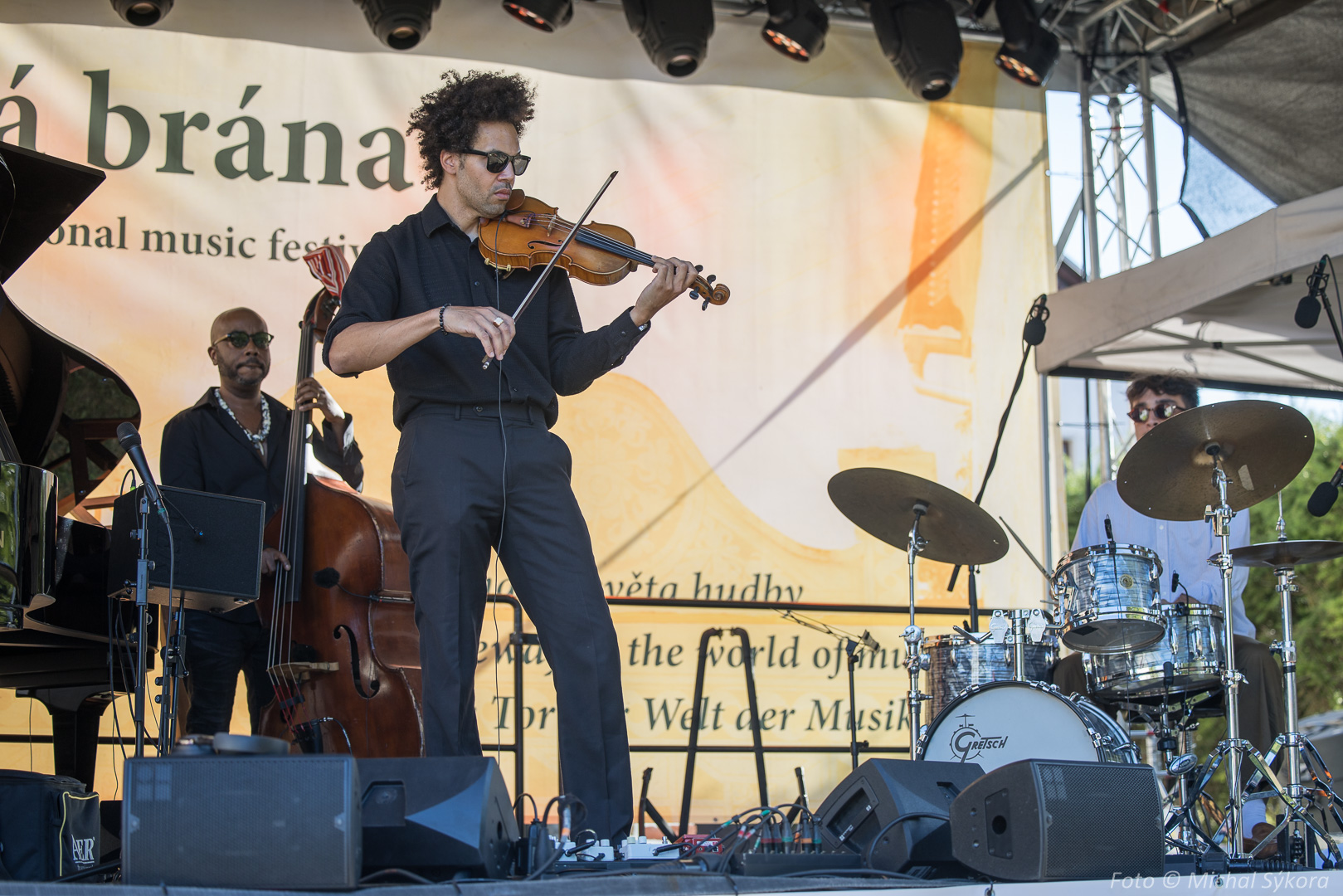
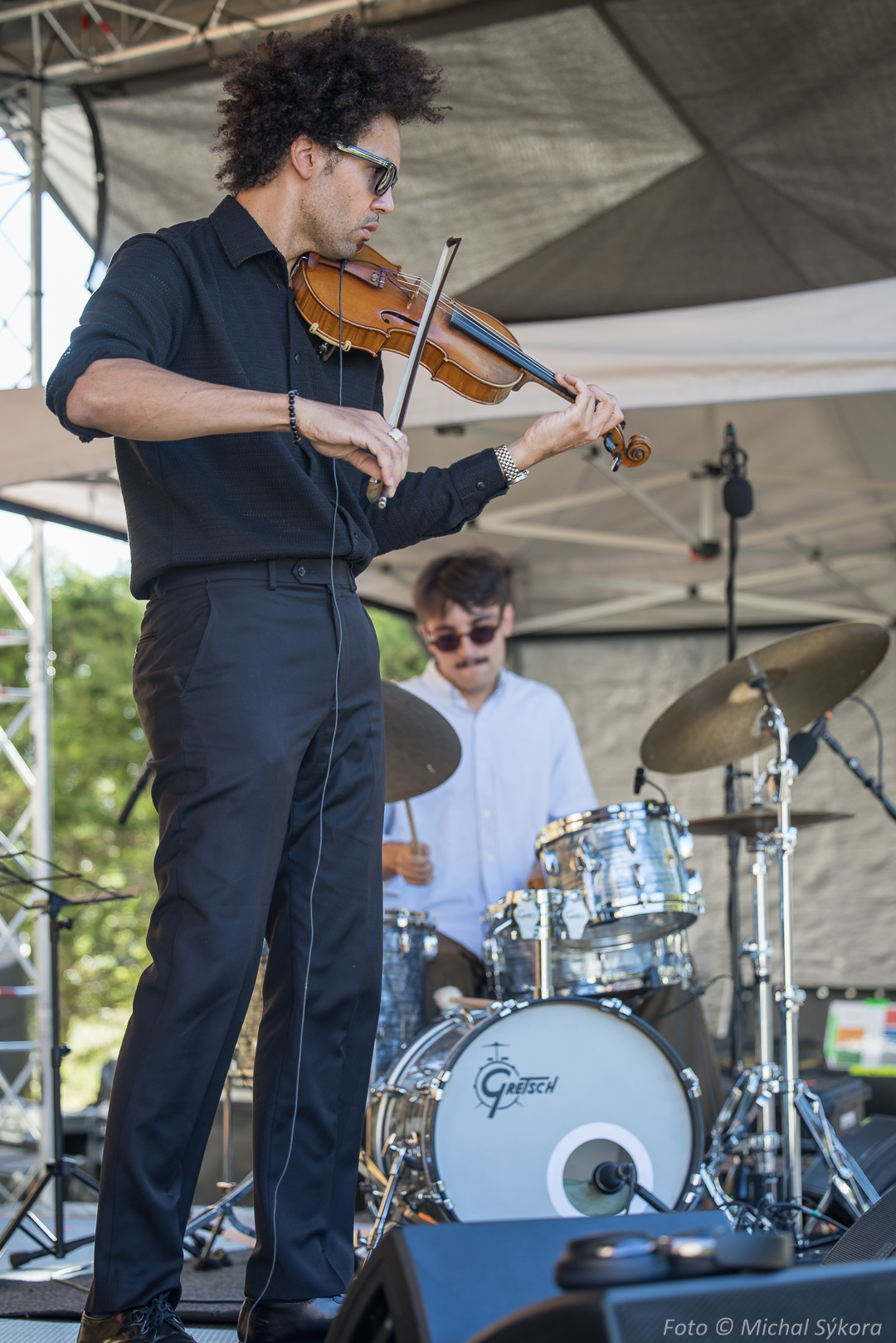
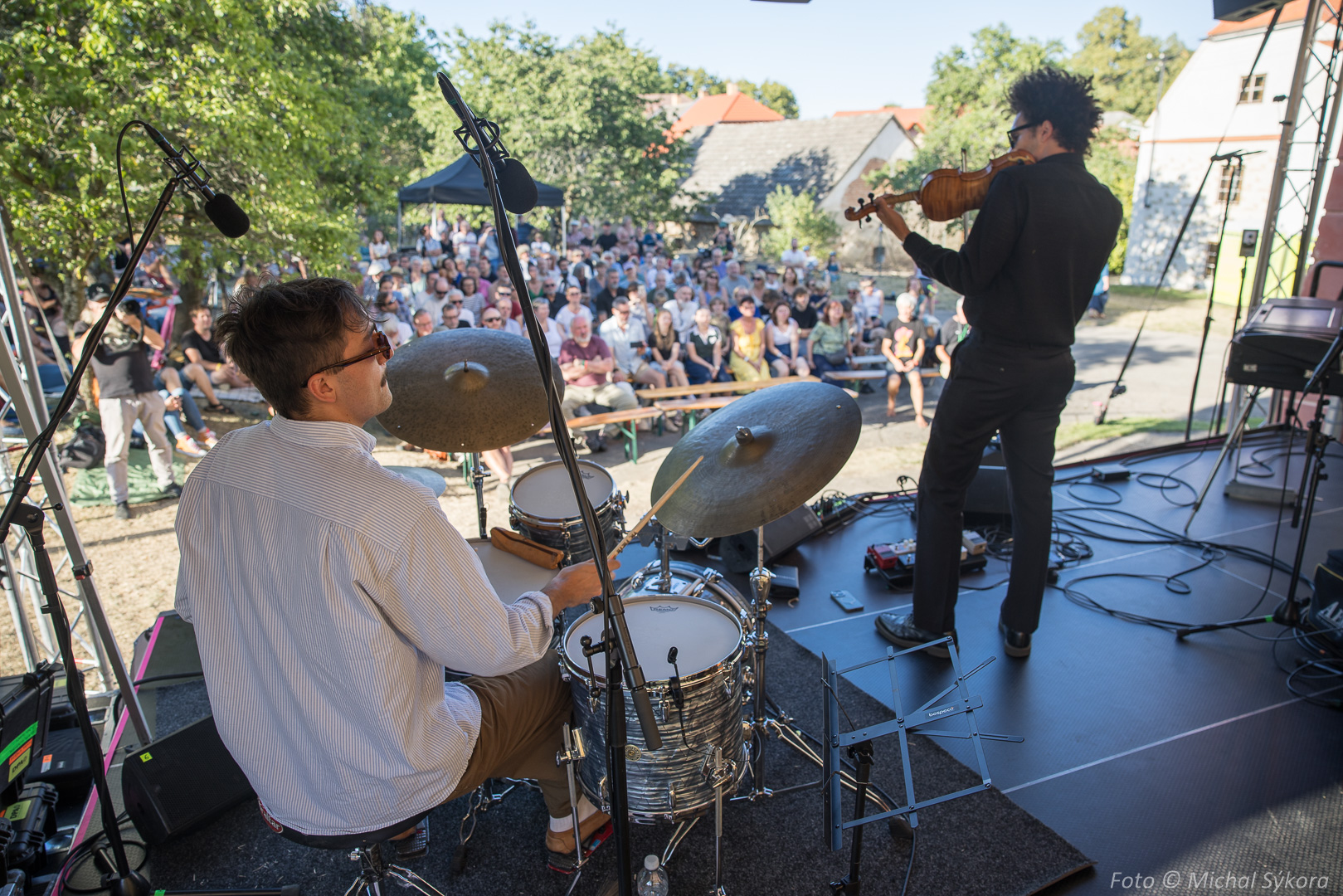
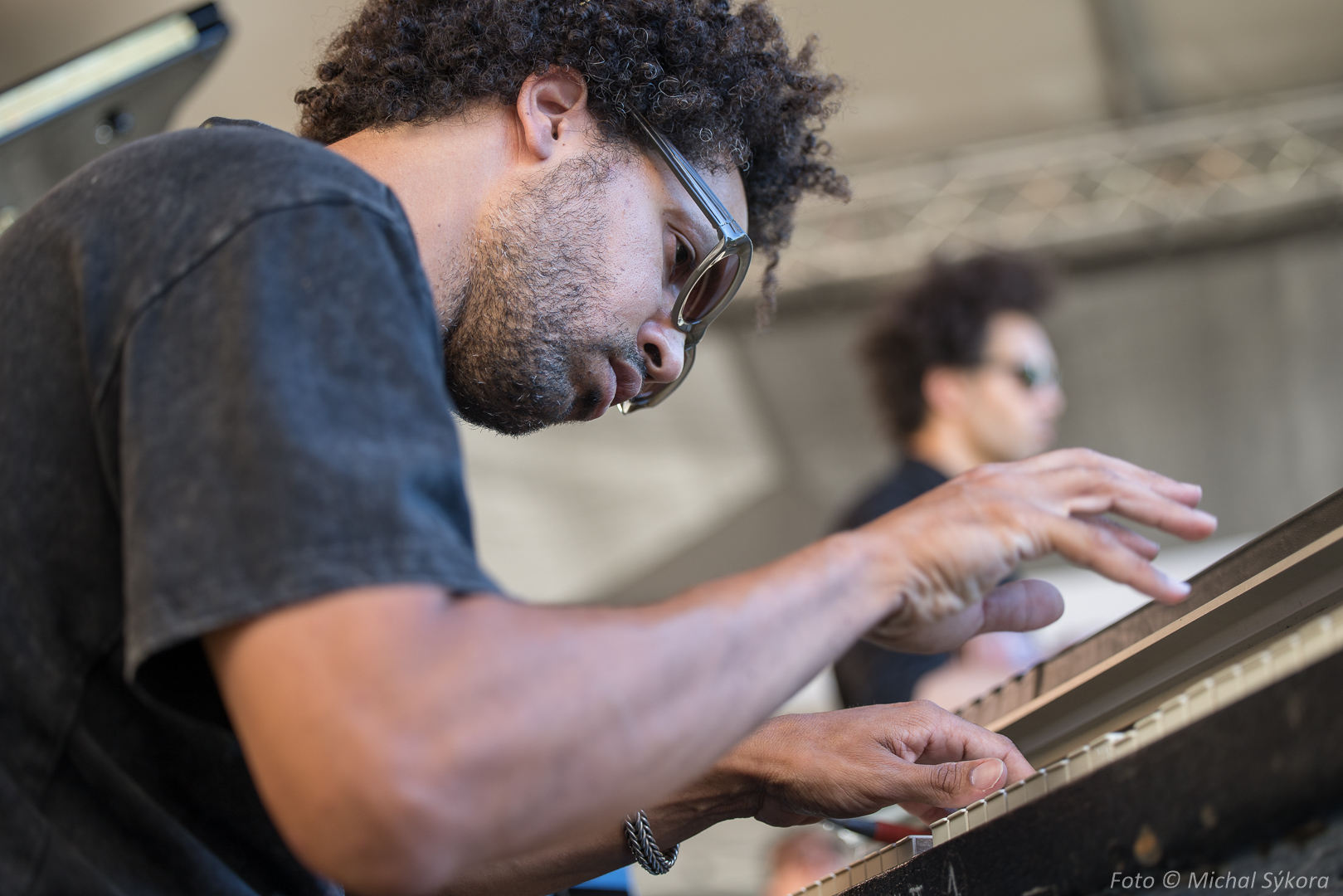
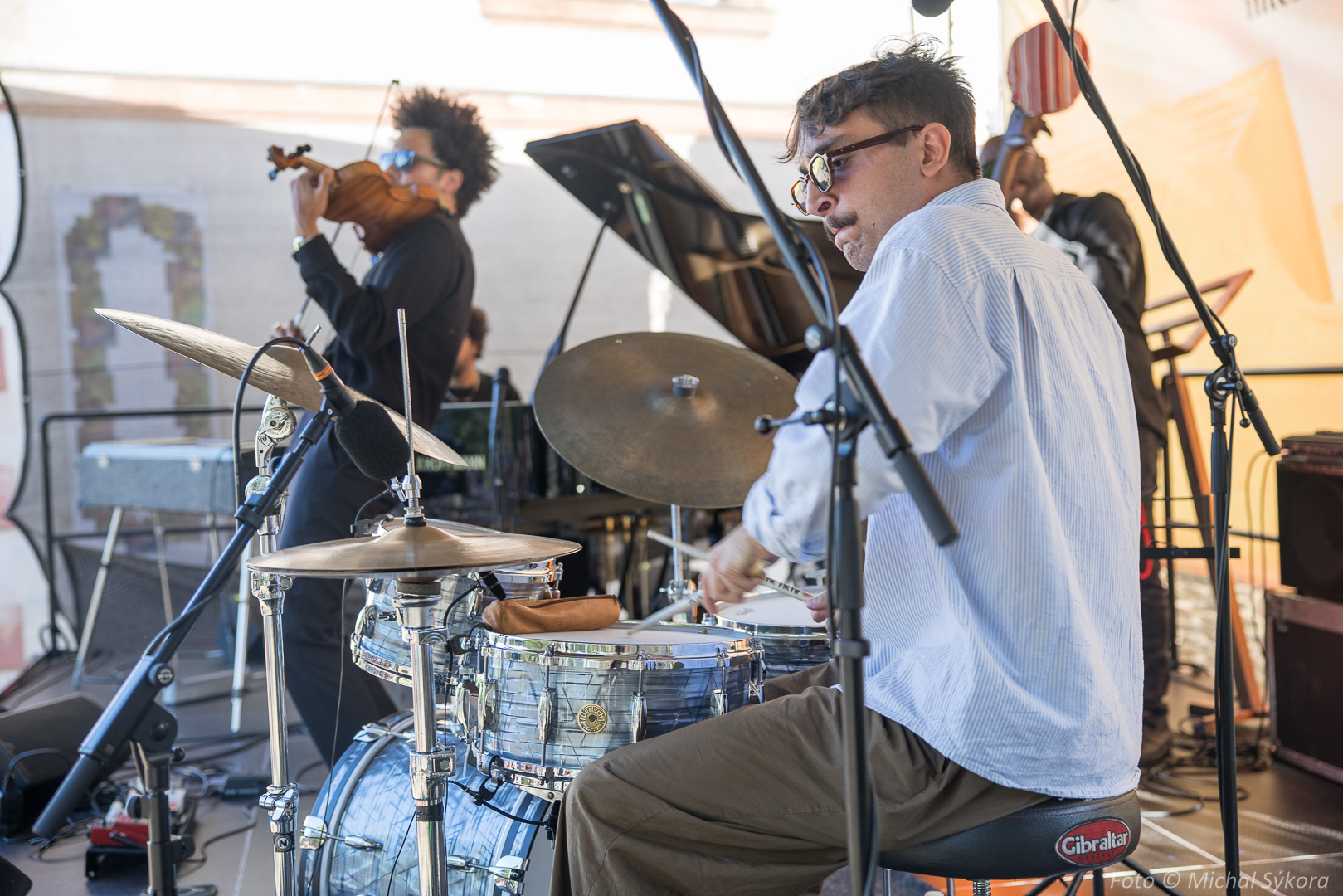
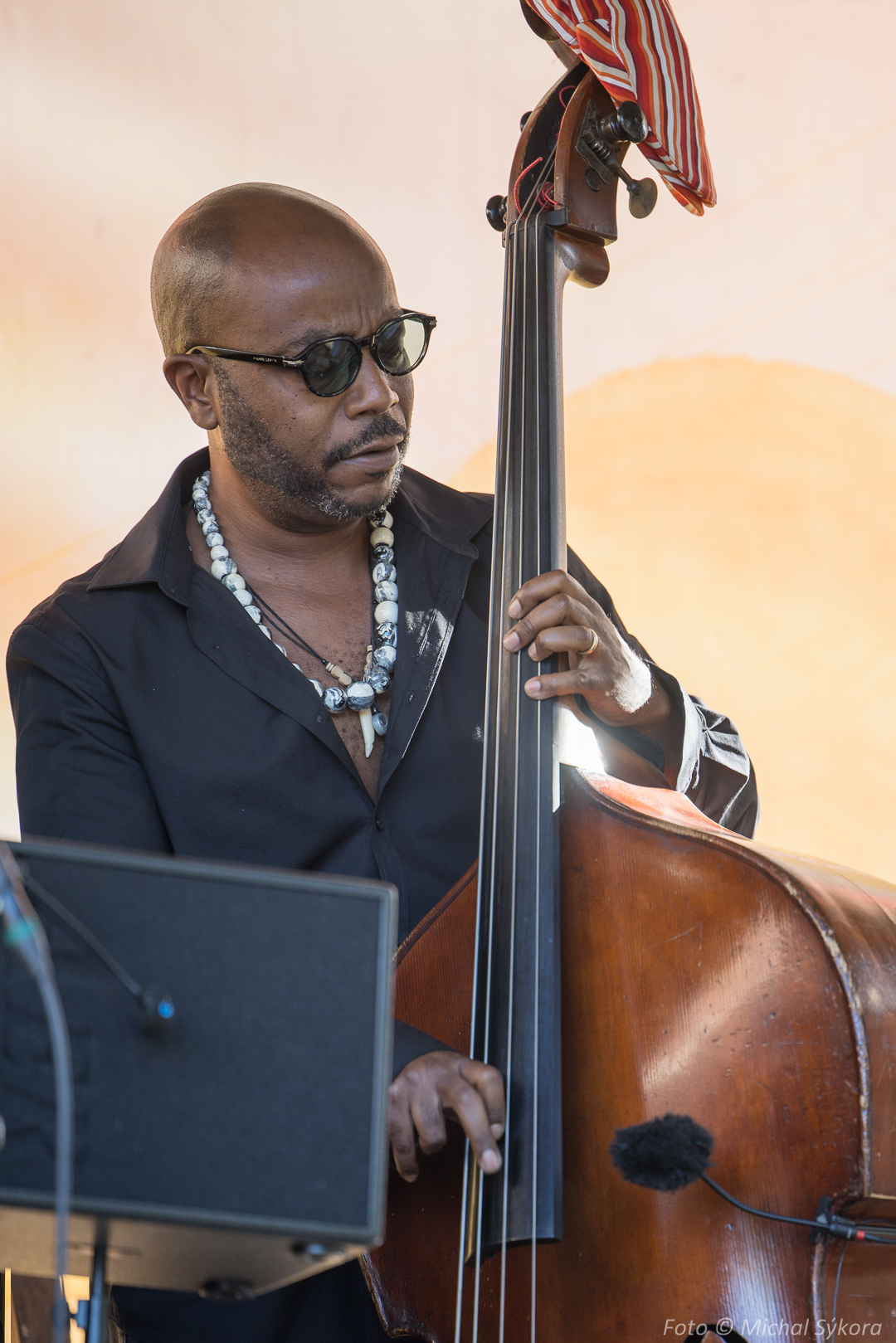
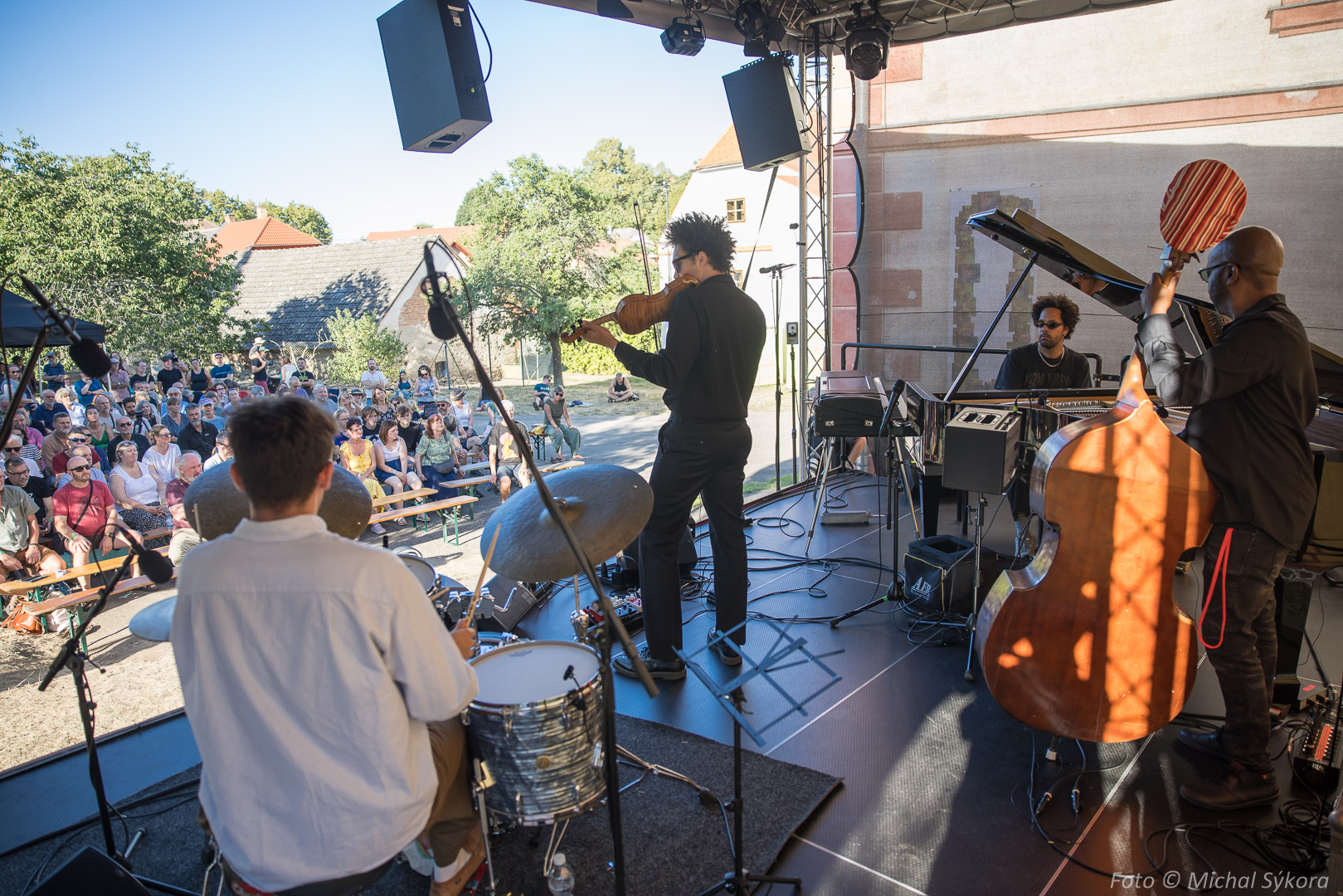
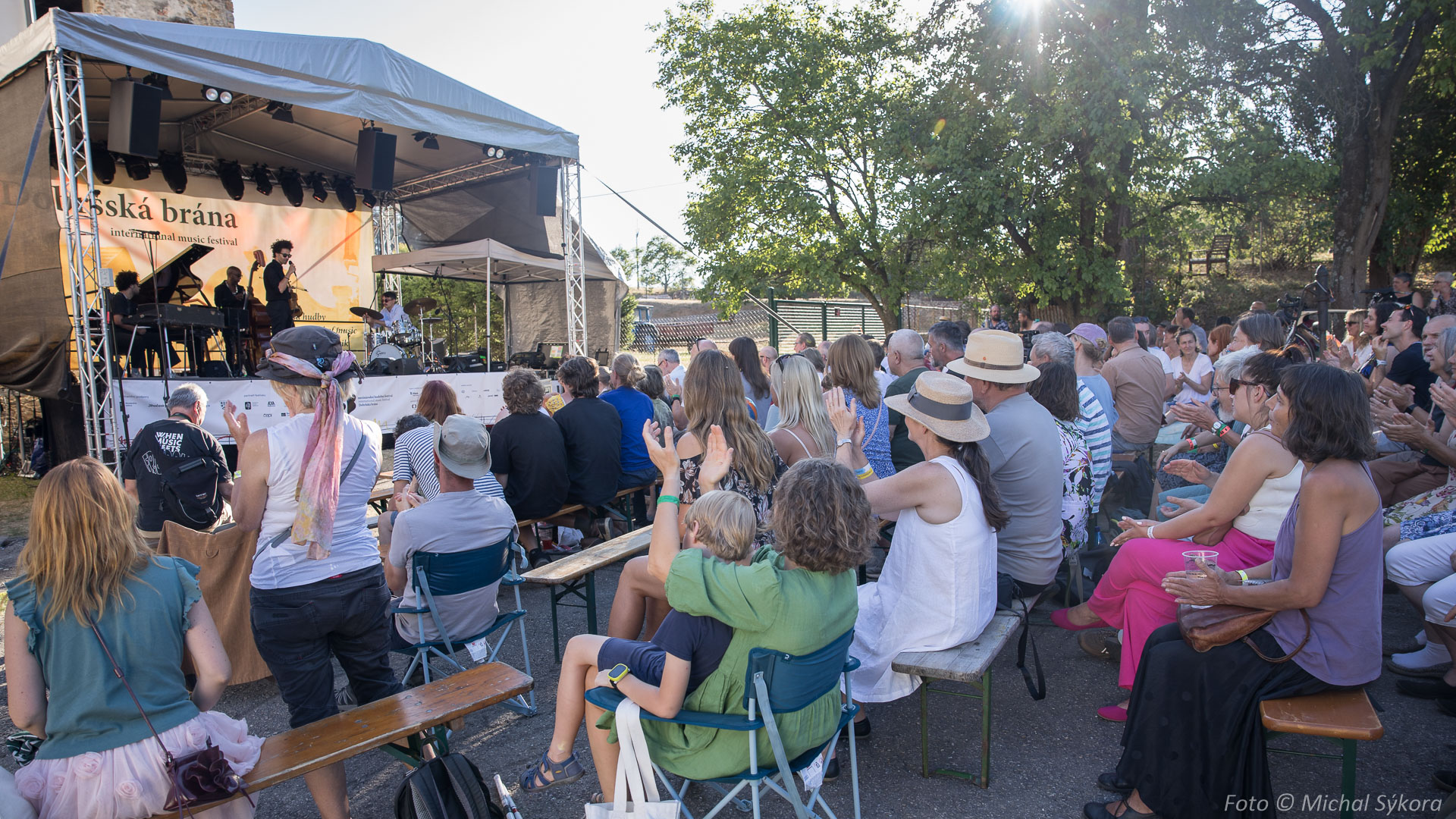
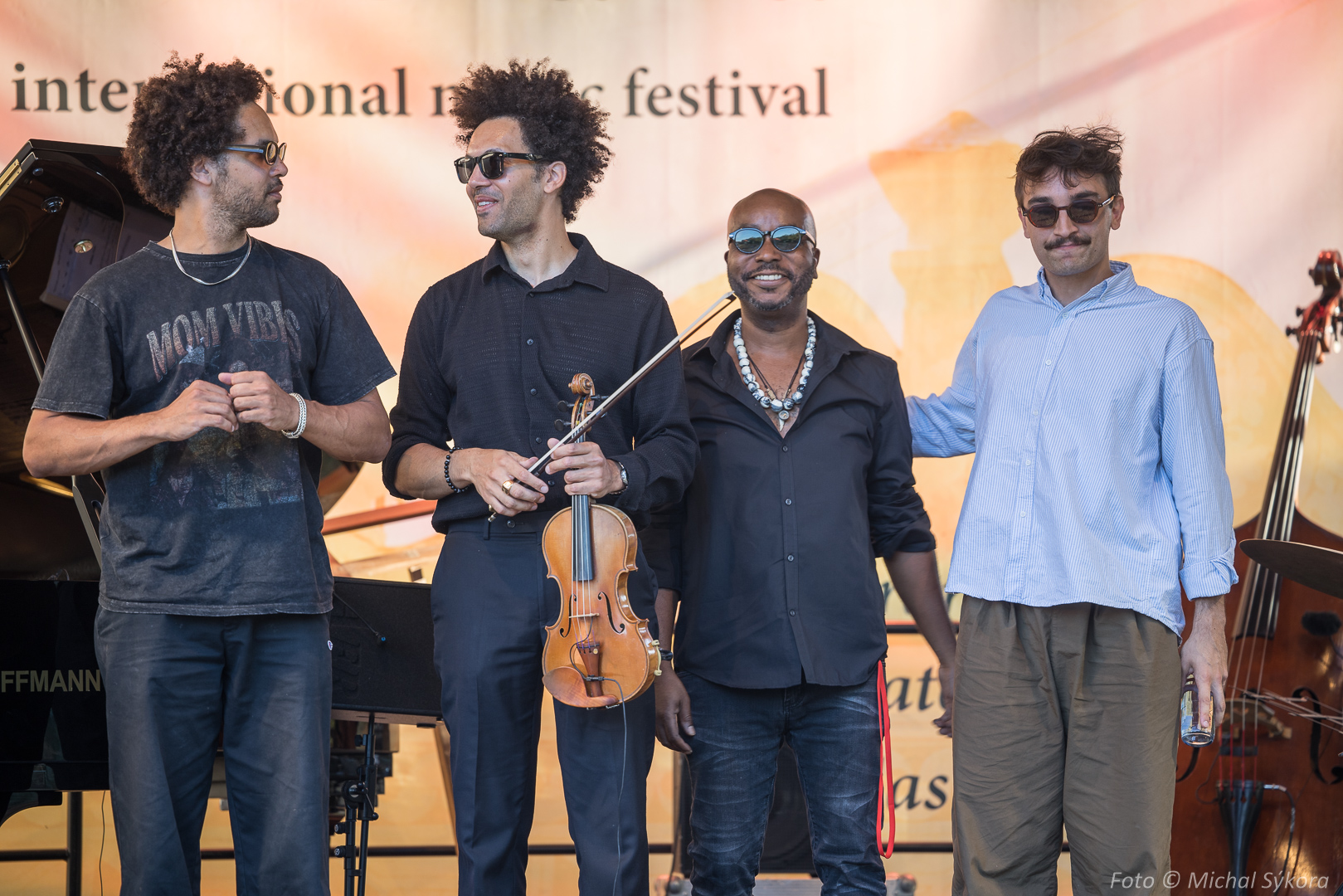
Scott didn’t hold back on banter with the audience; he recounted a story about being detained at the border, which inspired one of his compositions, and during the performance he included a tribute titled For Jean Luc (for Jean-Luc Ponty) as well as a piece by Django. His brother Tony also took the floor, sighing that it was a shame he hadn’t come with his own project, and the concert concluded with the composition Neil’s Landing, dedicated to their youngest brother. The set lasted over an hour and a half and was a huge success.
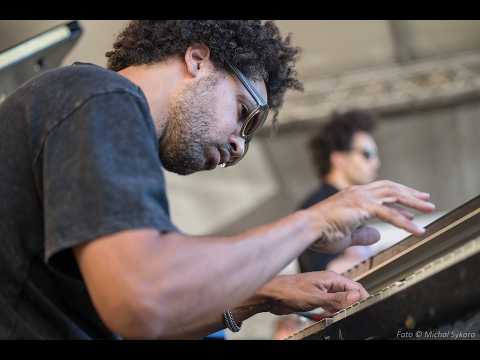
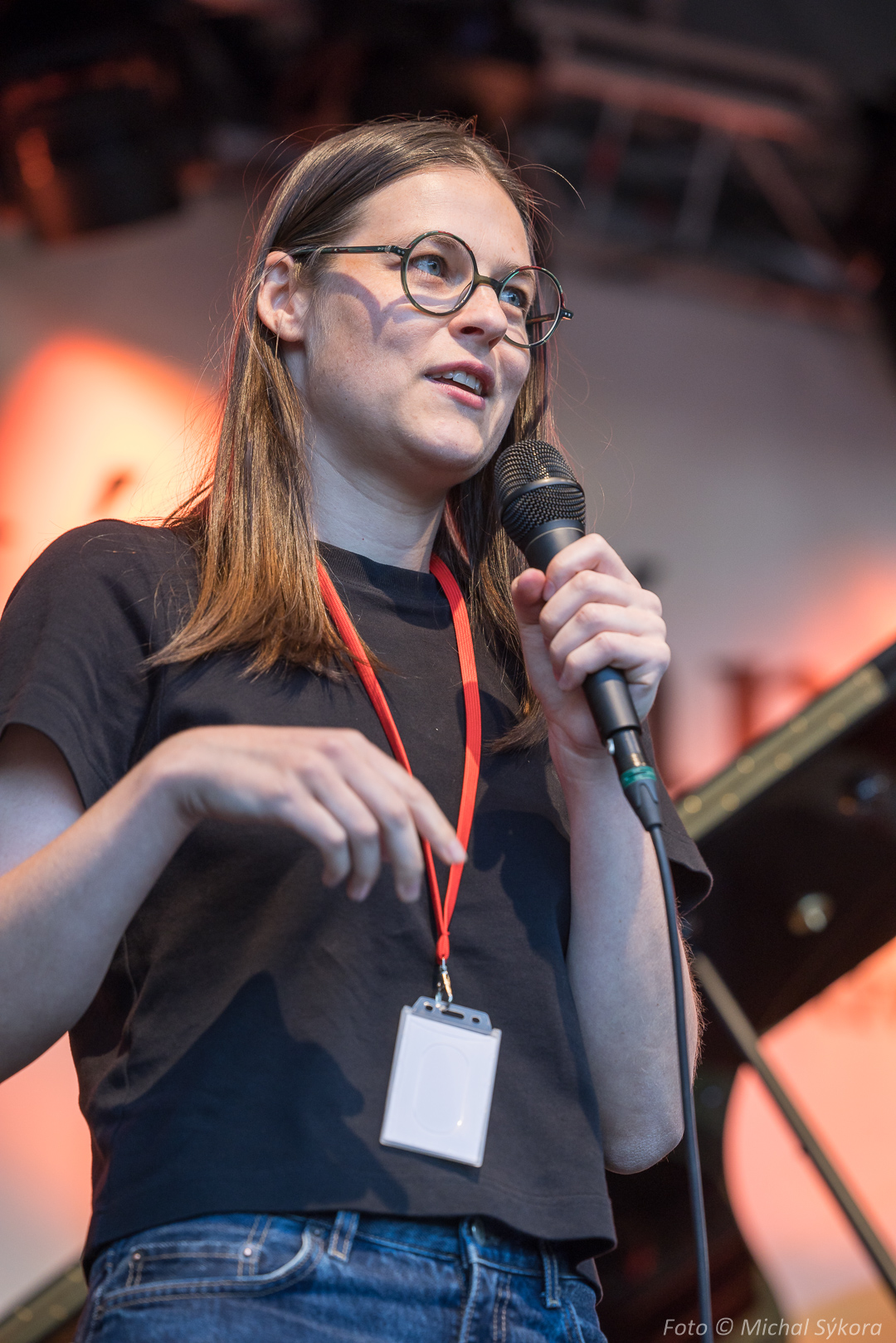
The home team was then represented by the Nikol Bóková Trio (Nikol Bóková – piano; Martin Kocián – double bass; Michał Wierzgoń – drums), joined towards the end by Markus Stockhausen on trumpet. Nikol opened the set with a brand-new composition, The Good Gate, written especially for the festival, and made no secret of her delight at stepping away from her composing desk to play in front of a live audience again – and not just for her husband. Alongside another new piece (which may be called El Niño), the set mainly featured material from the album Feathers, though she also revisited Perseids from Prometheus.
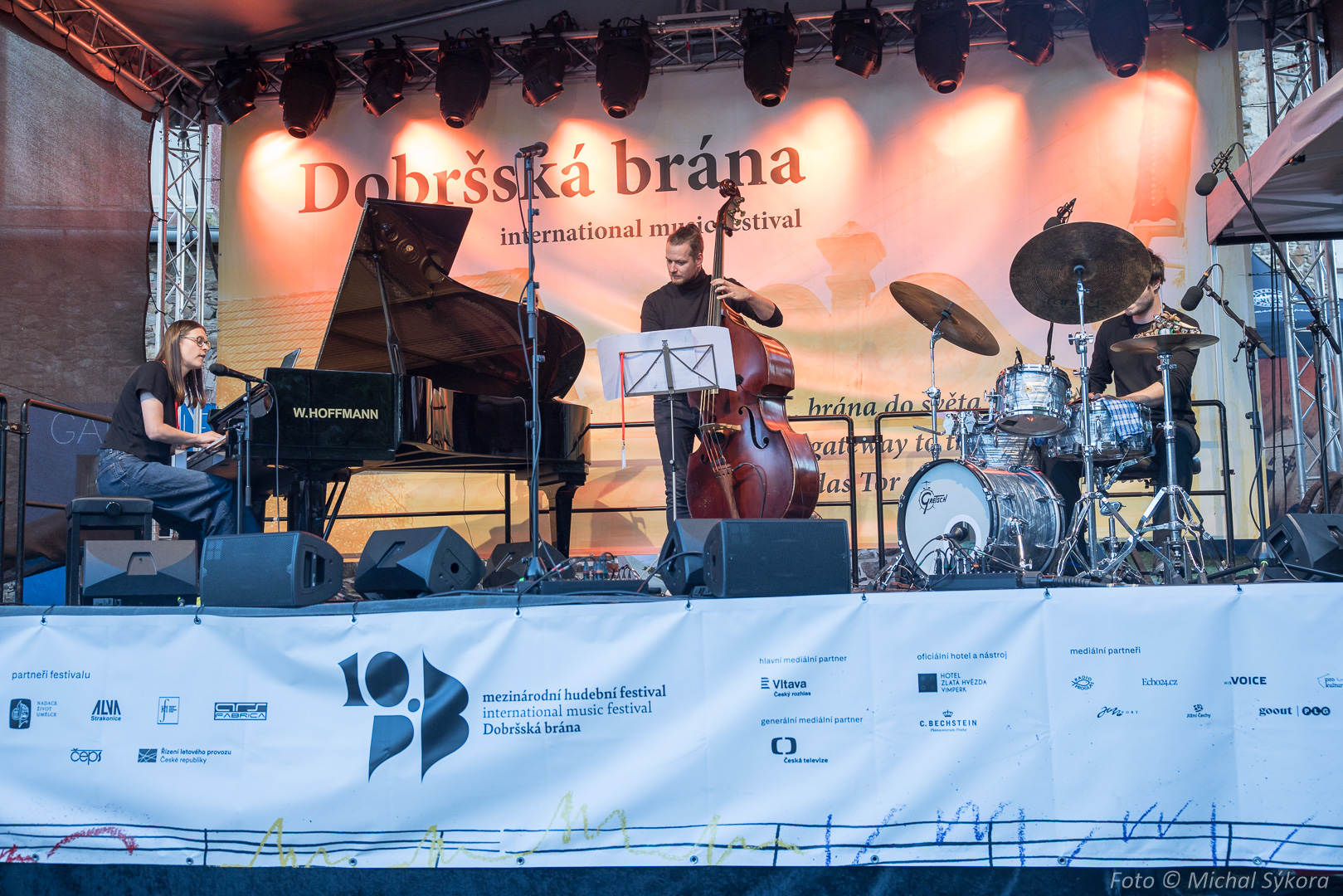
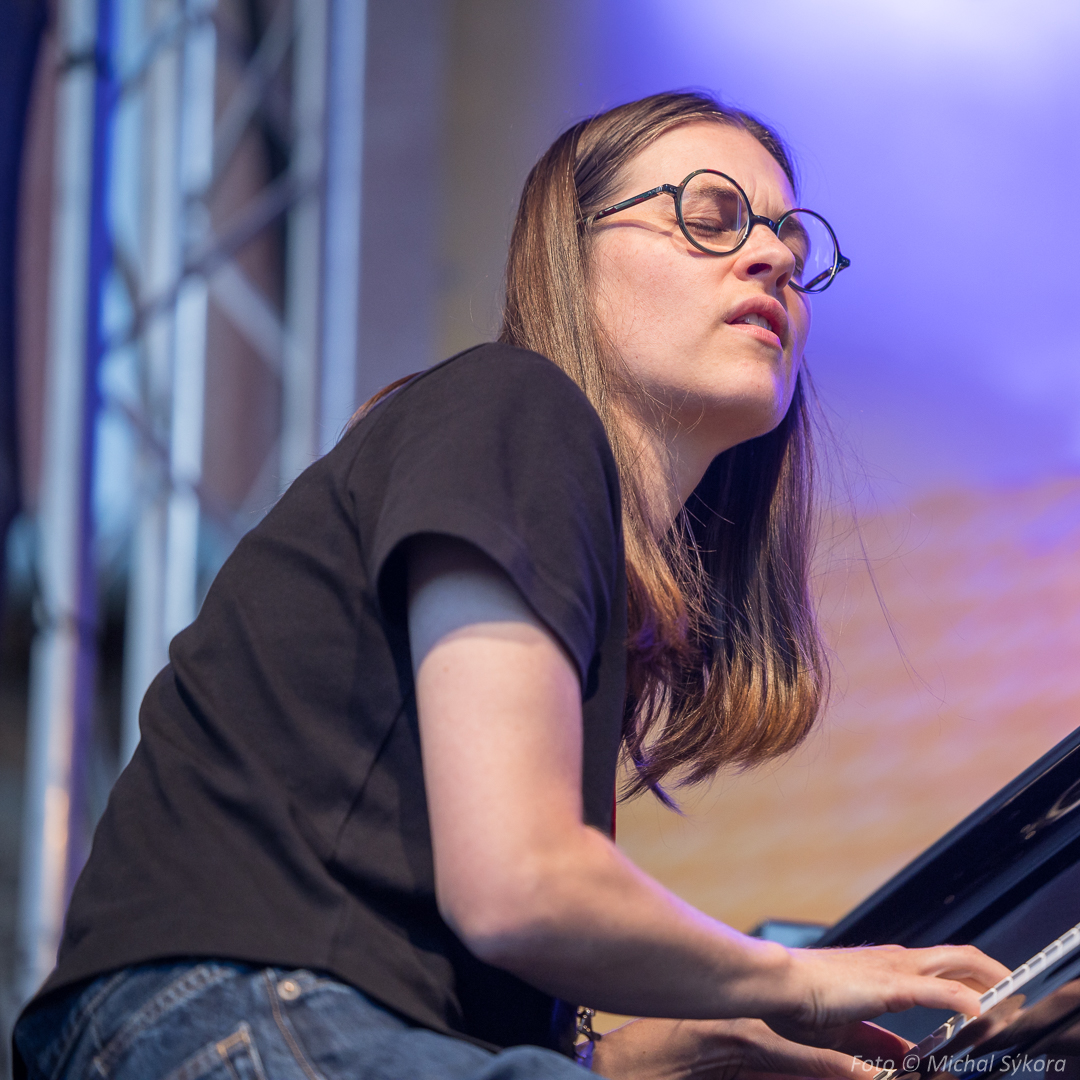
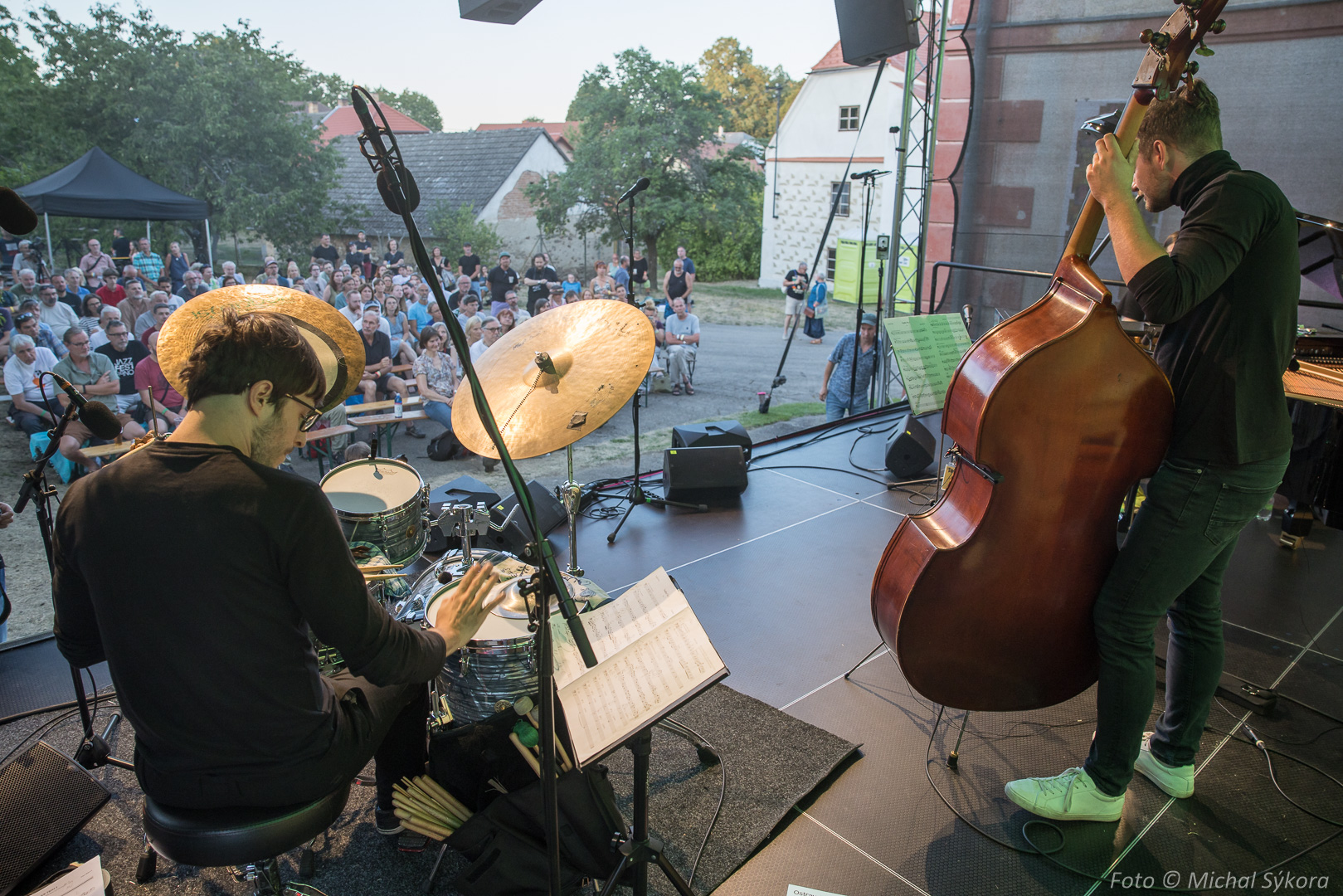
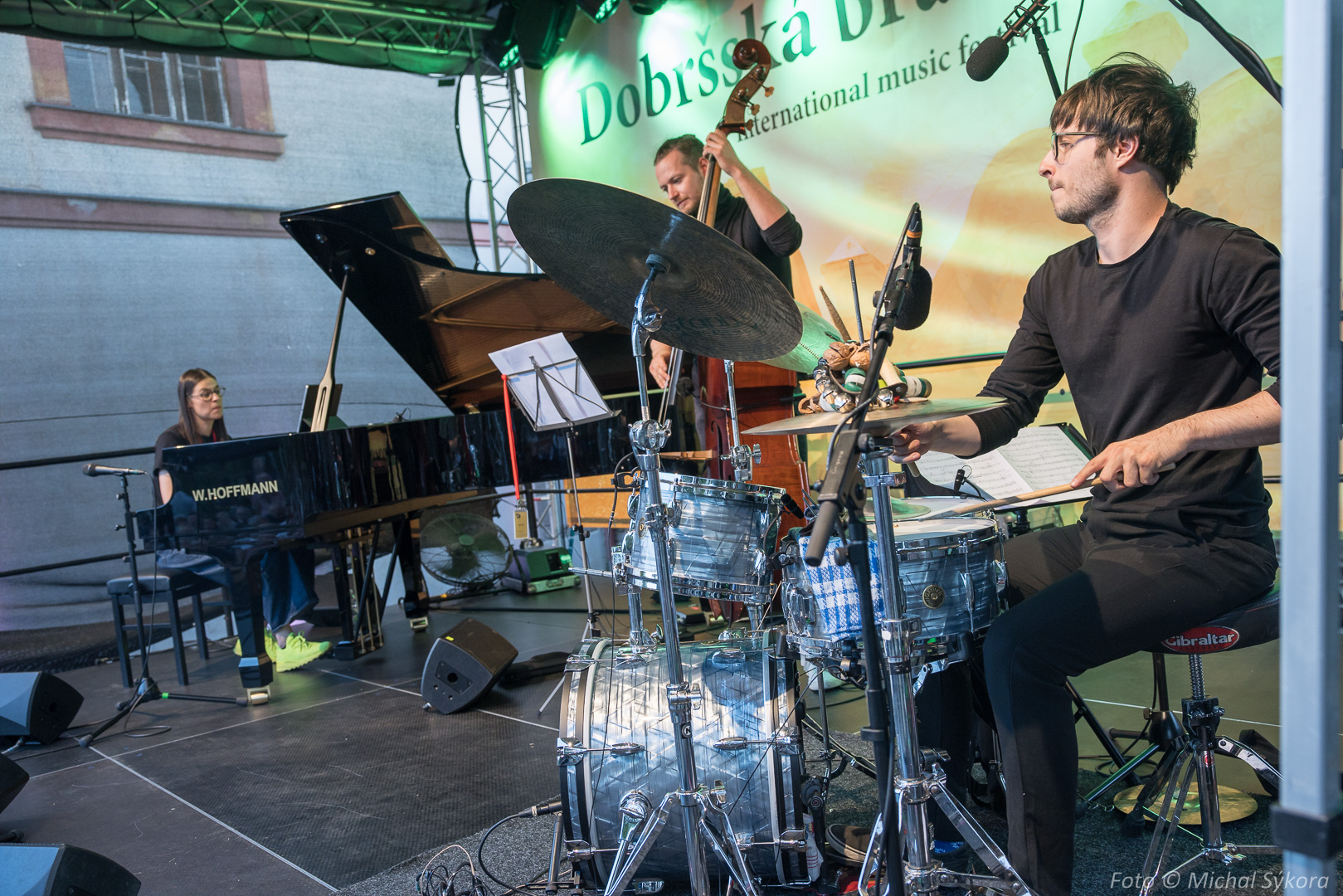
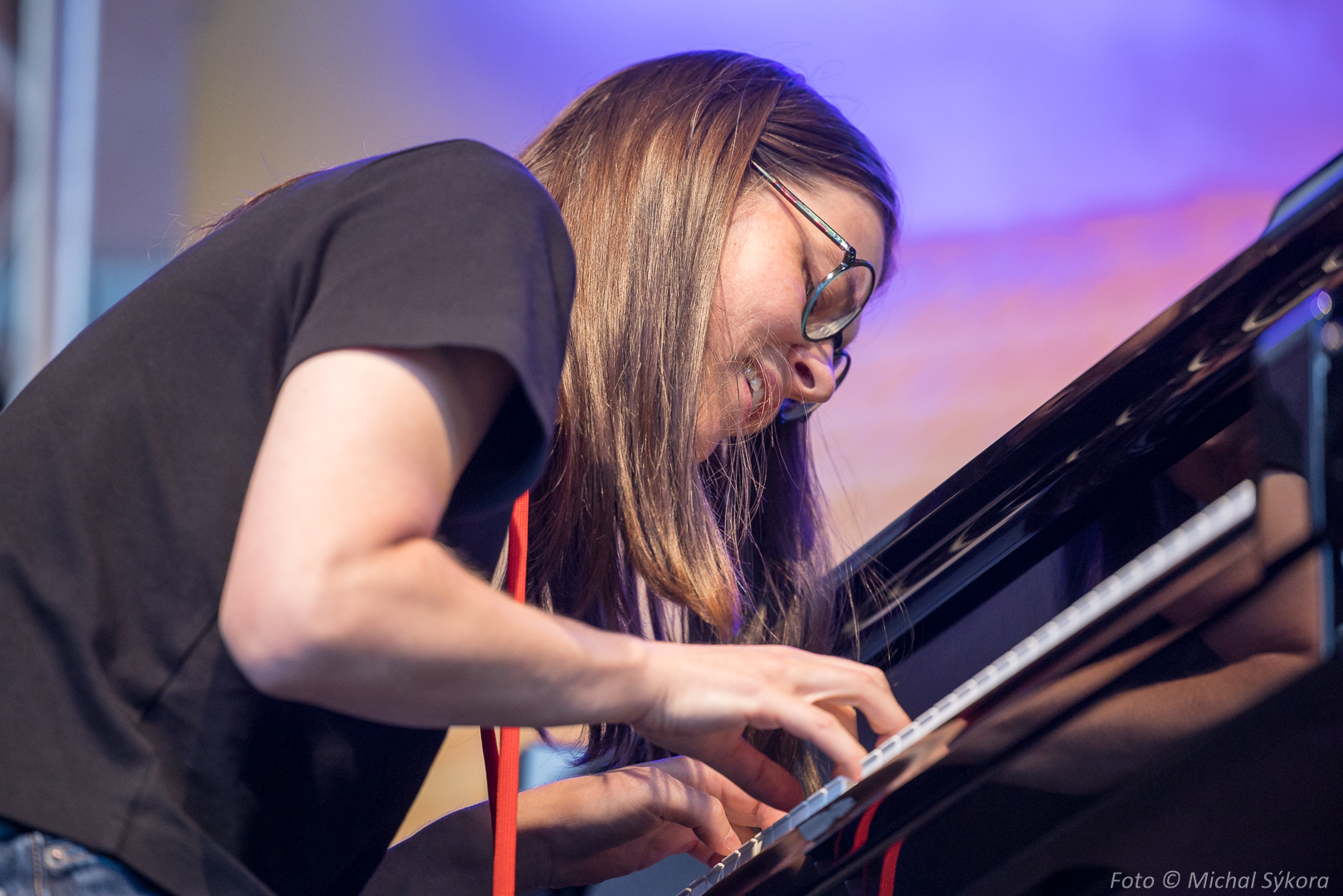
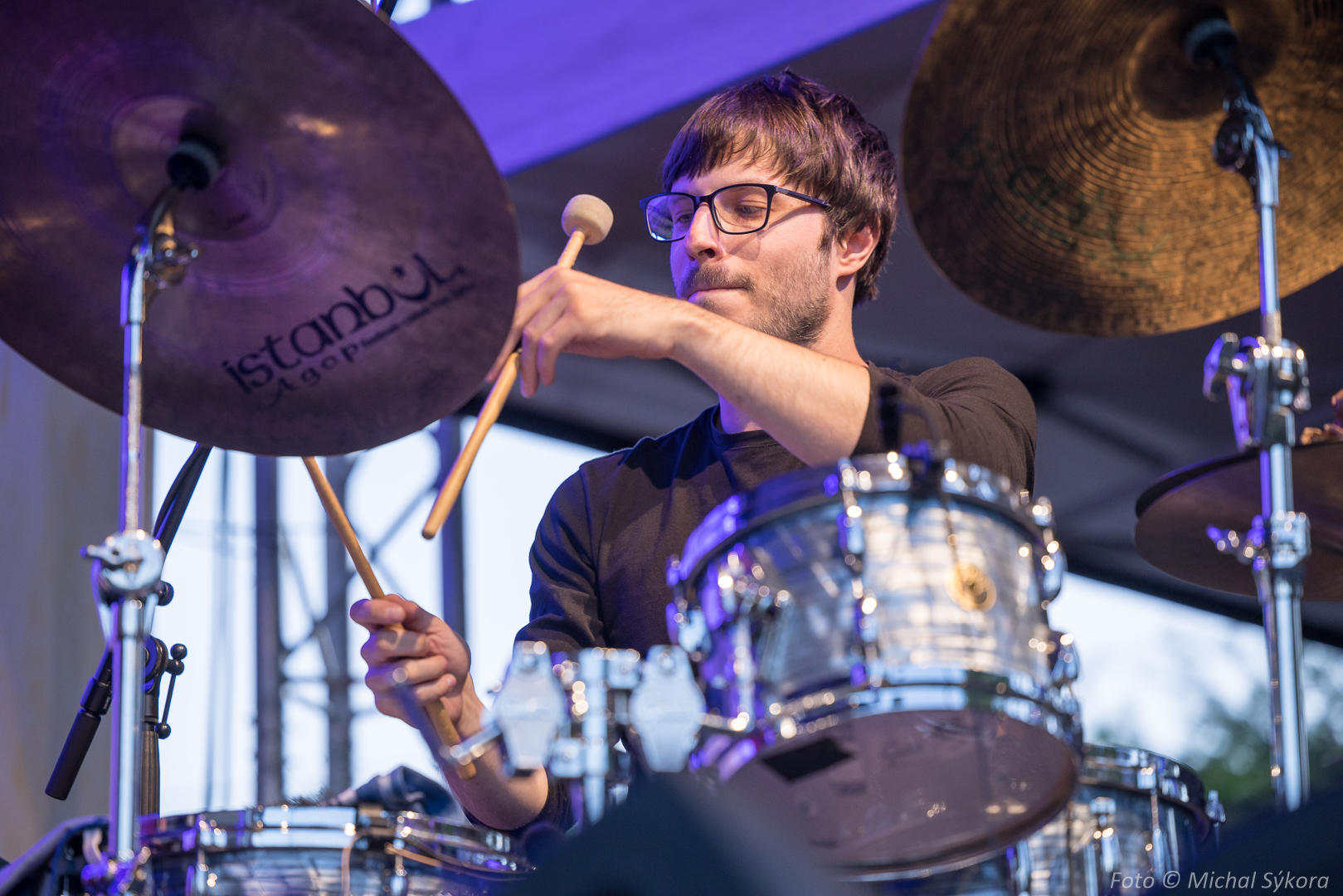
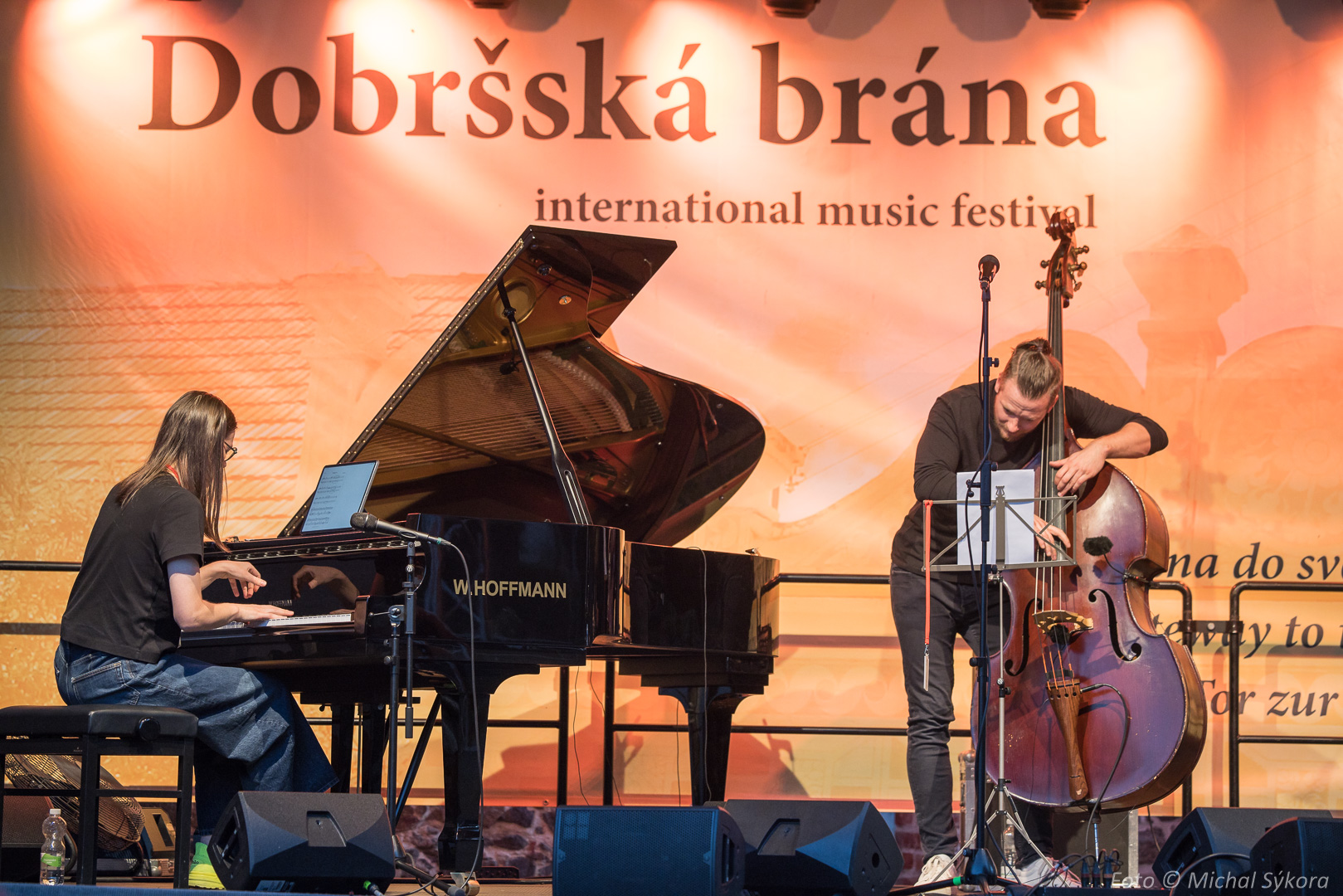
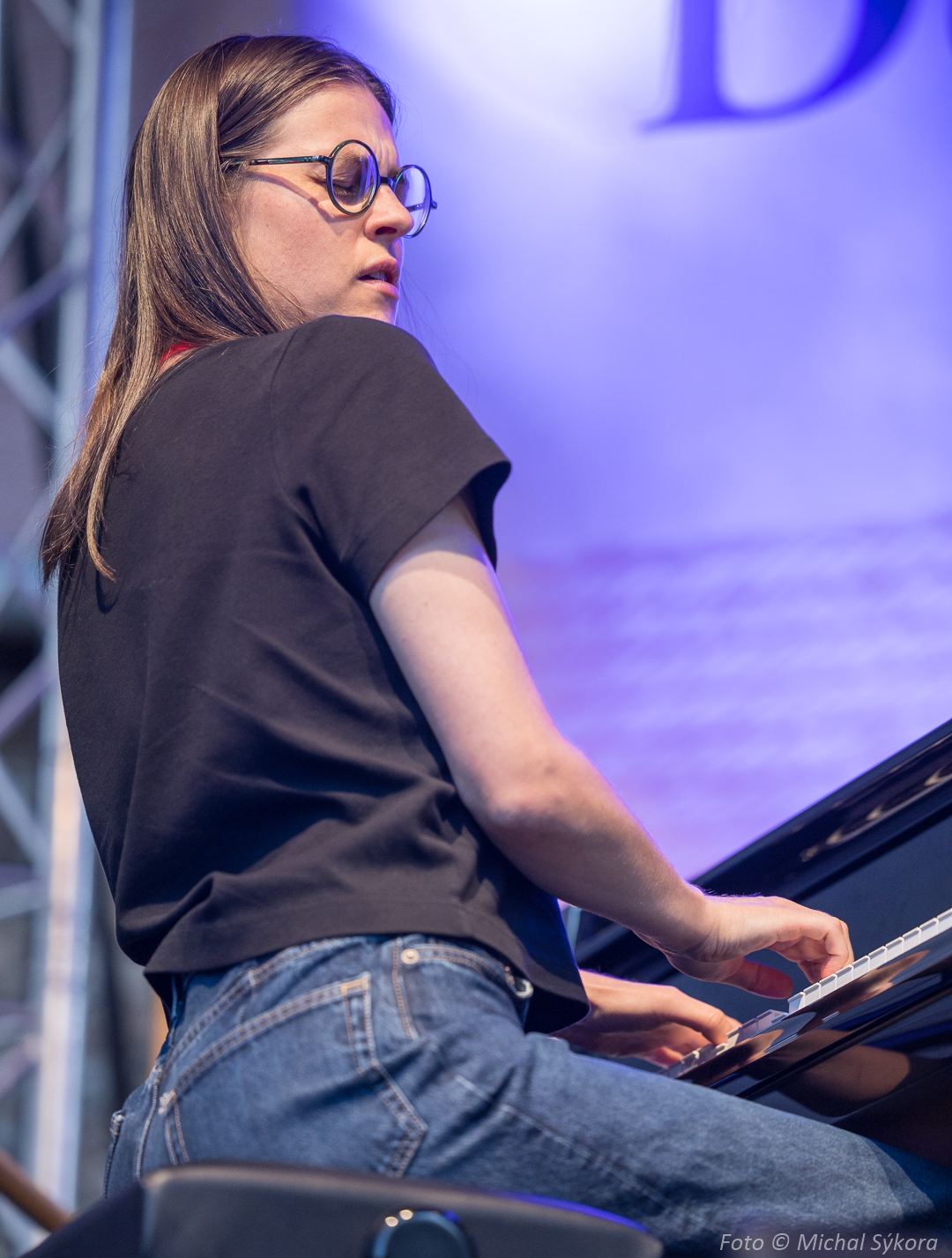
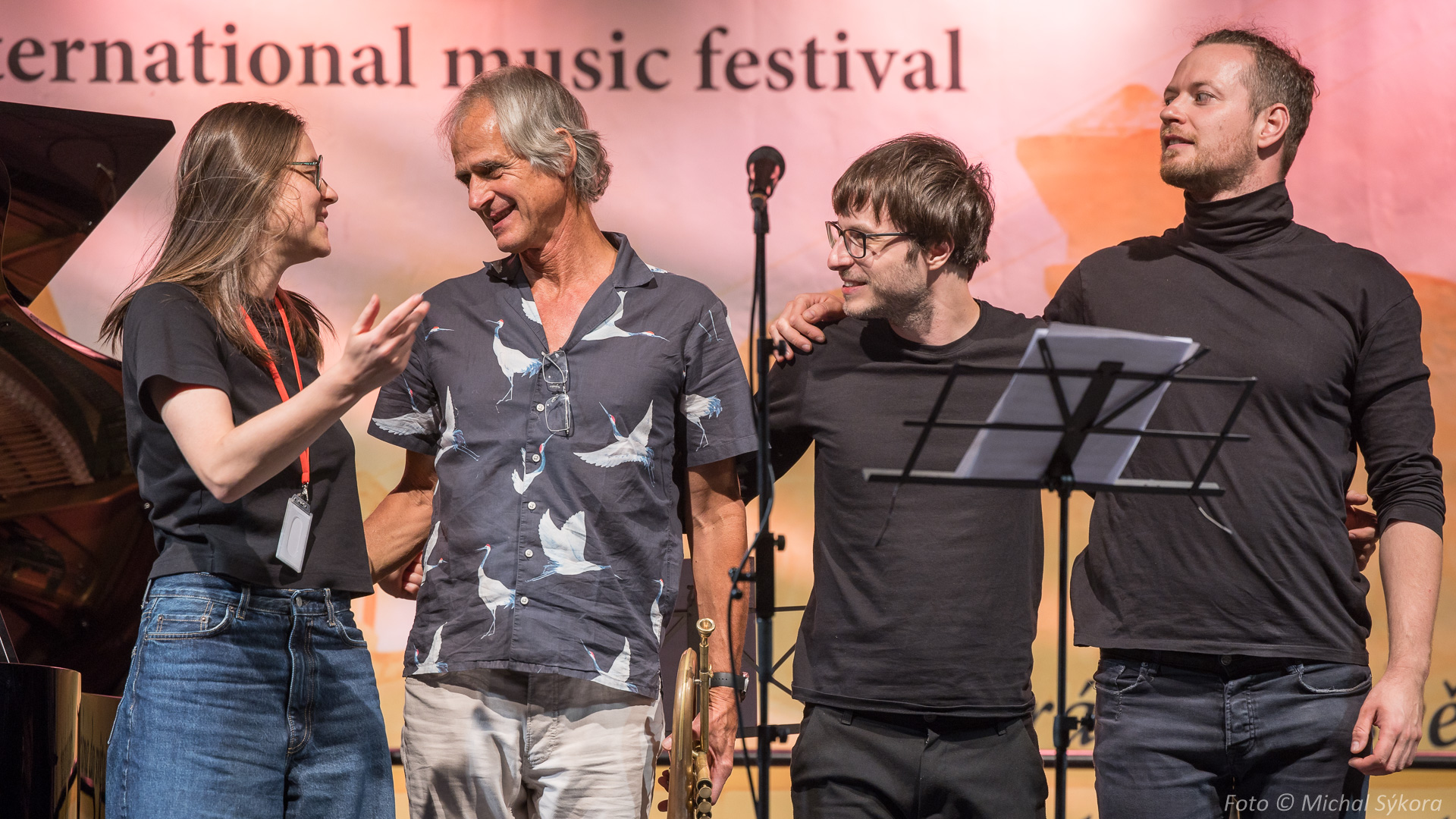
The final collaboration with Markus Stockhausen took the concert to an incredibly higher level, and it would be wonderful if this weren’t to remain merely a one-off festival collaboration. During the encore, once again performed as a trio, a personal piece dedicated to Nikol’s grandfather was played, bringing the successful performance to a close.

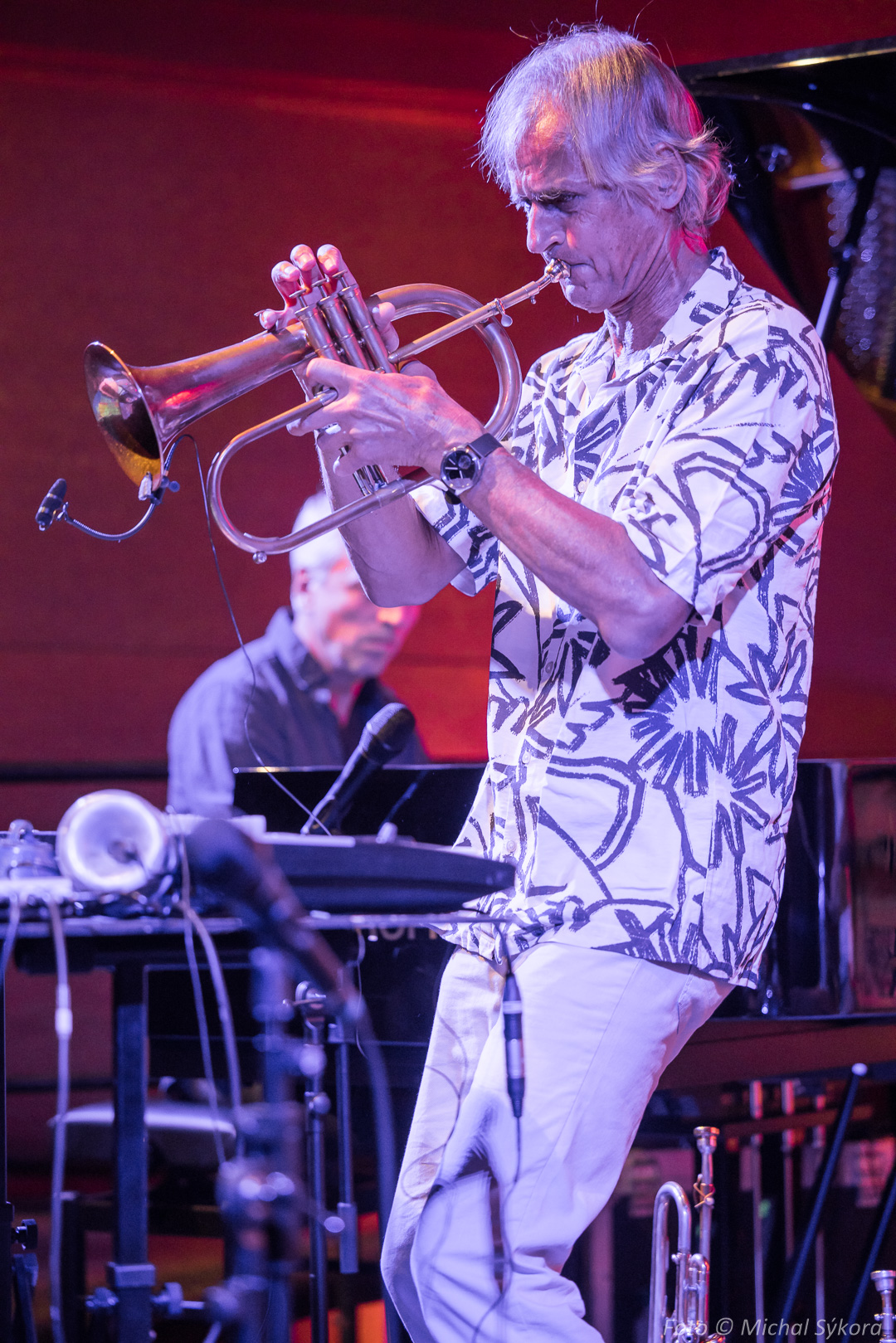
The Markus Stockhausen Group (Markus Stockhausen – trumpet, flugelhorn; Jeroen van Vliet – piano, synthesisers; Jörg Brinkmann – cello; Christian Thomé – drums) brought the entire festival to a close. It was a fitting celebration of the festival’s anniversary and a true highlight of the whole event. Indeed, four years ago Stockhausen’s ensemble delivered the very best concert we have seen in all the years we have been attending the festival, and this year’s performance lived up to those high expectations to the letter.
The quartet’s music stood out for its mesmerising sonic purity, compositional elegance and extraordinary lyrical charm. The central cornerstone was Stockhausen’s unmistakable tone – incredibly soft, resonant, velvety warm and crystal-clear. His masterful handling of breath, subtle dynamic nuances and the tonal possibilities of the trumpet bordered on perfection. The instrument literally sang in his hands, and every note carried a rare aesthetic and spiritual depth.
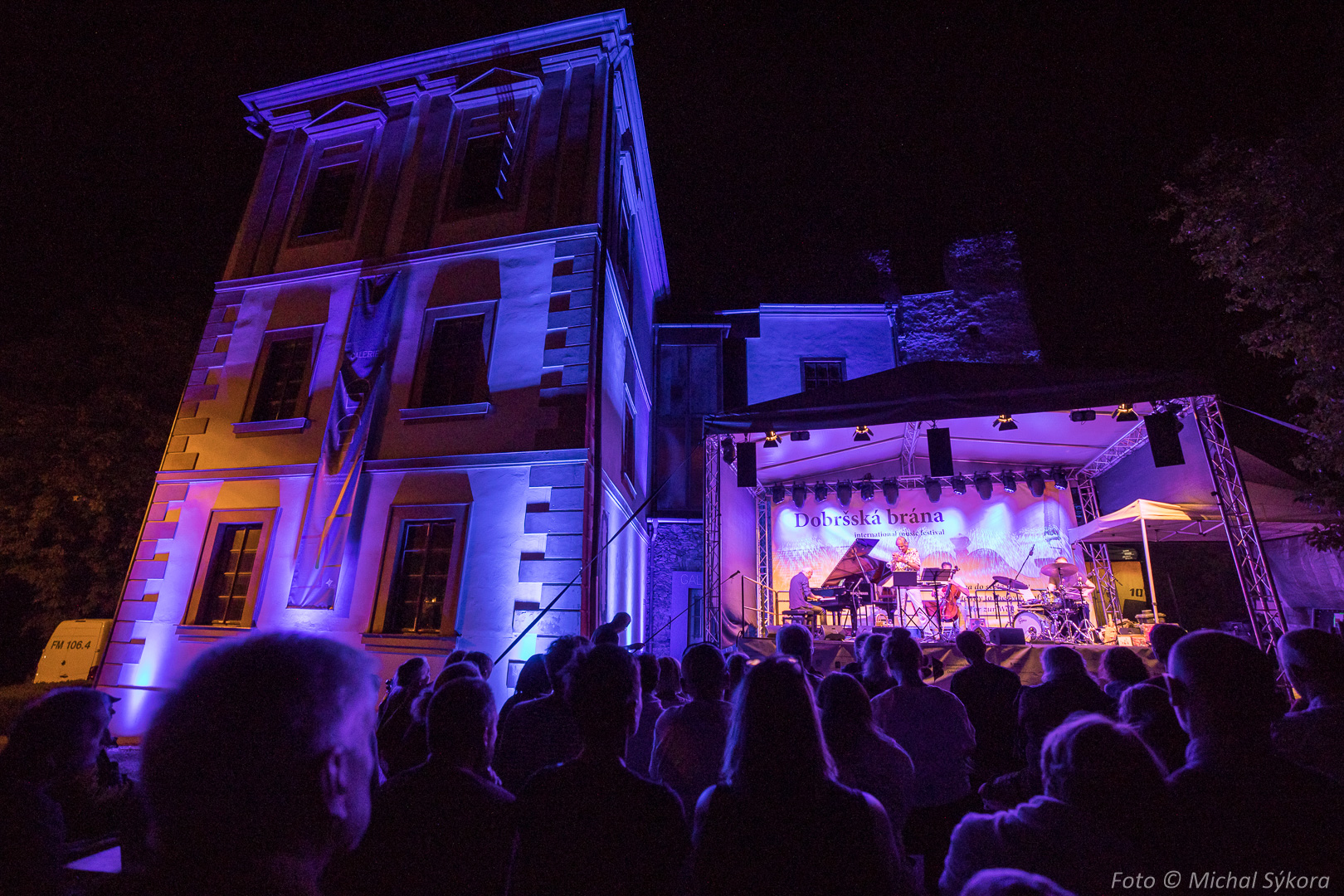
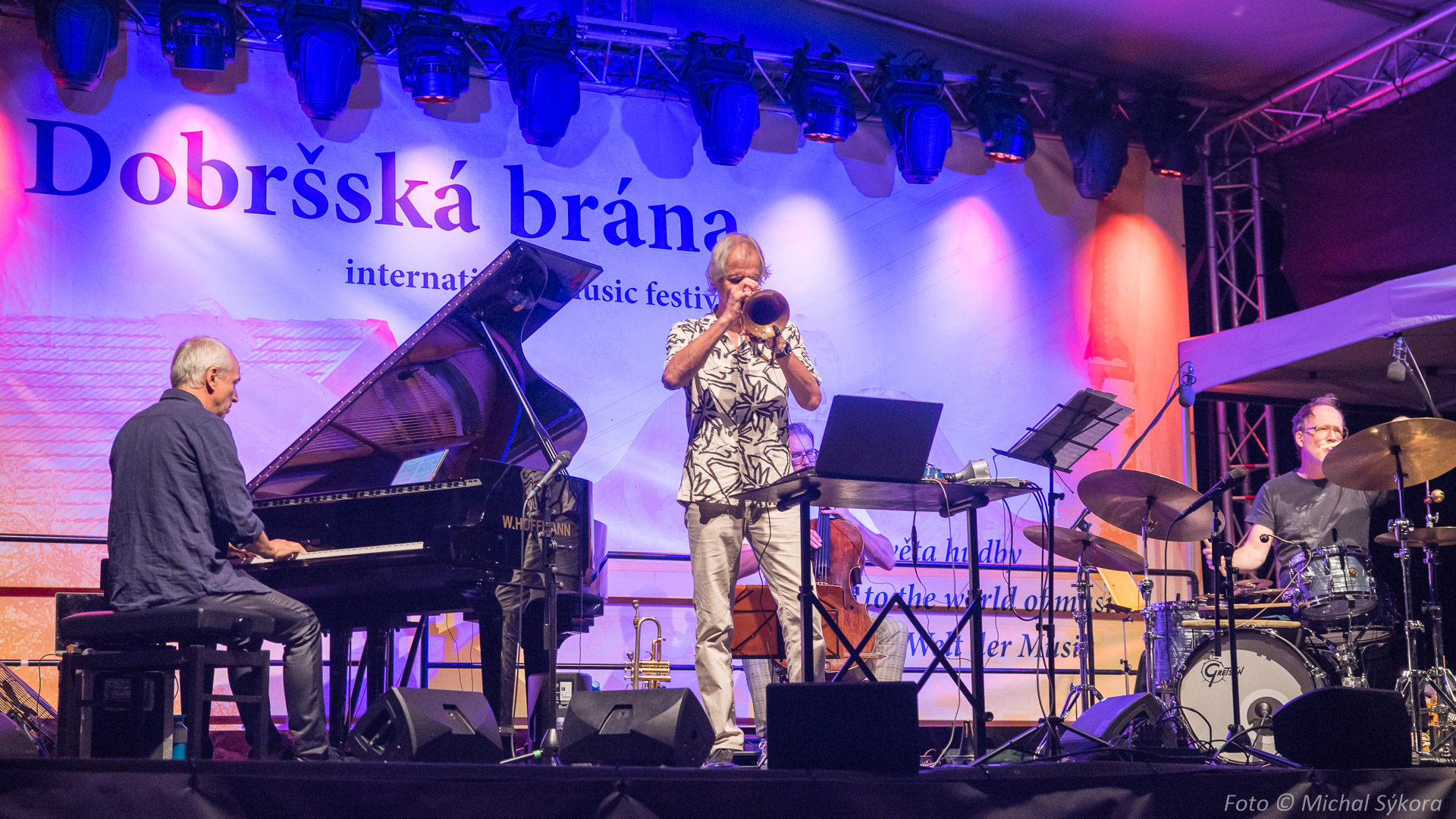
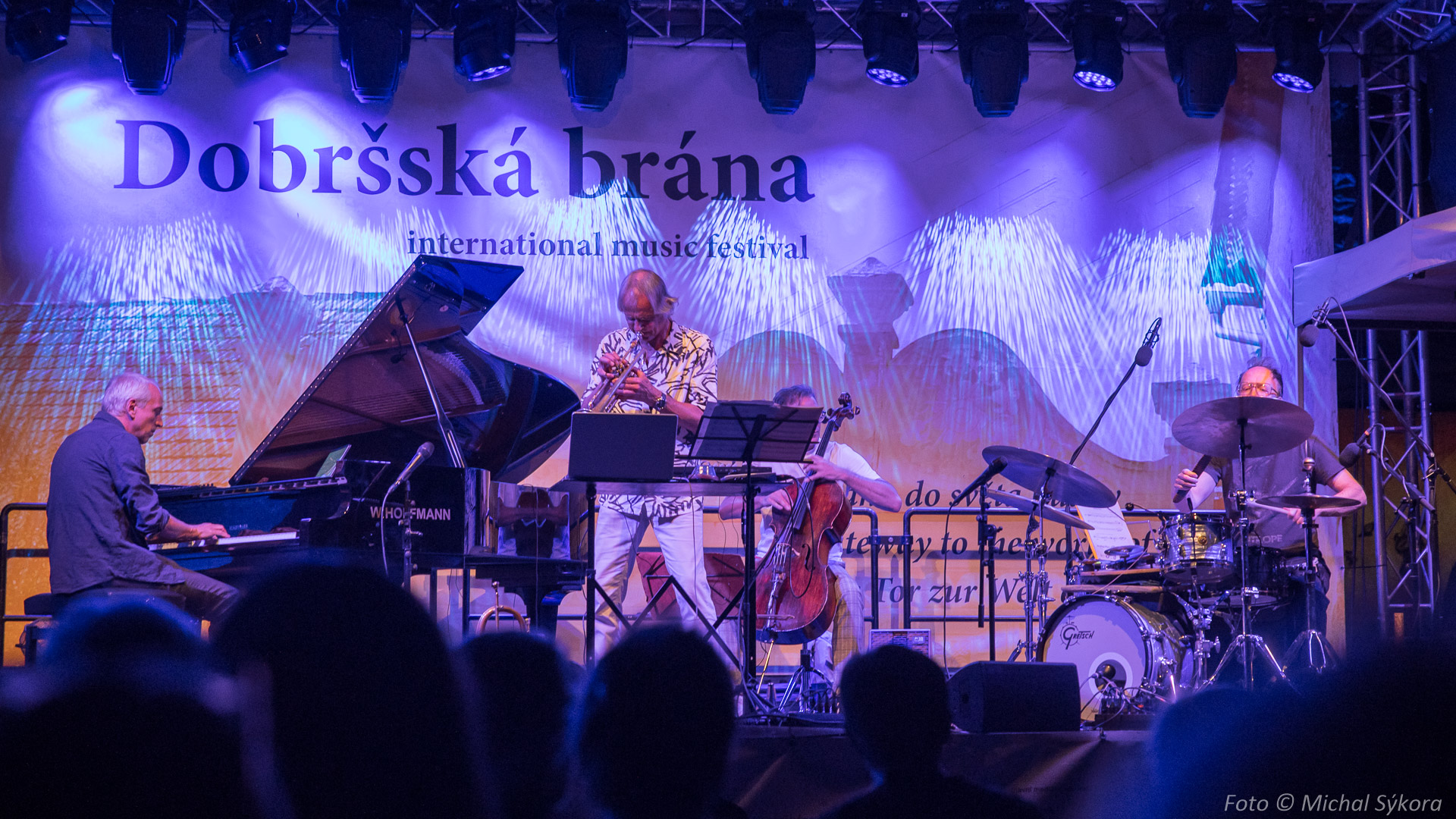
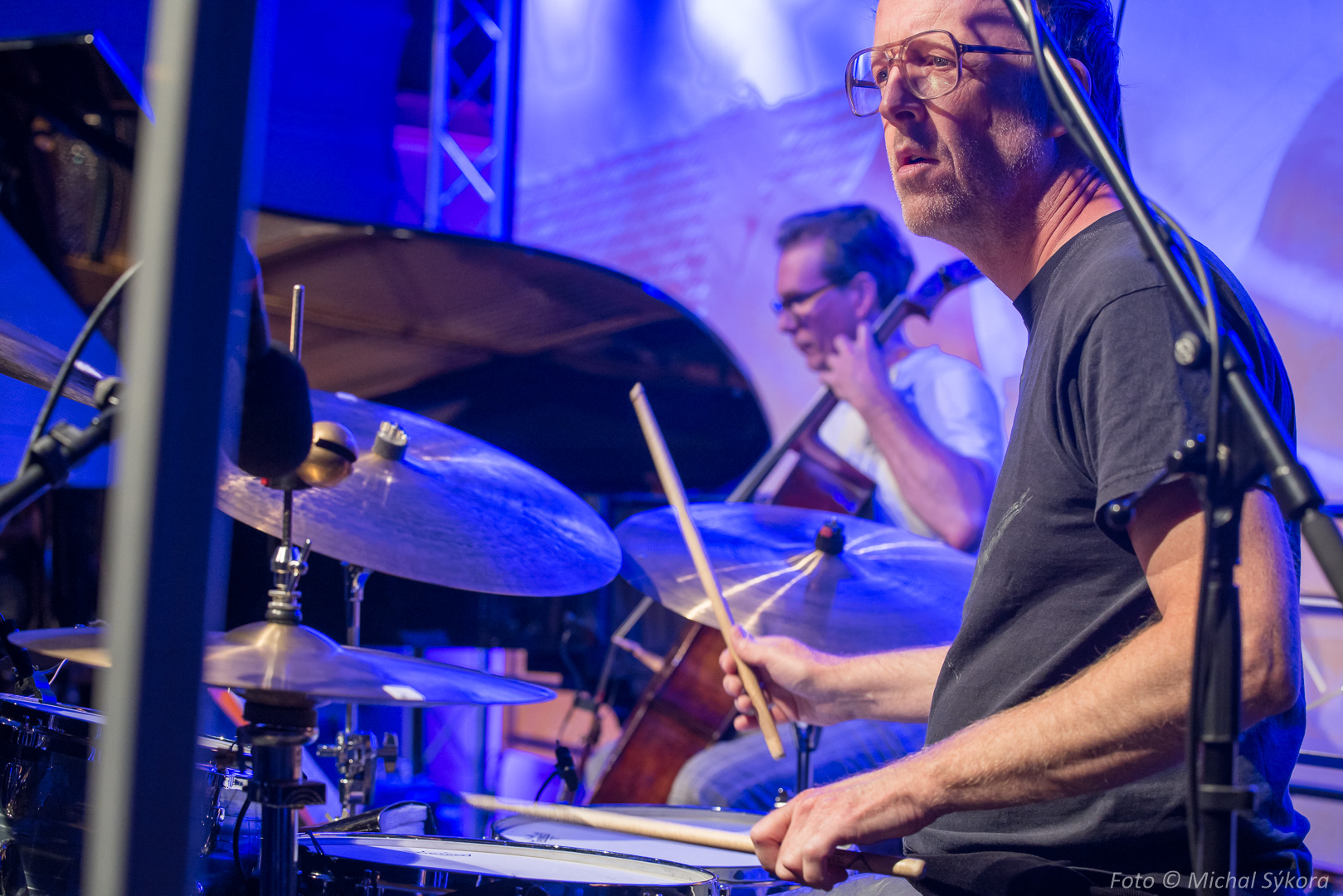
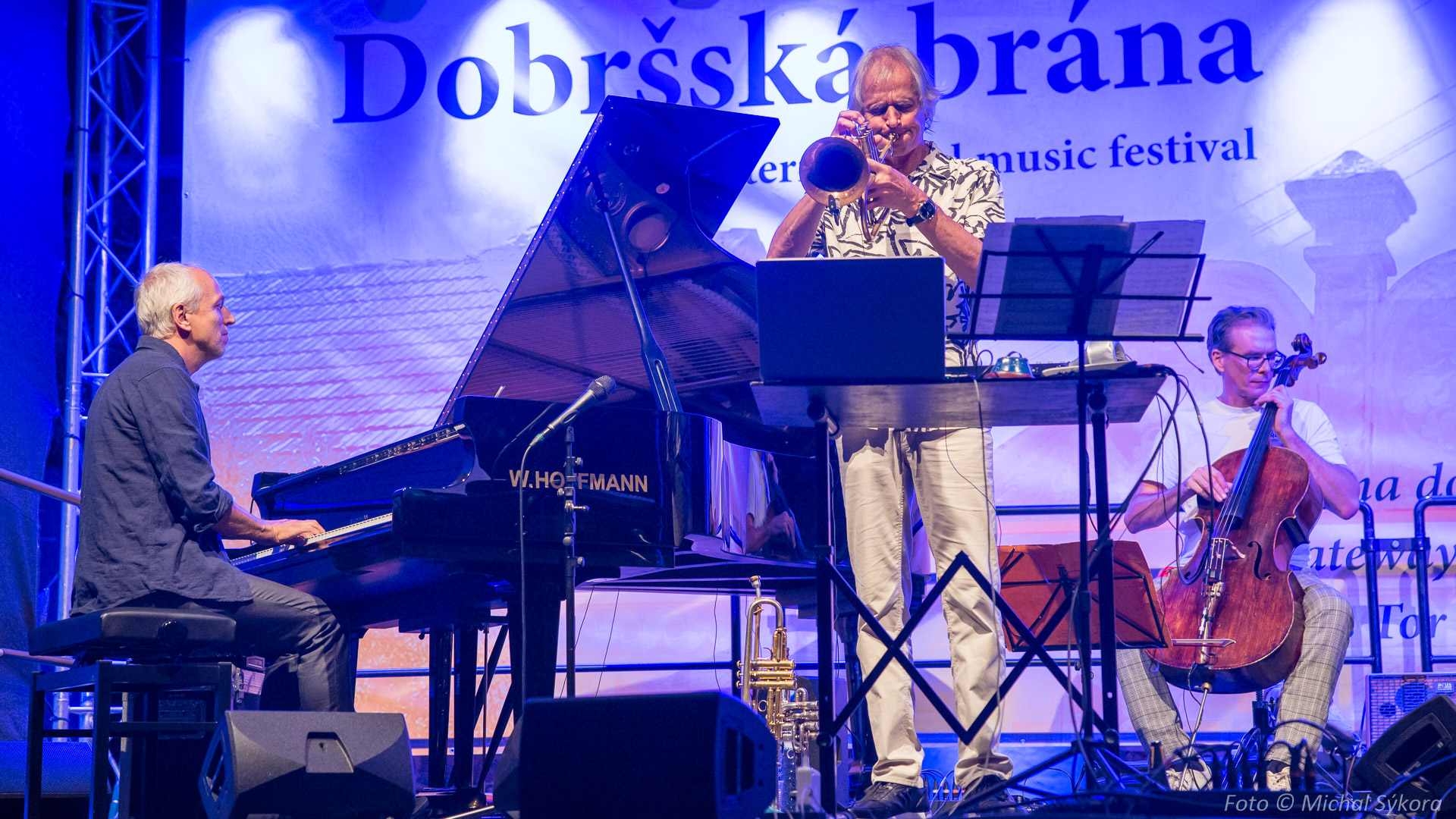
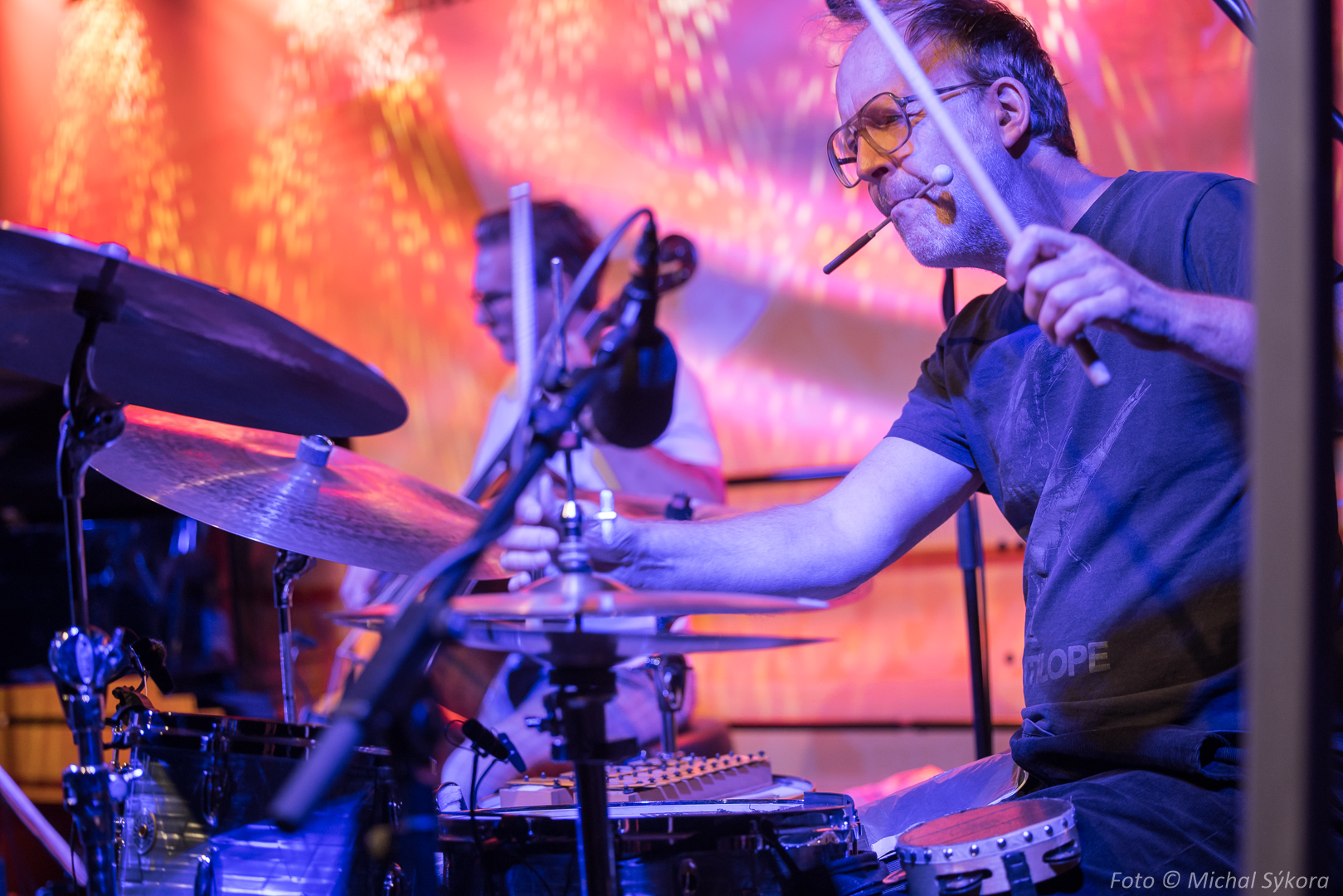
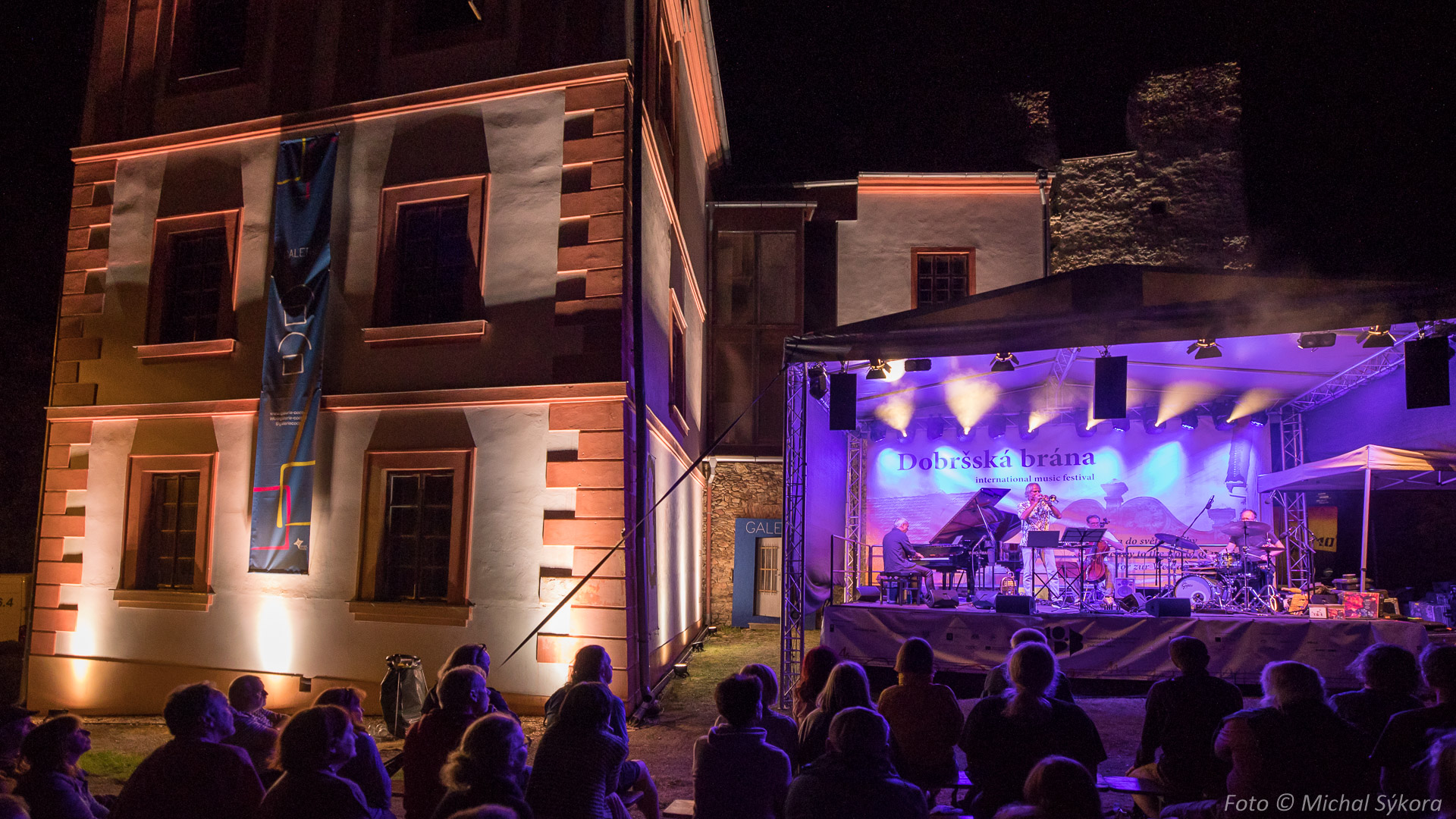
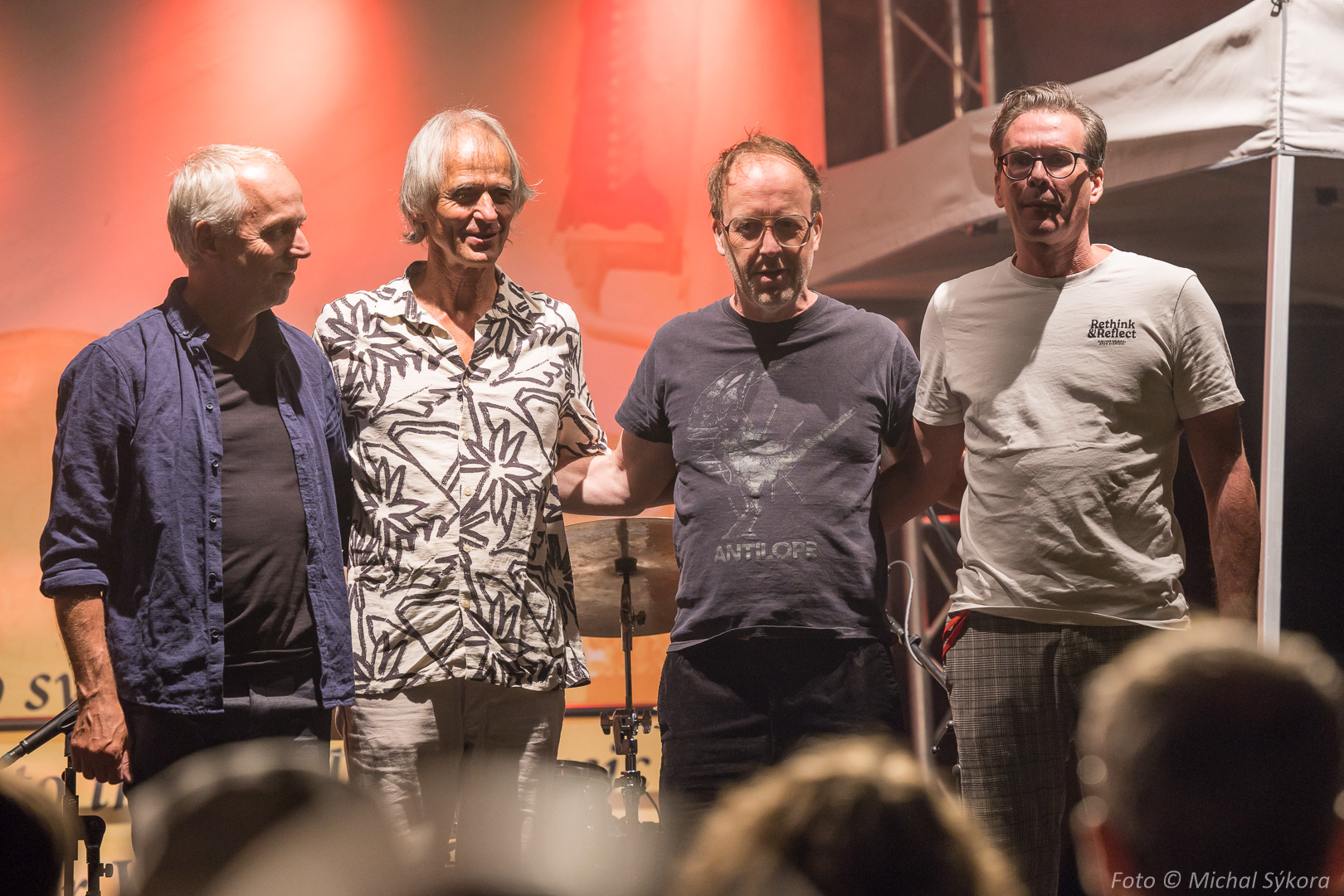
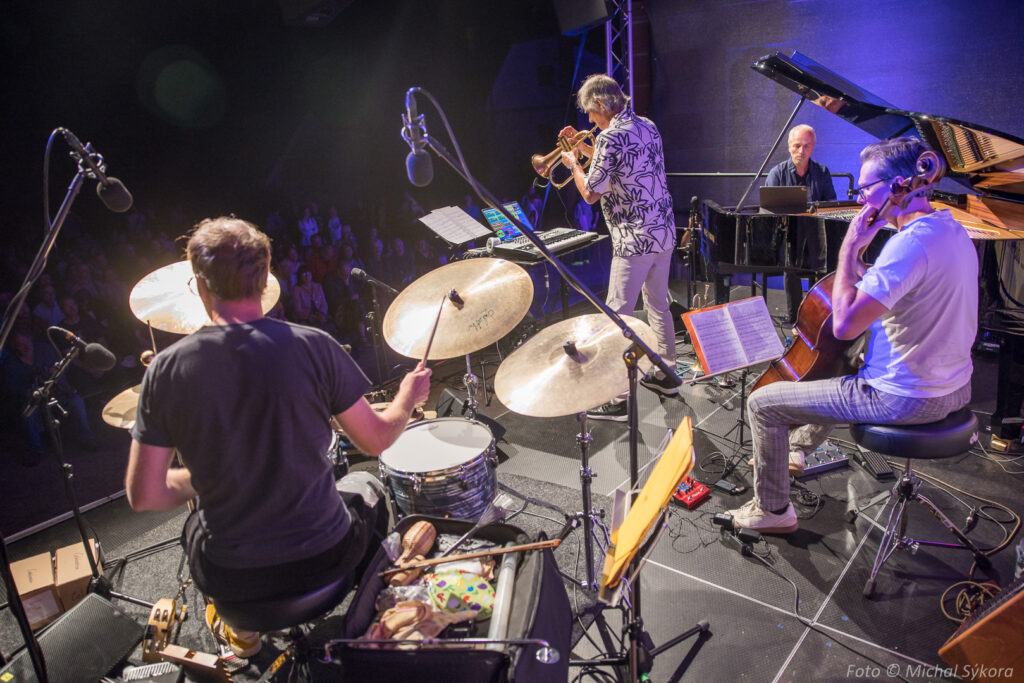
The band kicked off with Sunday Morning, which flowed seamlessly into the lovely Smile and the new track Rain No Play (during which our concentration was slightly disrupted by the neighbour’s dog, as is sometimes the case in Dobrš). Before performing Falling Stars, Markus spoke of his fascination with the universe, getting carried away as he spoke of billions of galaxies, and beautifully concluded his reflections with the idea that every moment is unique and precious. This idea was fully reflected in the performance itself – the delicate dialogue between the trumpet and Jörg Brinkmann’s melodious cello, Jeroen van Vliet’s sensitive passages and Christian Thomé’s subtle rhythmic texture created an almost otherworldly atmosphere.
Following the piece Better World, with its striking piano introduction, they moved on to the ‘stellar’ Nebula, the classic Flow and the rousing finale En Cœur. The encore, There’s Always Hope, then brought the entire festival to a close in a crystal-clear, cathartic atmosphere, with warm wishes for all the best for Europe.

What a splendid finale – what more can one say! We look forward to the festival returning in full force in 2028 to celebrate České Budějovice as a European Capital of Culture.


Štítky