



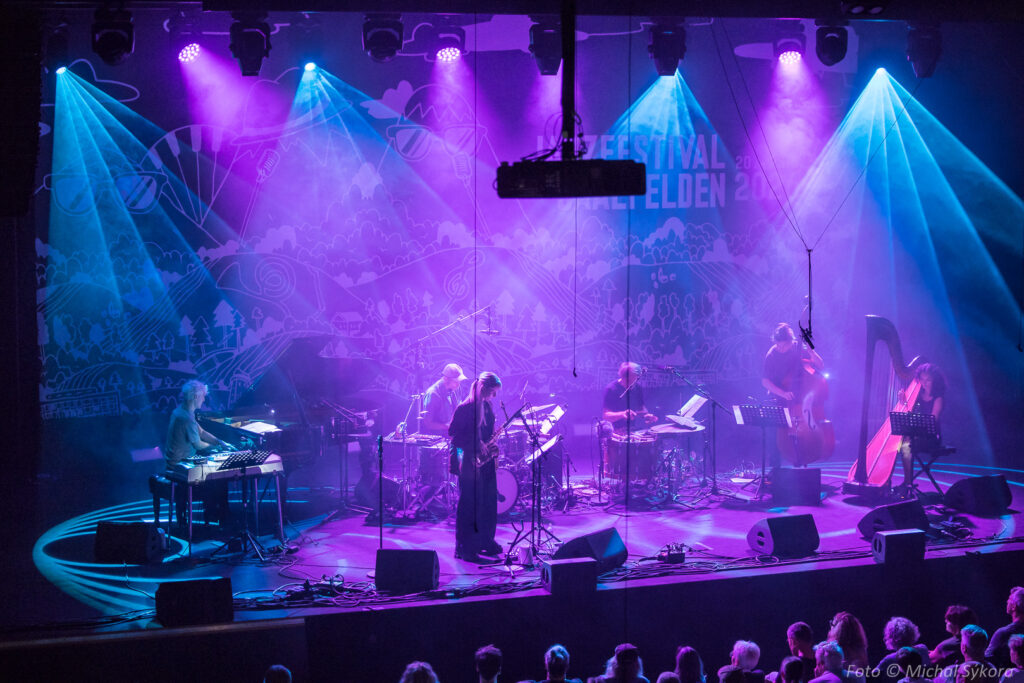
The first few days in Saalfelden – the Austrian Mecca of free jazz improvisation and experimentation – delivered exactly what you’d expect from this renowned festival: genre-bending, a willingness to experiment, and concerts that either sweep you away or leave you perplexed. Thursday was just a warm-up evening, which welcomed us, for the time being, to the Nexus hall and the Otto Gruber Halle. Performances on the festival’s main stage didn’t begin until Friday…
Lava Quartet
The official programme description promised a dynamic sound project built on organic musical material and improvisation, which the quartet – comprising Almut Kühne (vocals), Jordina Millà (piano), Gonçalo Almeida (double bass) and Wieland Möller (drums, percussion, gongs) – undoubtedly delivered. From the outset, the entire performance had a clear concept – it was meant to sound like a slow build-up of pressure just before a volcanic eruption.
Jordina pounded away at the stripped-back piano, Wieland played a massive gong and an unusual array of percussion instruments, Gonçalo pushed his double bass to the limits using extended techniques – perhaps the most interesting moment was when he placed a Tibetan singing bowl on the bridge of the instrument and made it resonate with his bow – and Almut used her voice purely as a musical instrument.
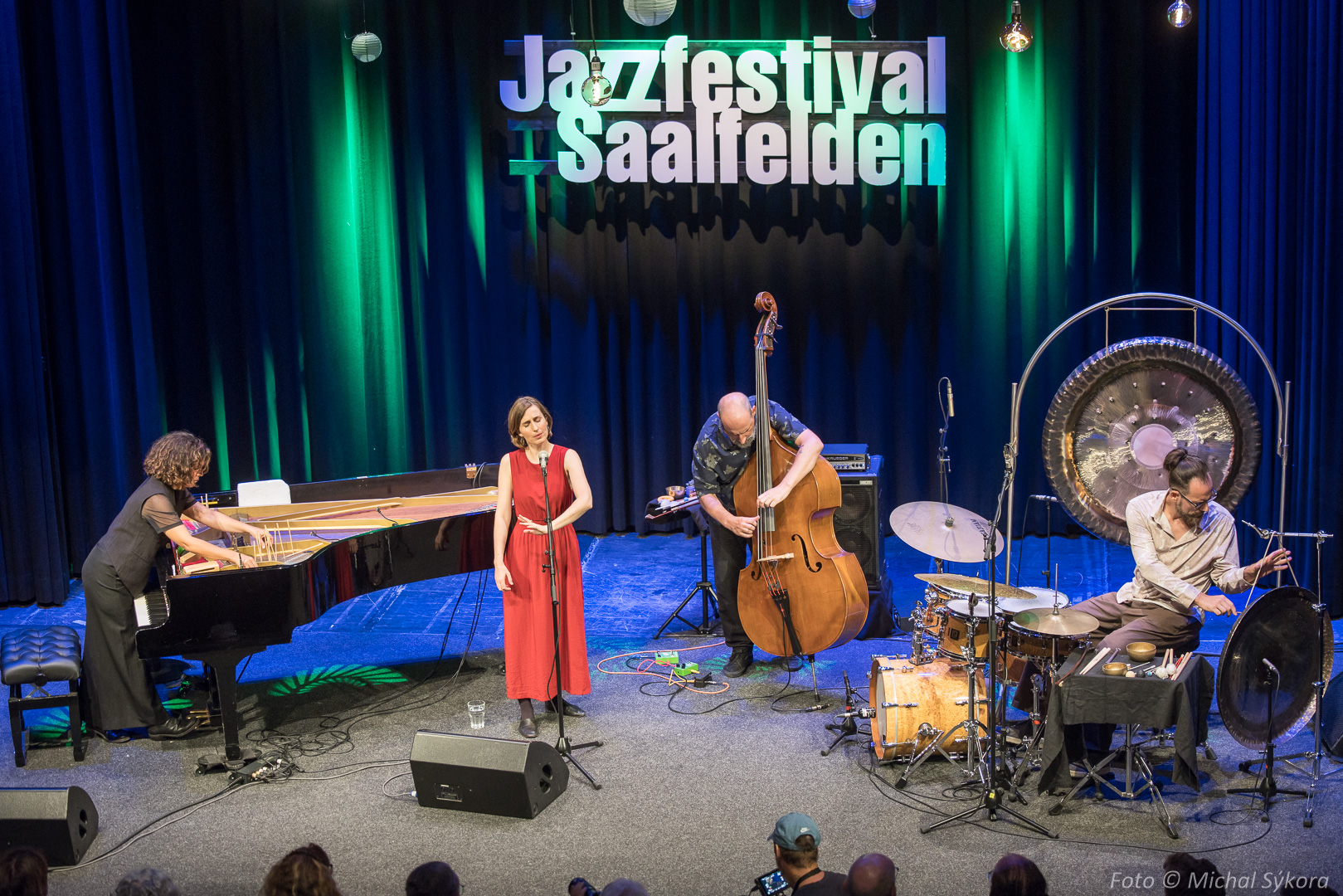
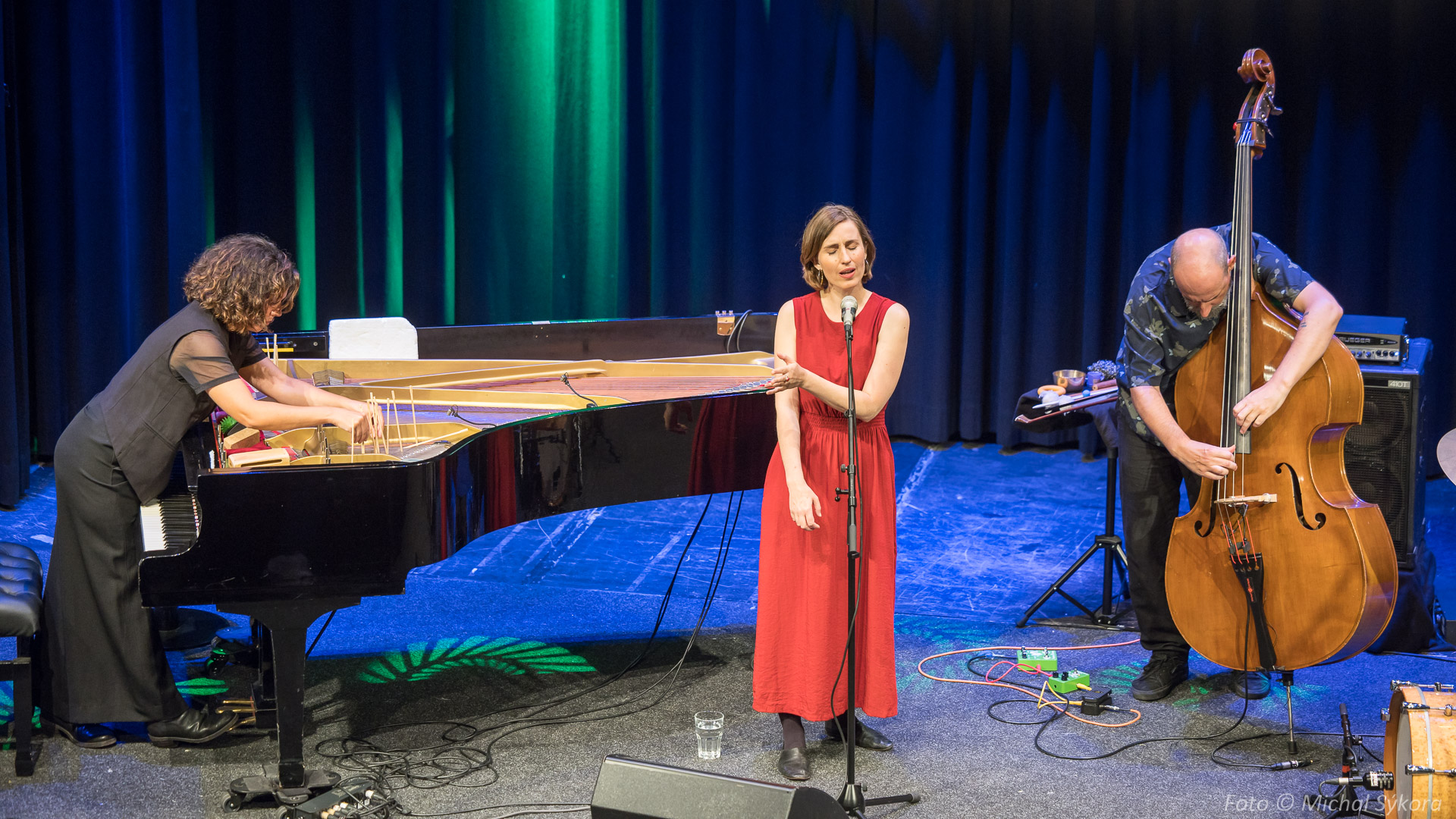
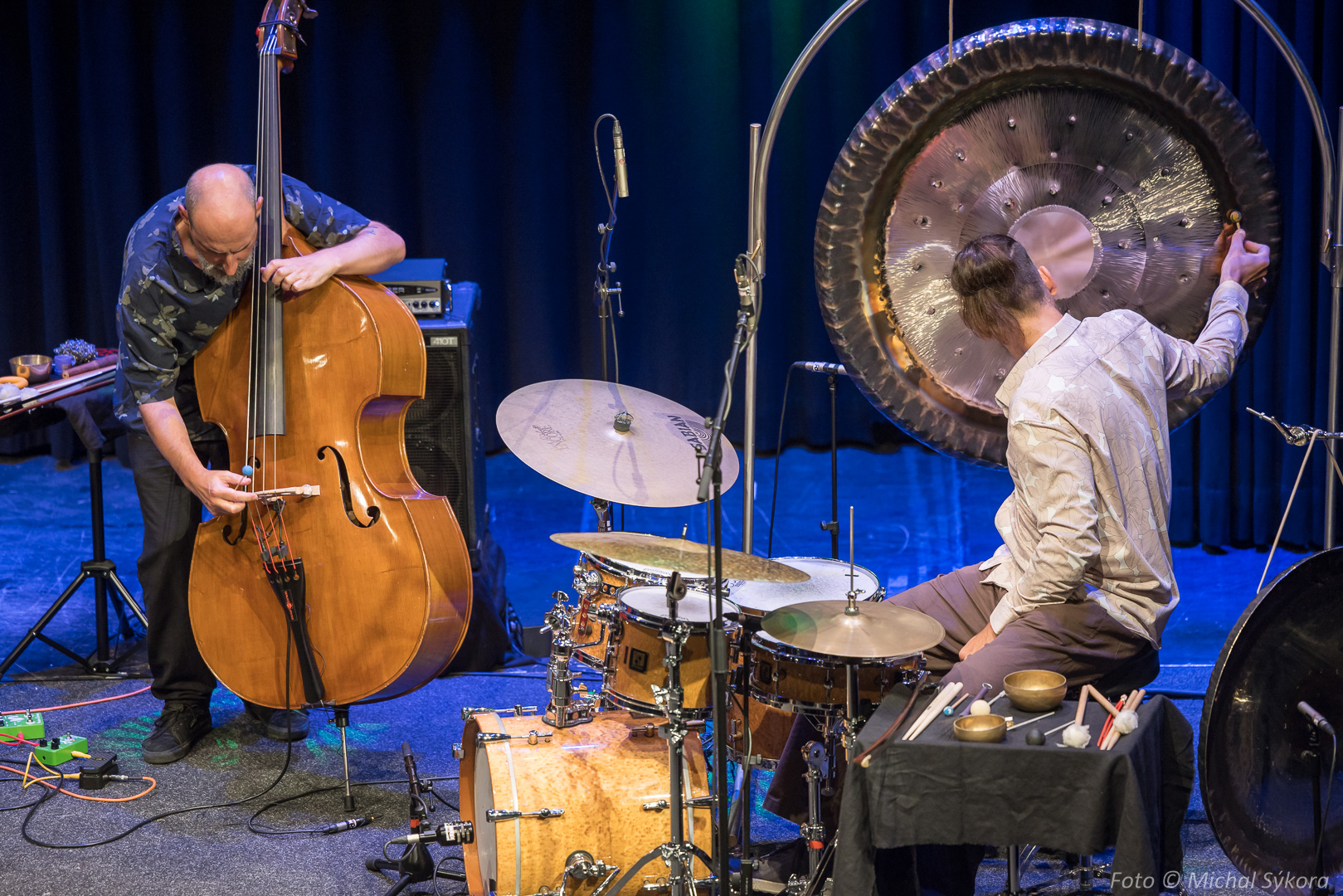
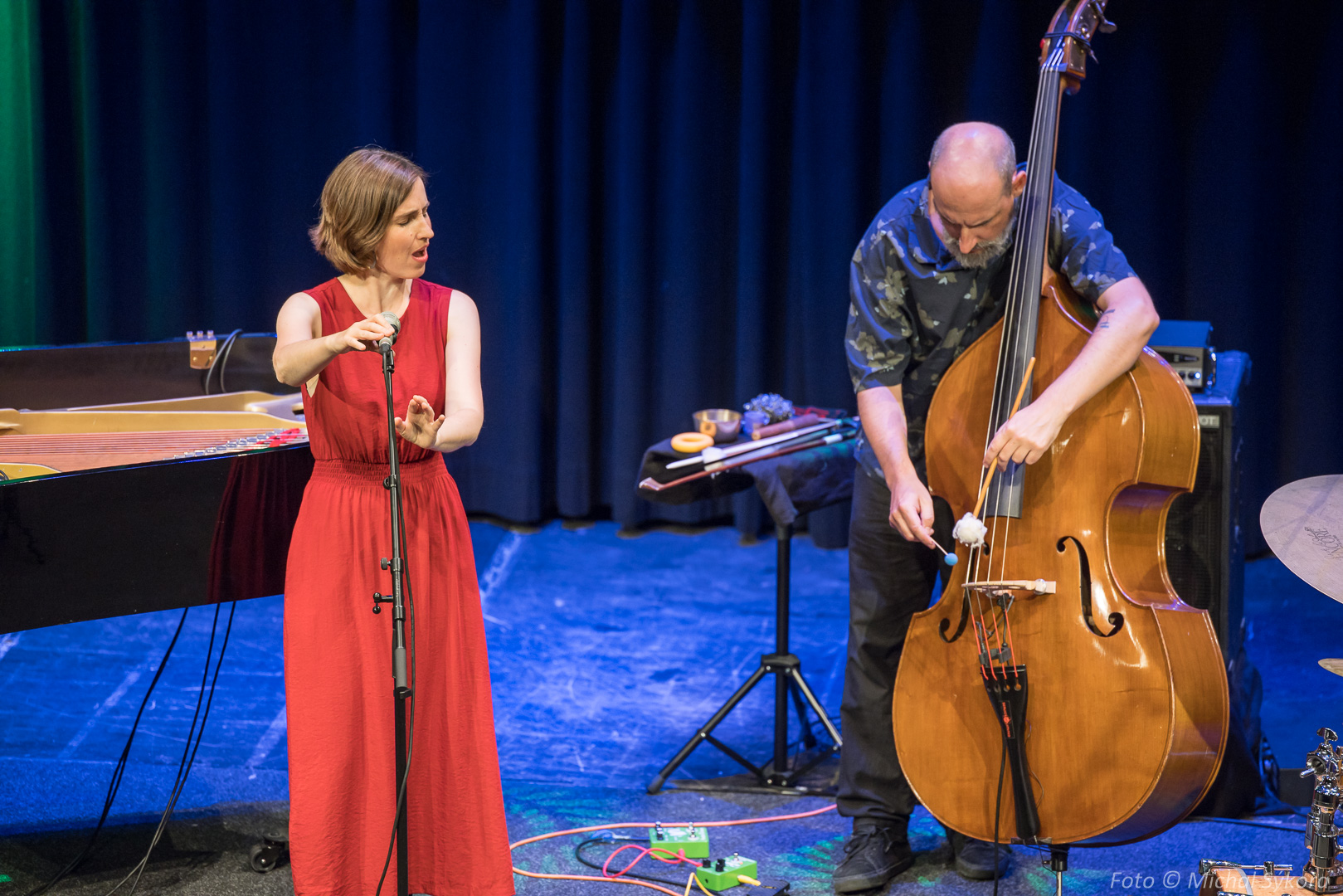
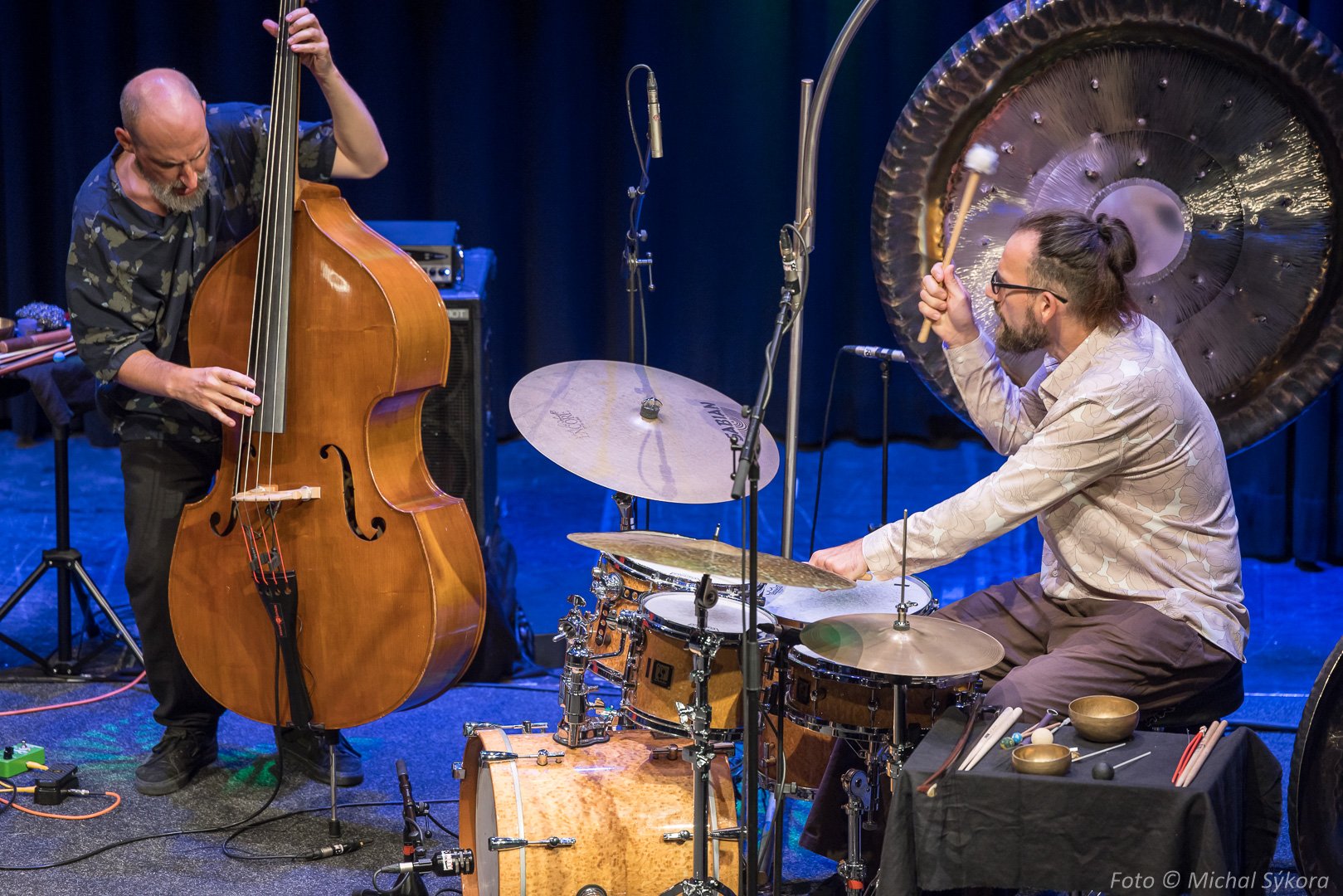
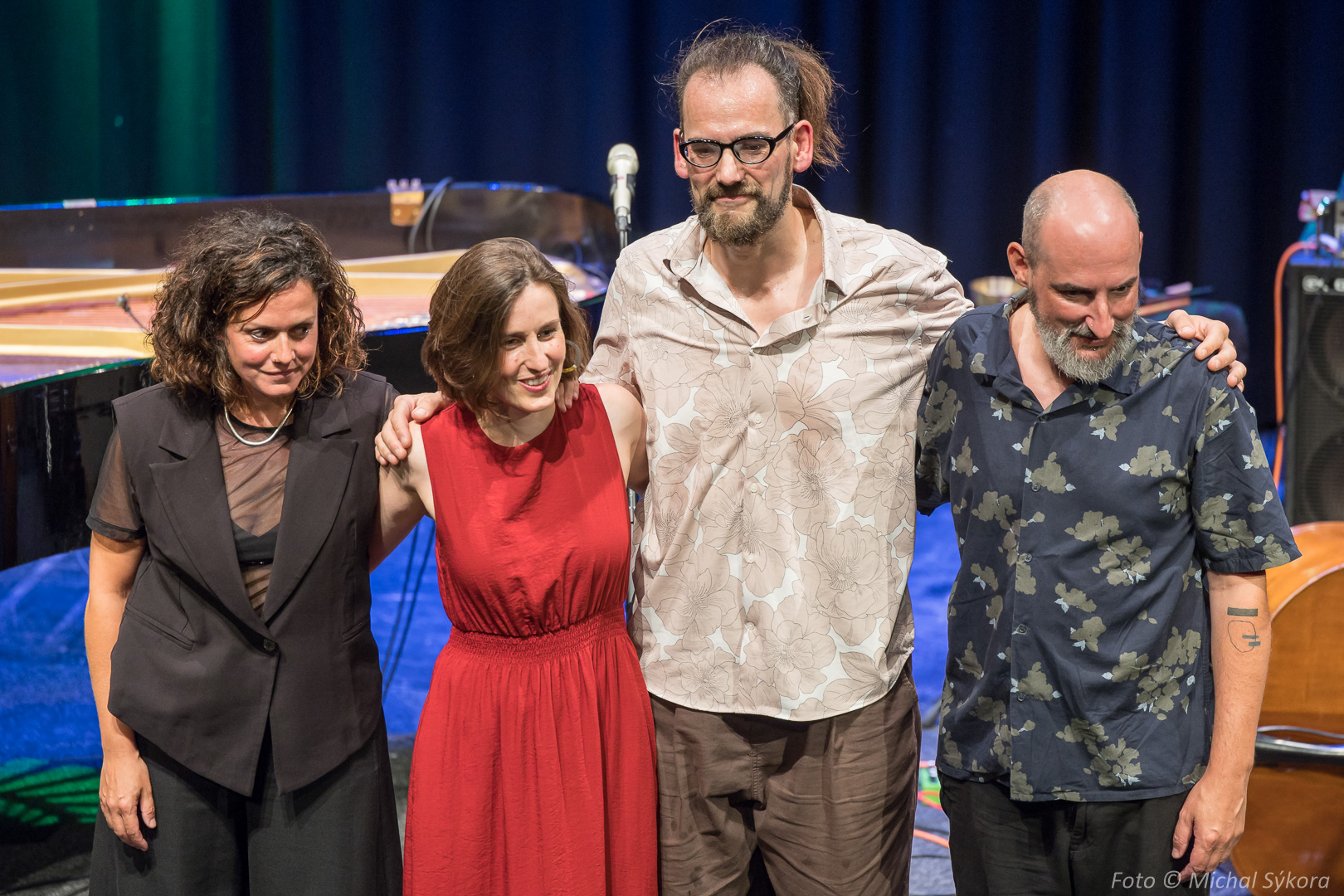
For a long time, however, it seemed at Nexus as though we were simply waiting endlessly for an eruption that never quite arrived. And lo and behold, after twenty-five minutes of tension, the volcano finally awoke, began spewing ash, and an incredibly intense, roughly five-minute-long lava eruption ensued. I really didn’t envy the piano tuners at that moment. Before the end of the set, they treated us to one more minor eruption, and the whole 45 minutes flew by quite quickly – in the end, it was just right.

Mel*E
The Viennese trio Mel*E – comprising keyboardist Viola Hammer, bassist Judith Ferstl and pioneering drummer Judith Schwarz – took to the stage at the Otto Gruber Halle with the ambition of blending club culture, synthetic grit and free improvisation. The band’s name, referring to the English term for a wild brawl or close-quarters combat, promised an intense clash. The band members were undoubtedly stylish on stage.
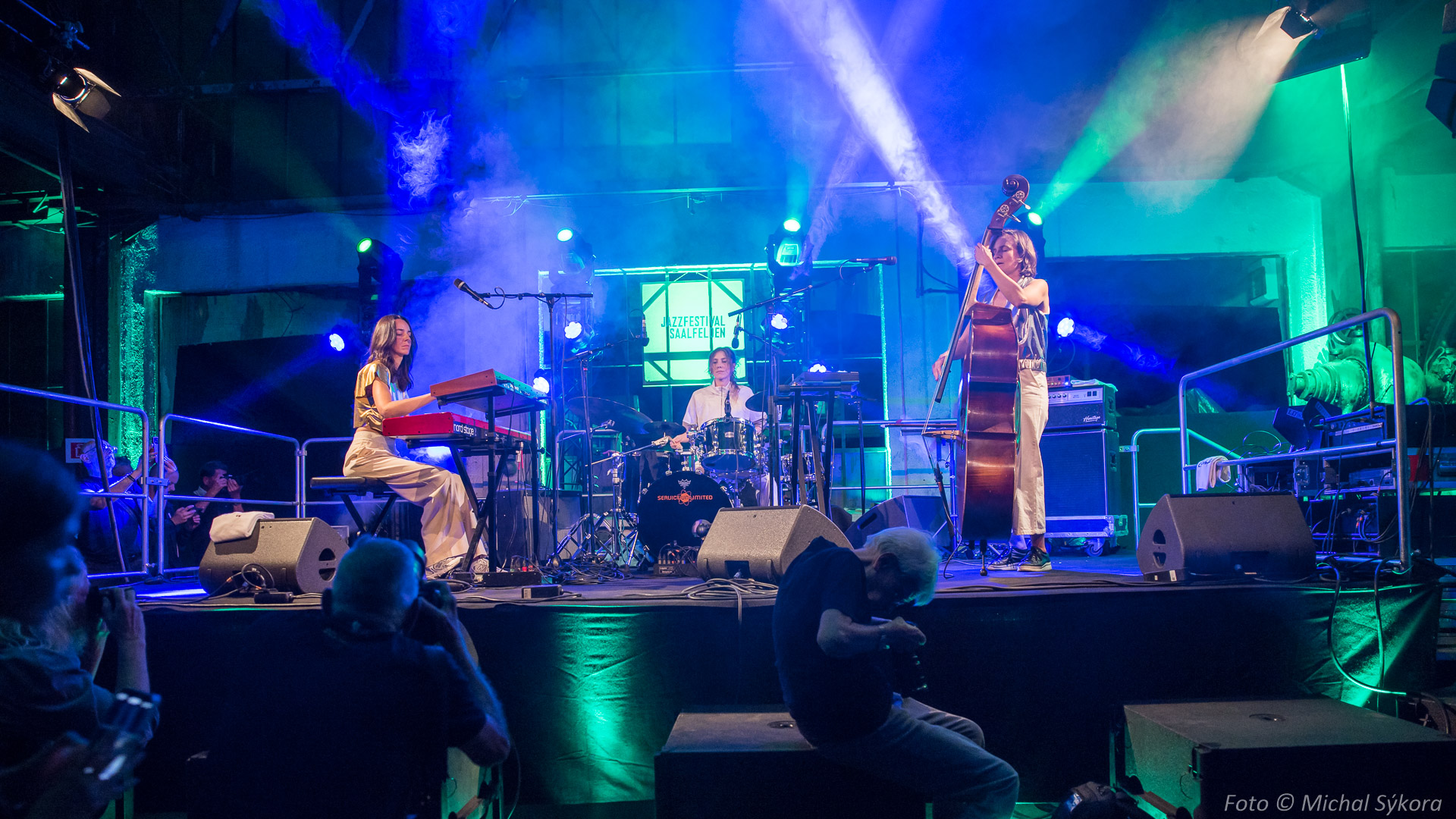
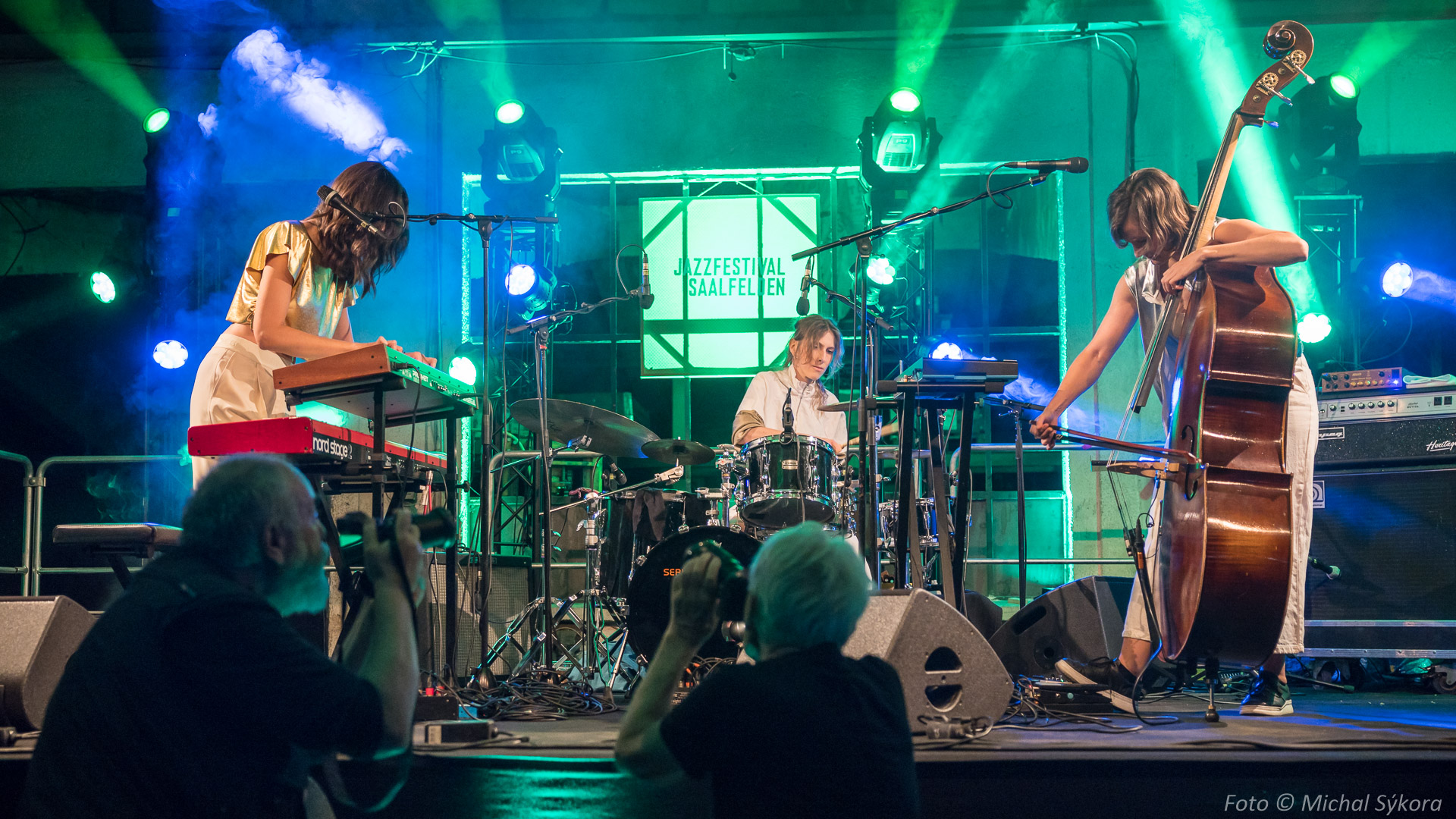
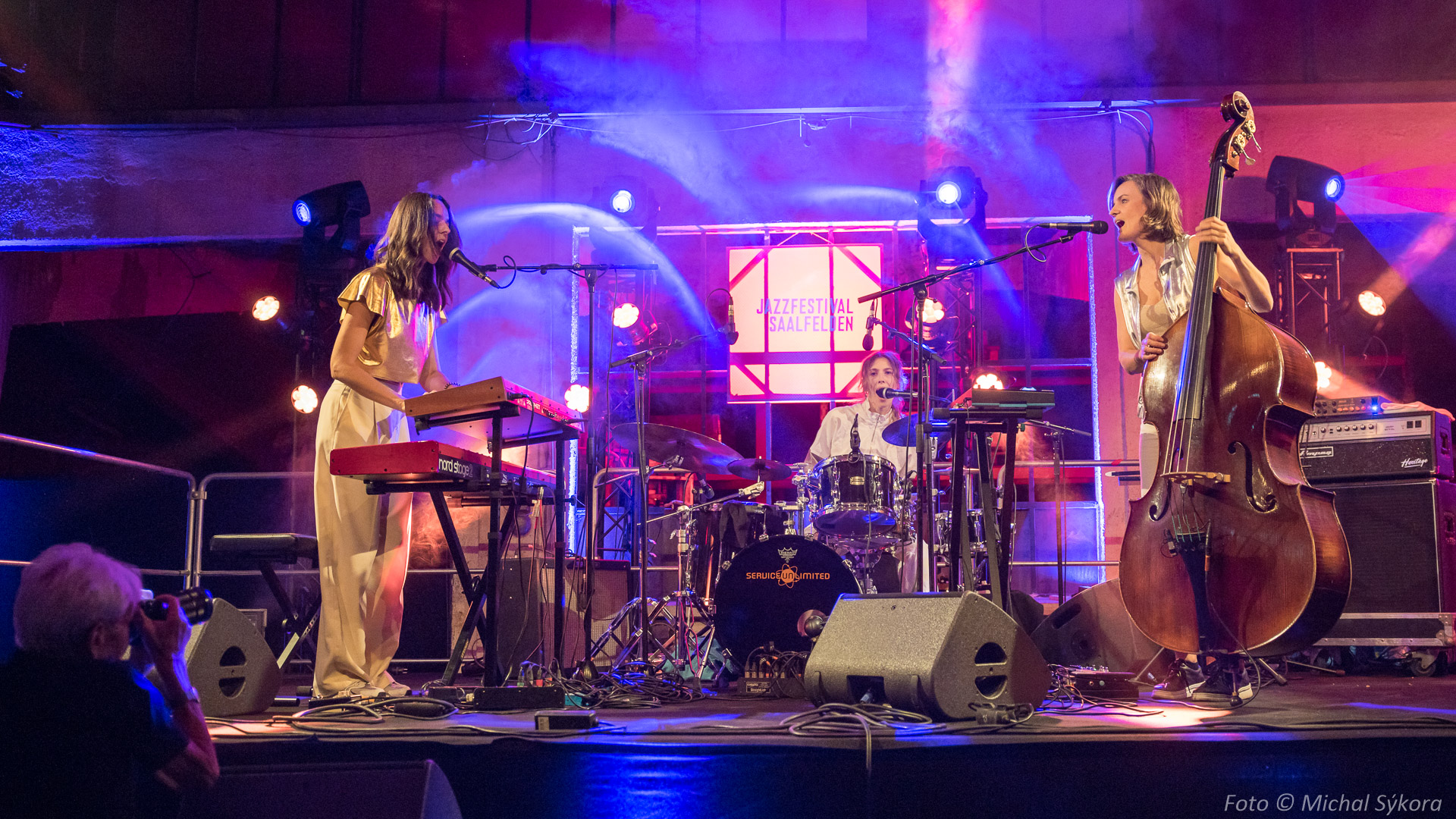
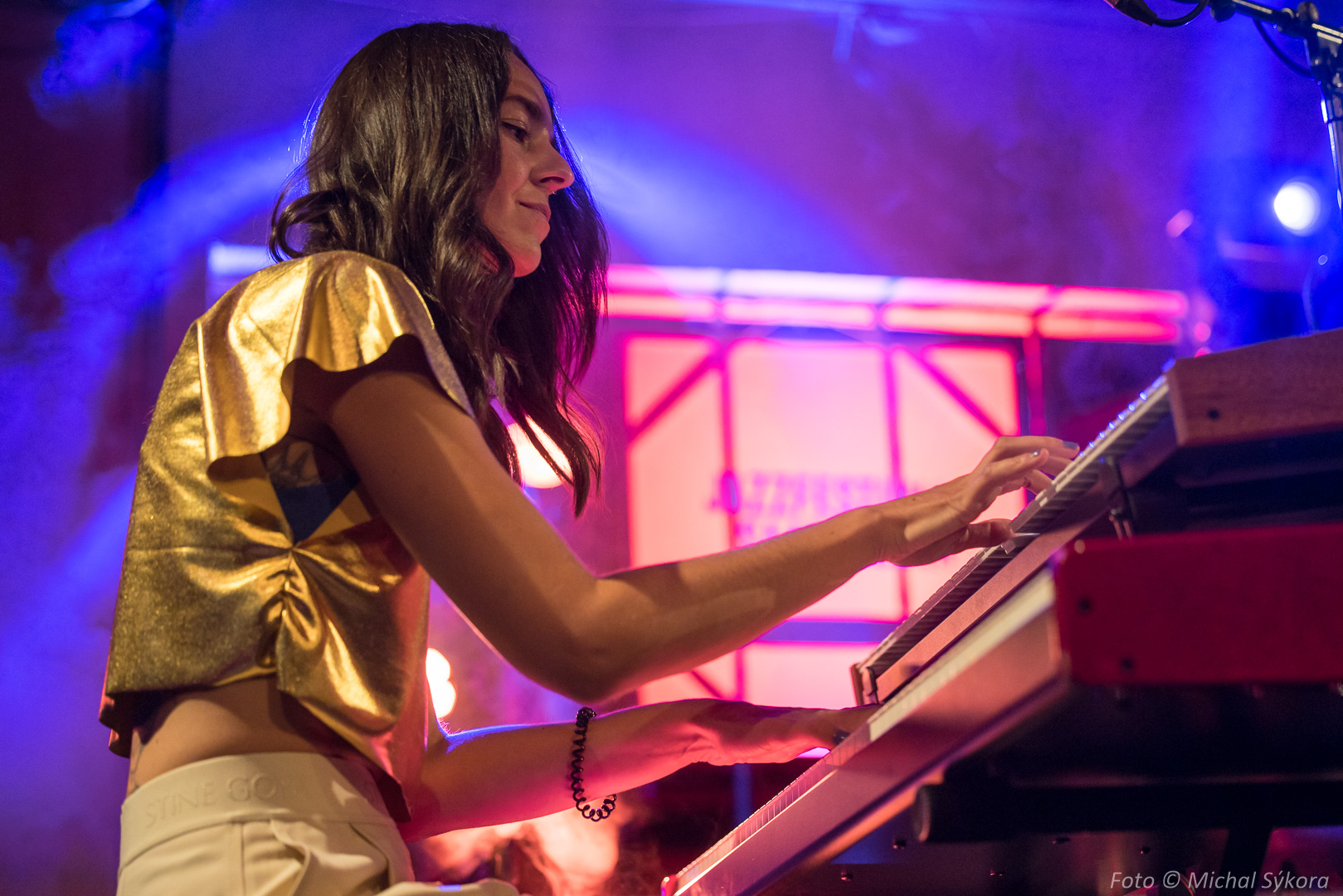
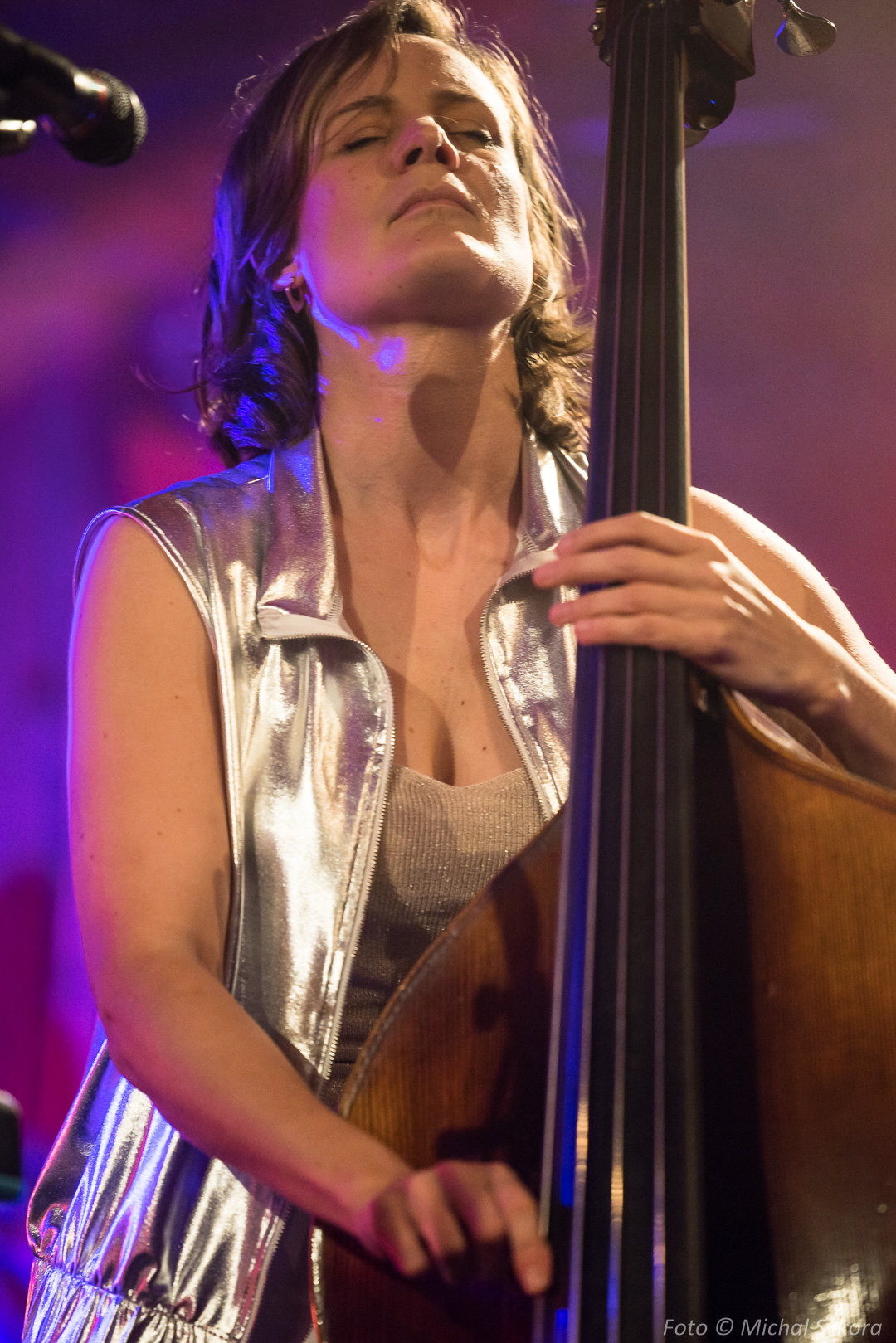
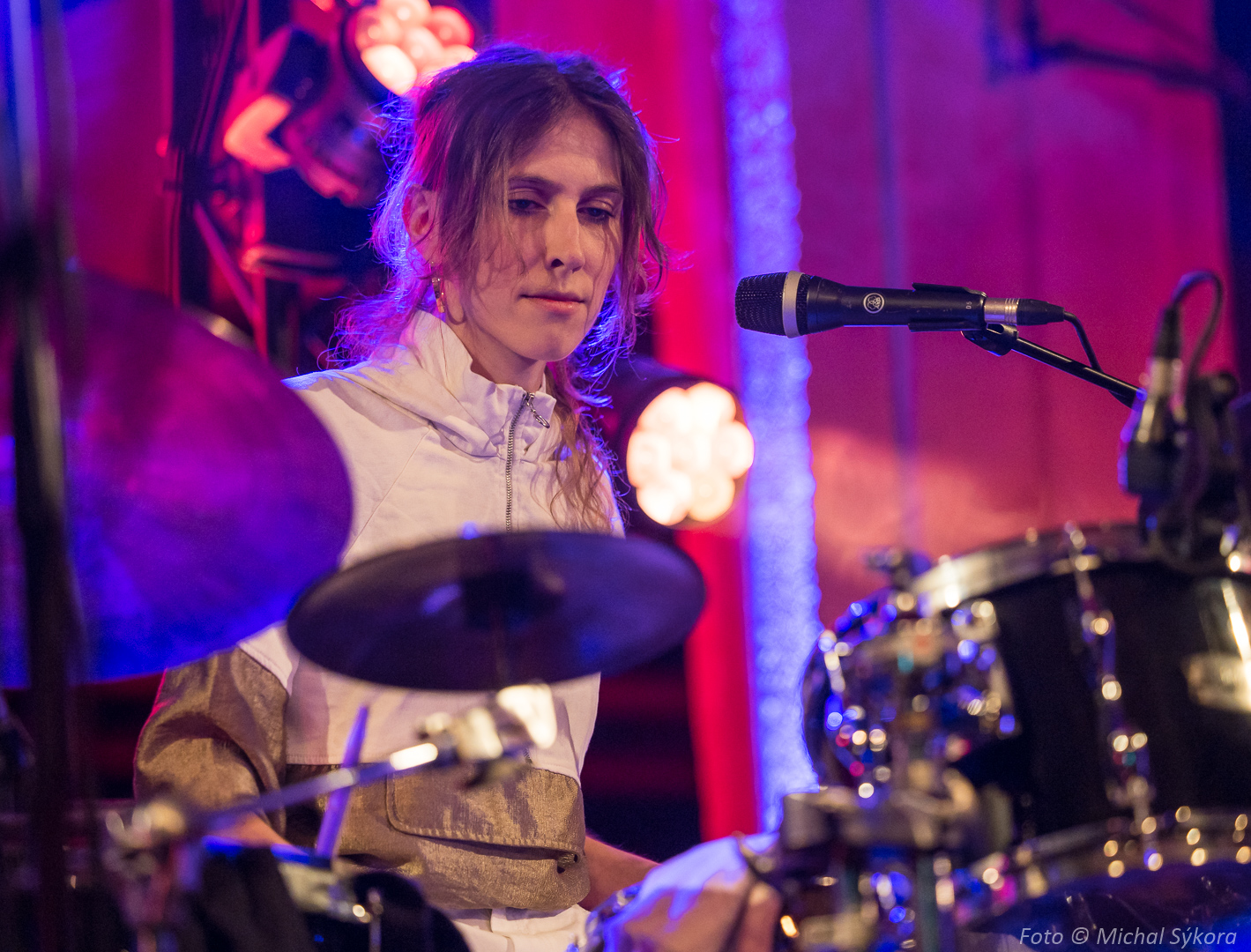
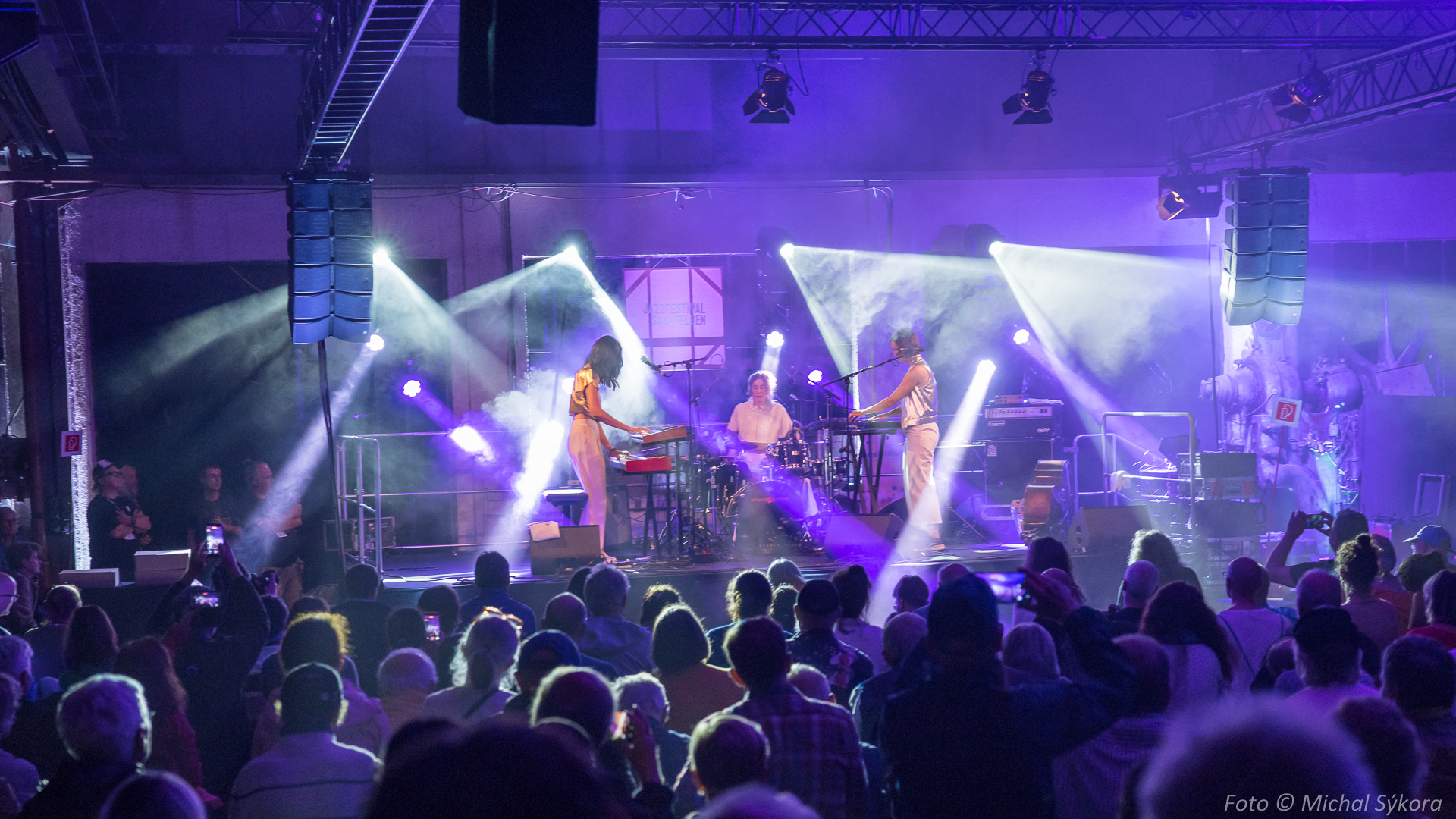
Their set offered a rather peculiar brand of synth-driven grunge and a touch of weird music. If it was meant to be dance music at its core, it actually wasn’t, although a free concert like this certainly counted on a certain genre crossover to appeal to a wider audience. During the performance, however, I found myself remaining completely indifferent to everything happening on stage.

DaughterDaughter
The DaughterDaughter quartet brings together four distinctive musical personalities from different corners of the world – the Danish saxophonist Amalia Dahl, the Argentine saxophonist Camila Nebbia, the German cellist Elisabeth Coudoux and the South Korean drummer Sun-Mi Hong. The official description speaks of collectively composed music arising from the tension between their different biographical roots, which leaves ample scope for unrestrained improvisation and transitions between harmonic textures and fierce rhythms.
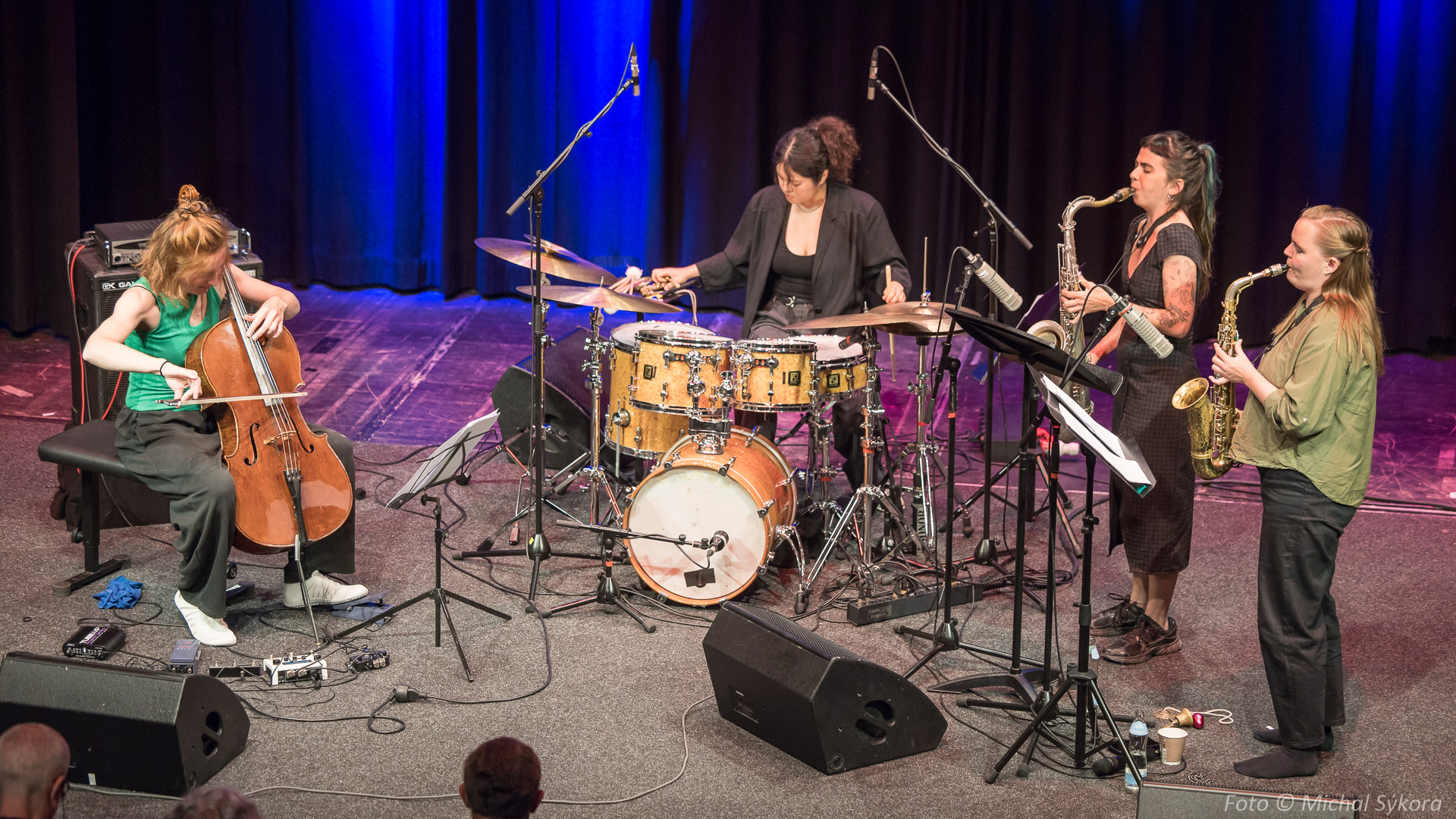
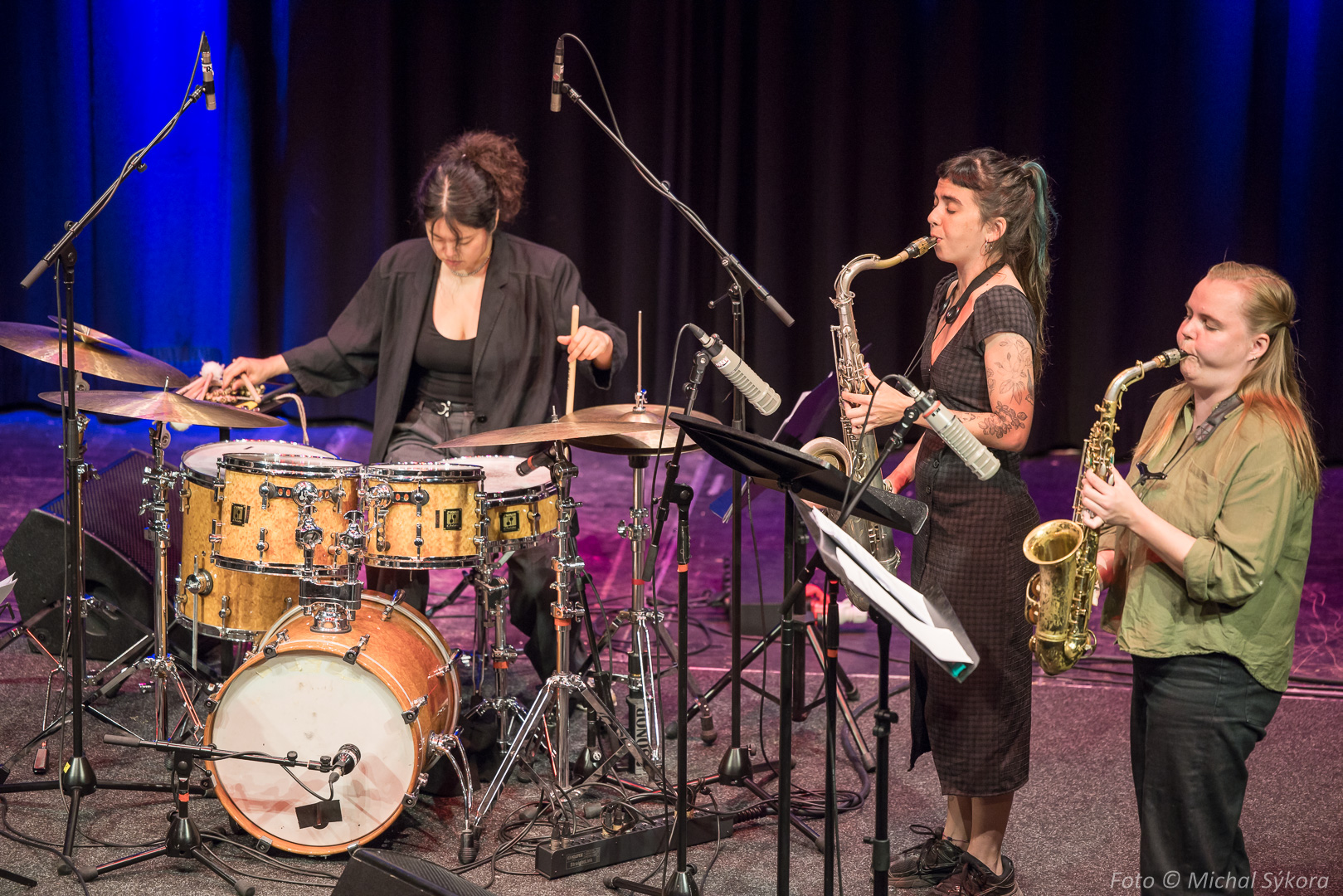
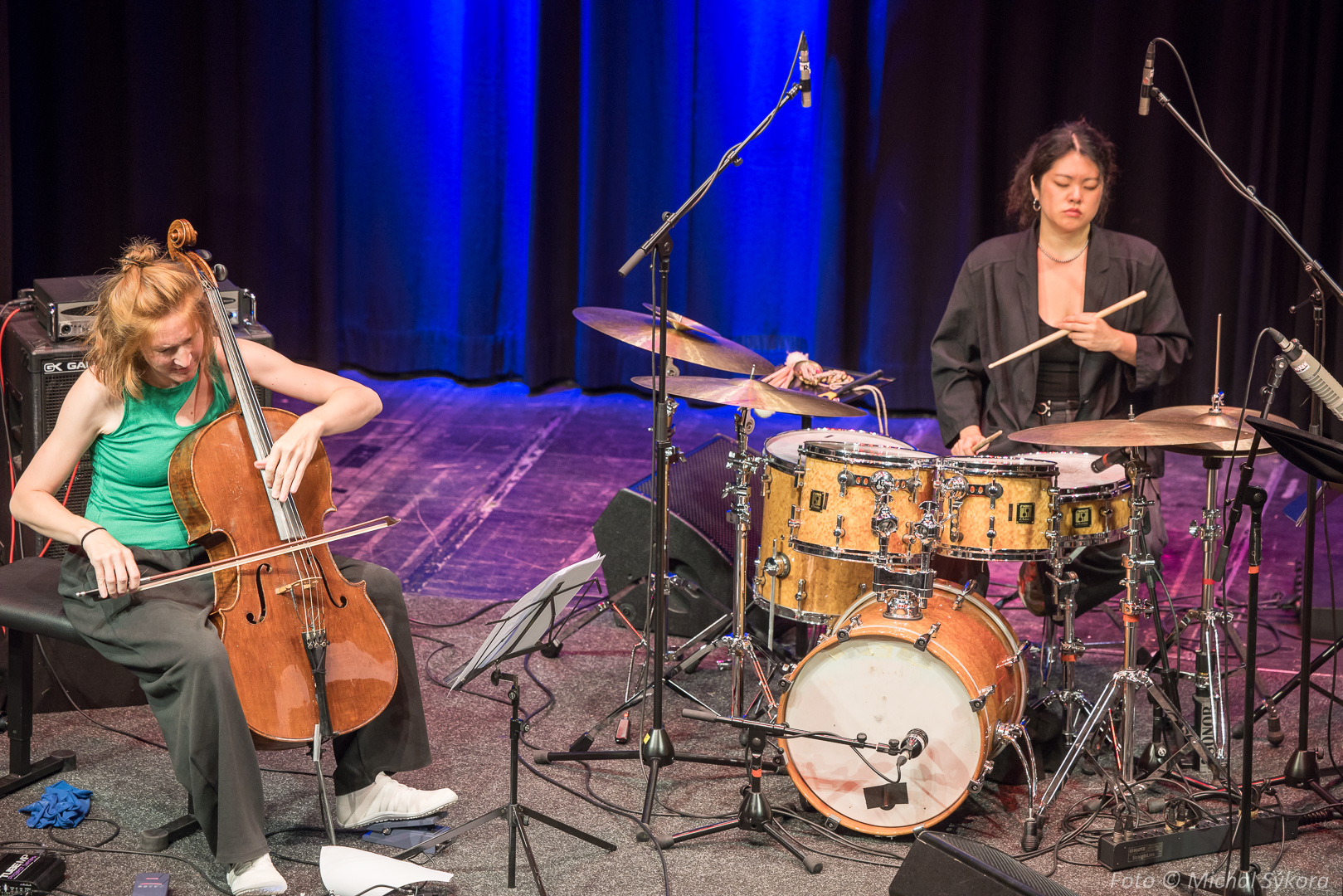
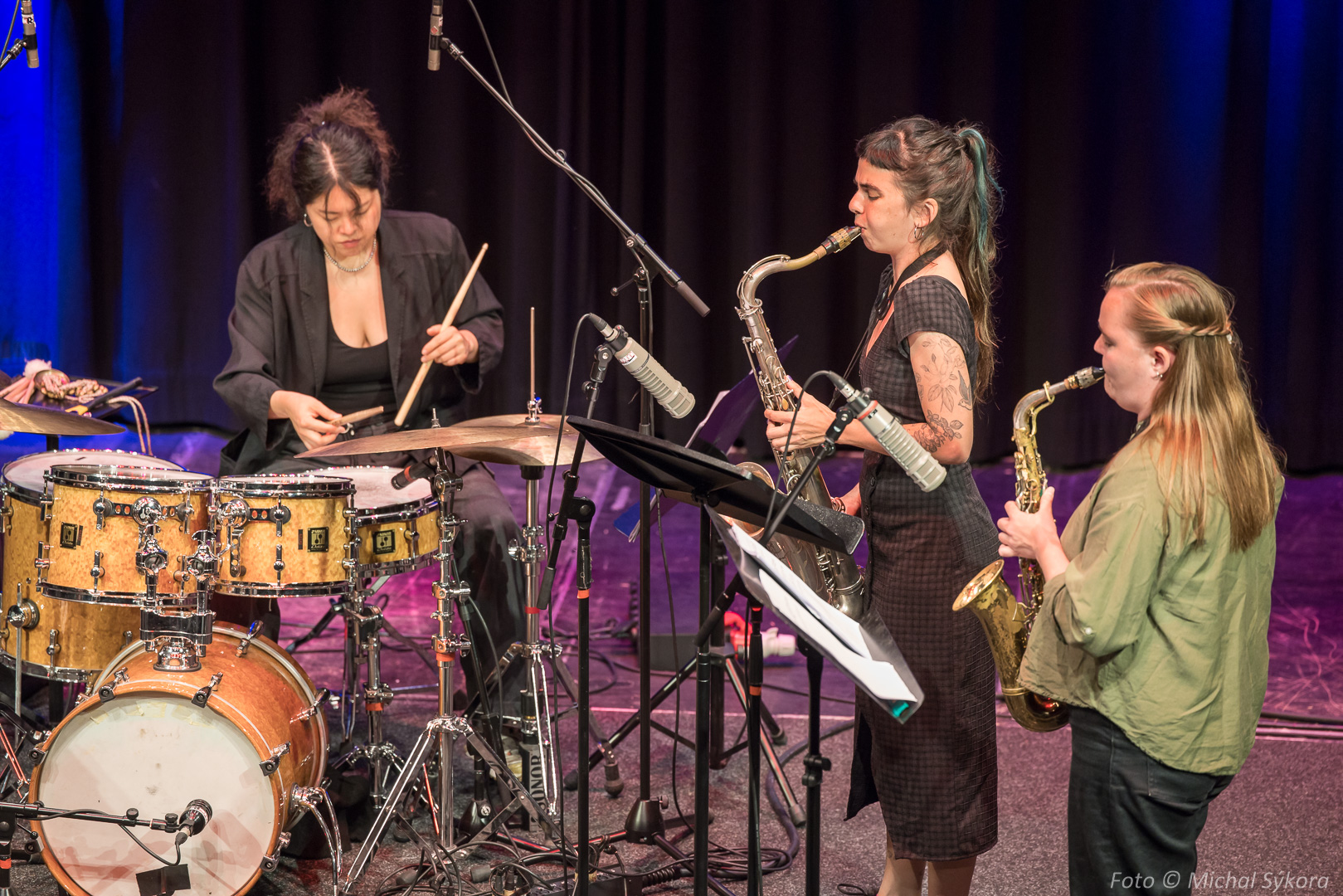
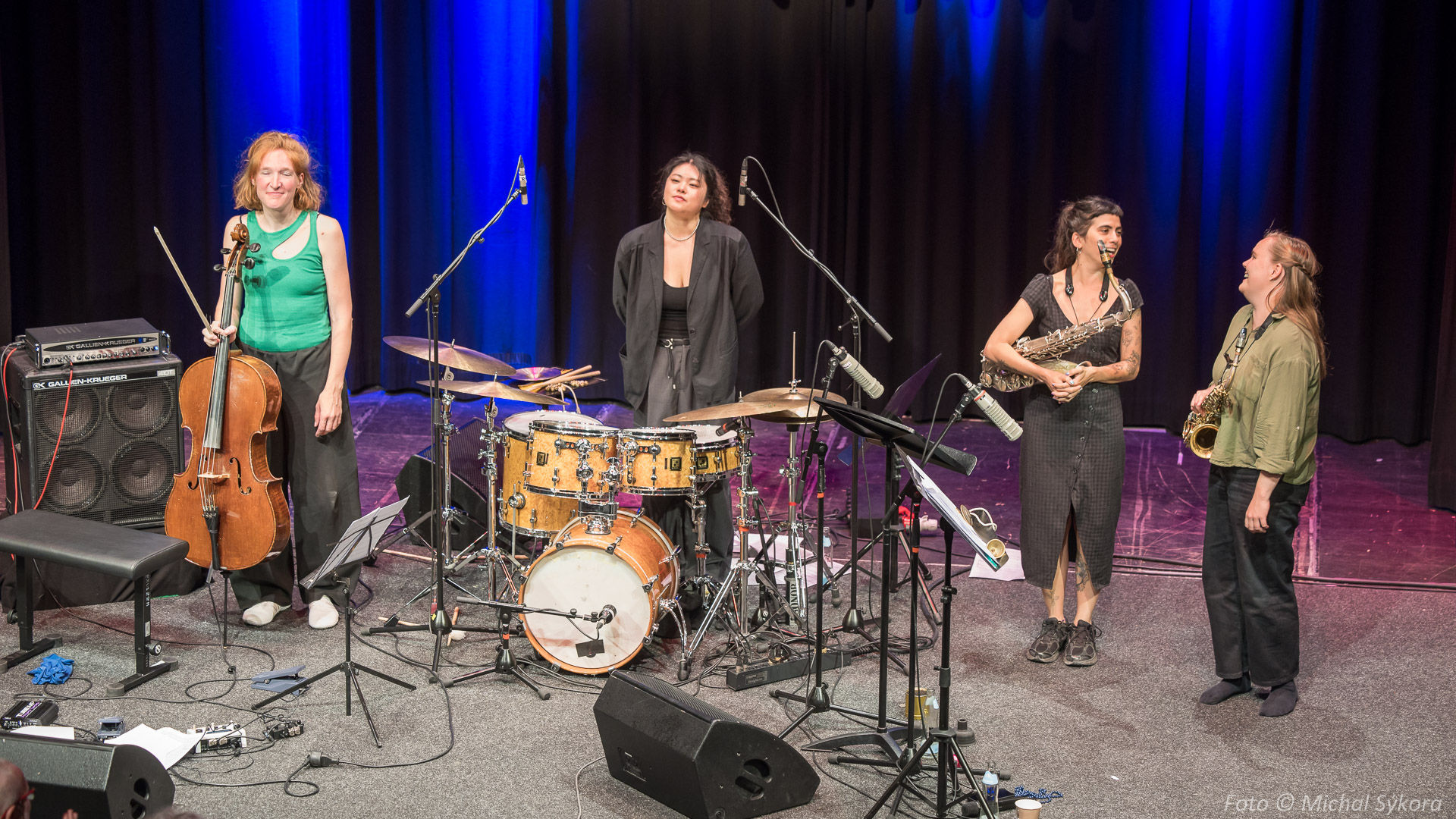
Despite the undeniable potential and instrumental skill of all four performers, I was unable to fully immerse myself in their performance. I honestly tried to find some connection to this improvised collage, but even after half an hour I simply couldn’t manage it, so I gave up. Well, judge for yourselves from the video clip to see if you can connect with it.

Friday’s programme at the 46th Saalfelden Jazz Festival offered a thrilling musical journey ranging from chamber-style deconstructions of classical music through energetic industrial outbursts to sophisticated original projects on the main stage and unexpected late-night surprises.
Christoph Cech & oenm: Satiesfaction+
Friday afternoon at the Kunsthaus Nexus was kicked off by the Austrian composer and pianist Christoph Cech, who joined forces with the renowned chamber ensemble oenm (Österreichisches Ensemble für Neue Musik). For the Satiesfaction+ project, he was joined by harpist Valentina Cinquini and trombonists Stefan Konzett and Dušan Kranjc.
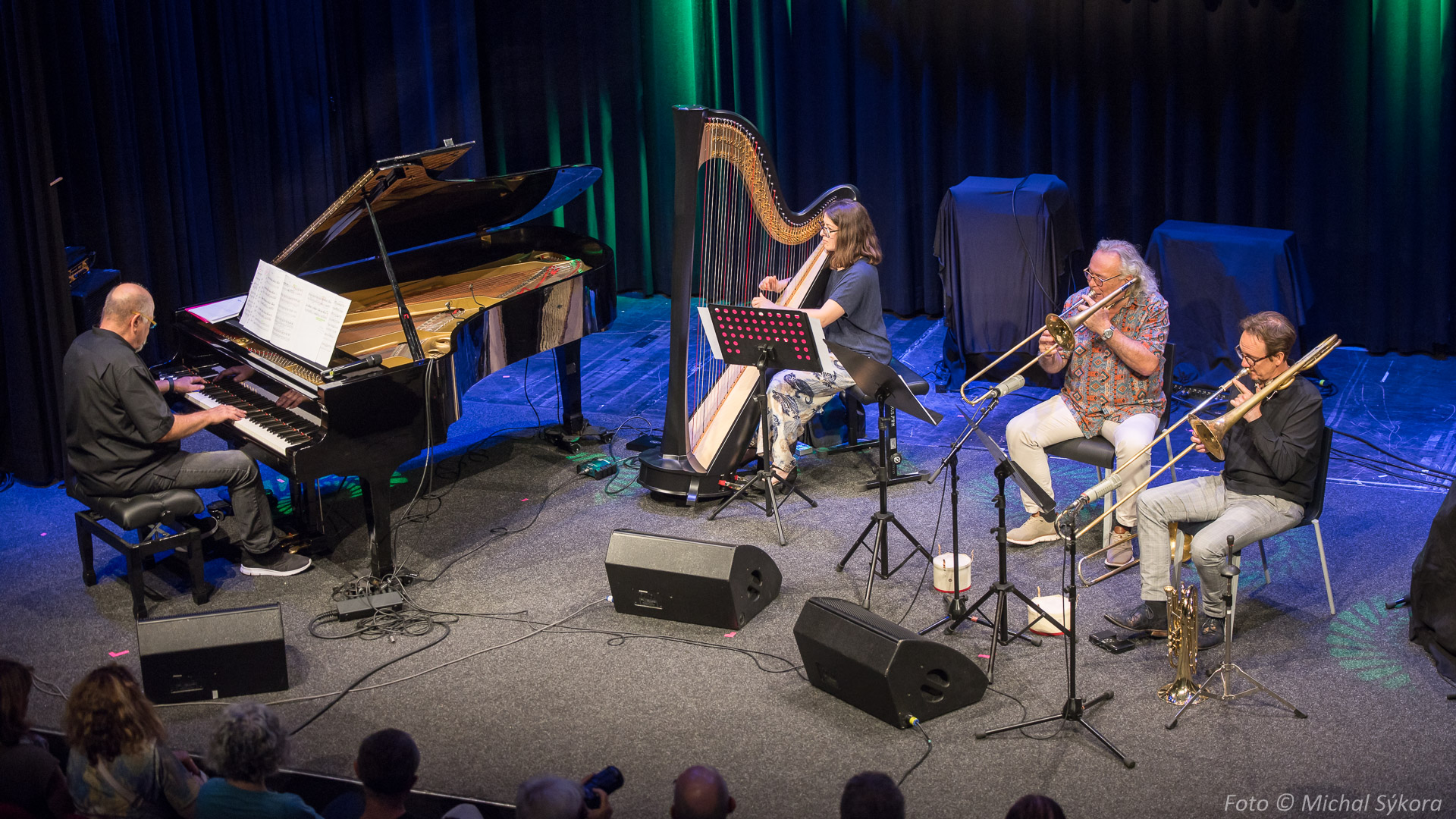
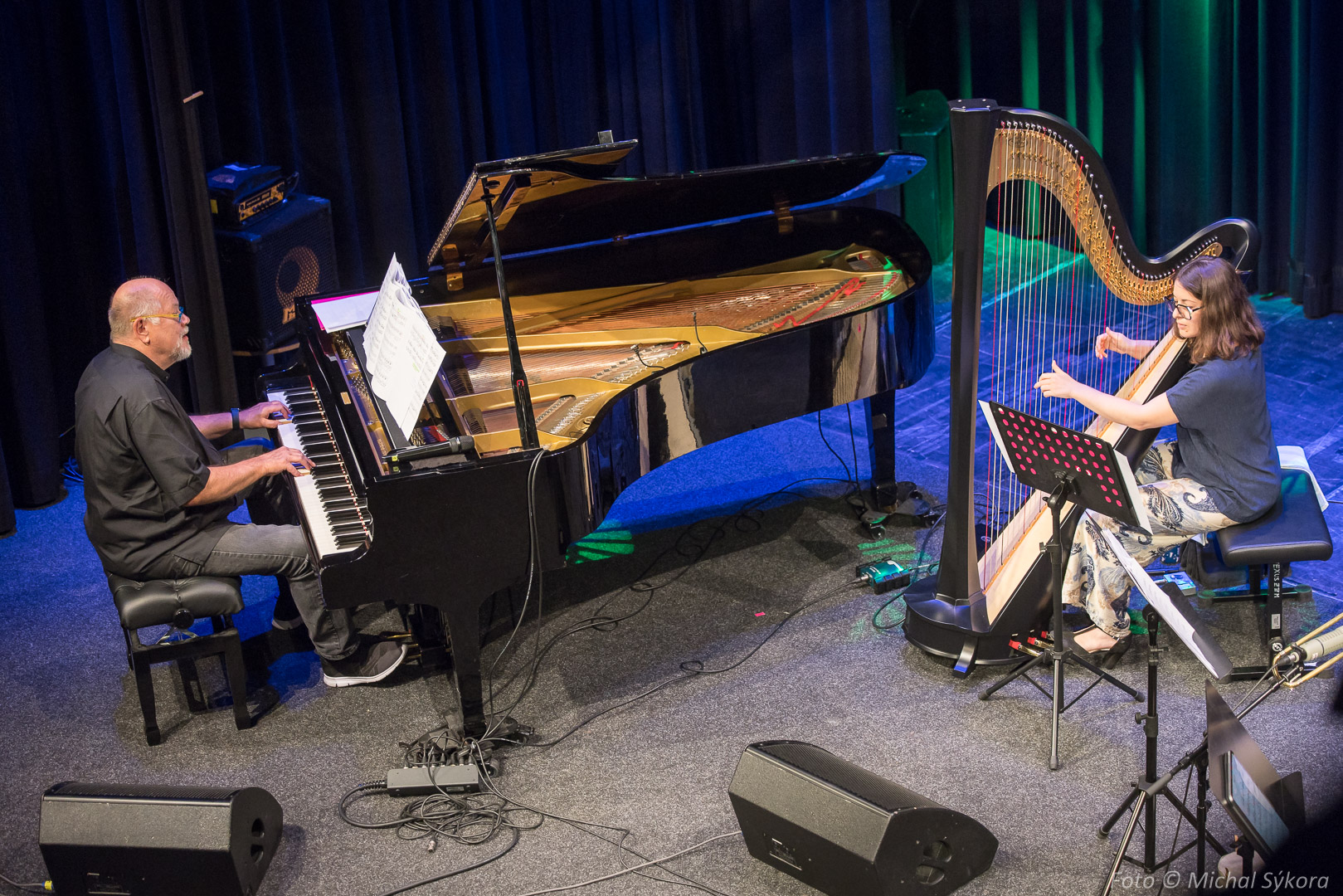
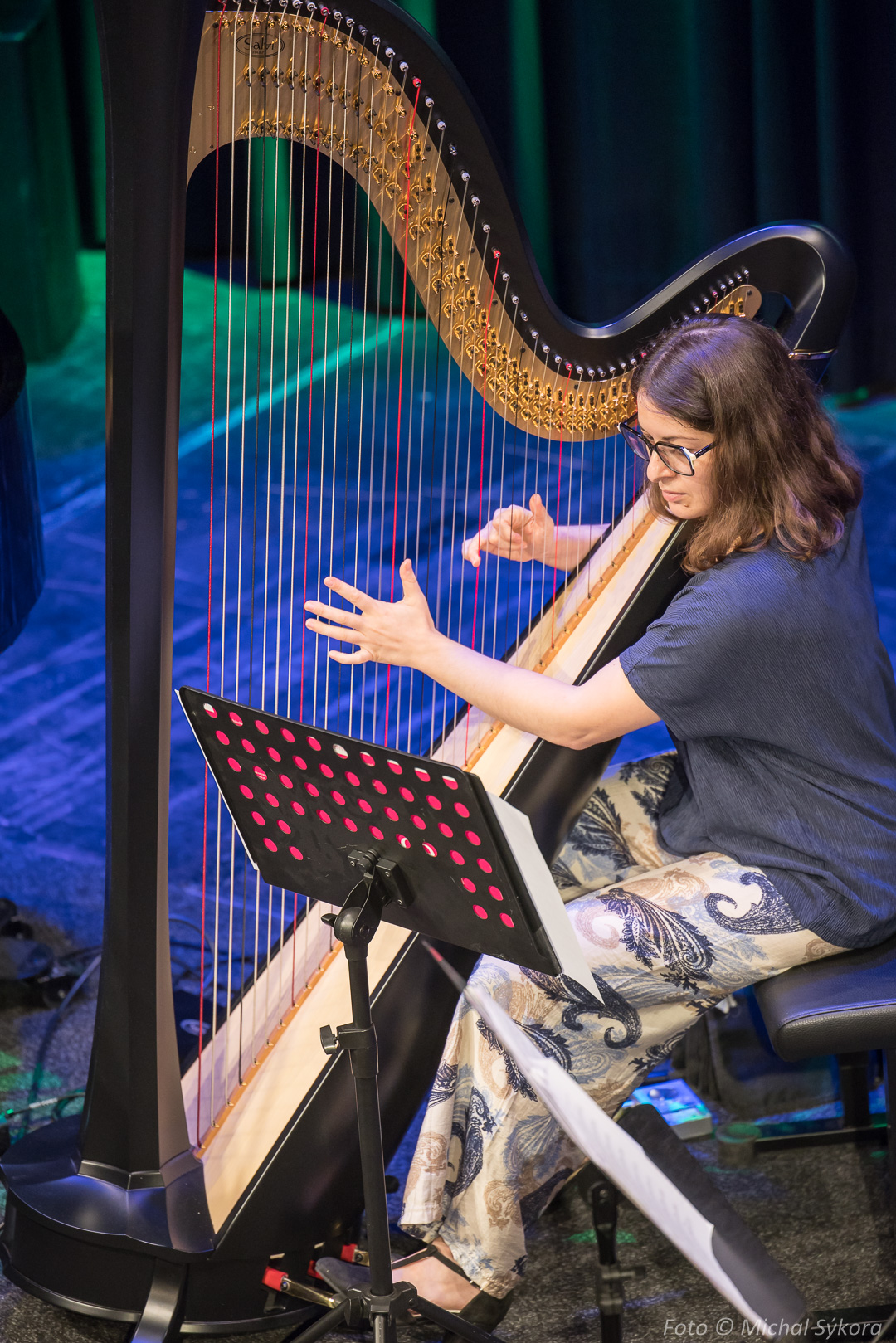
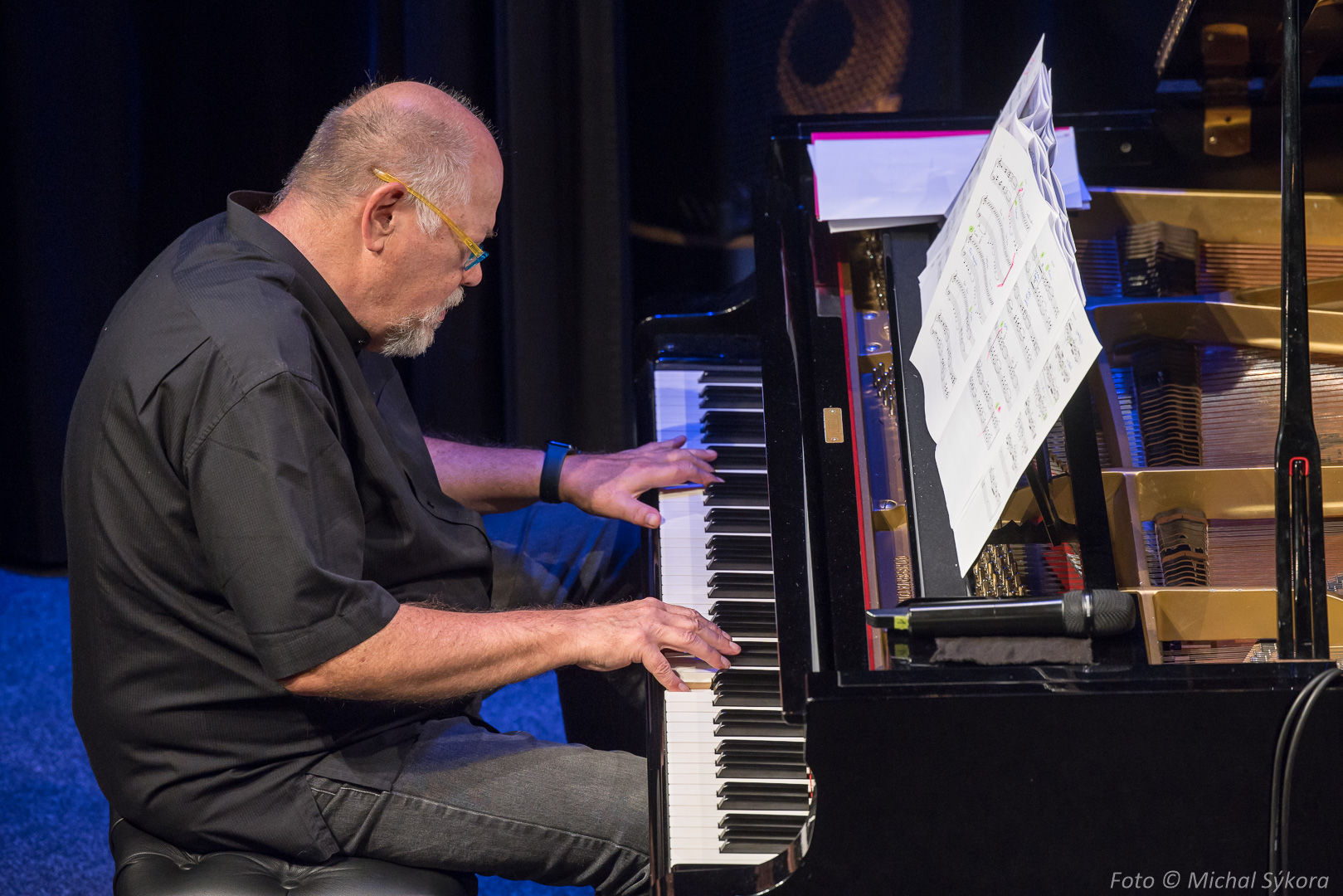
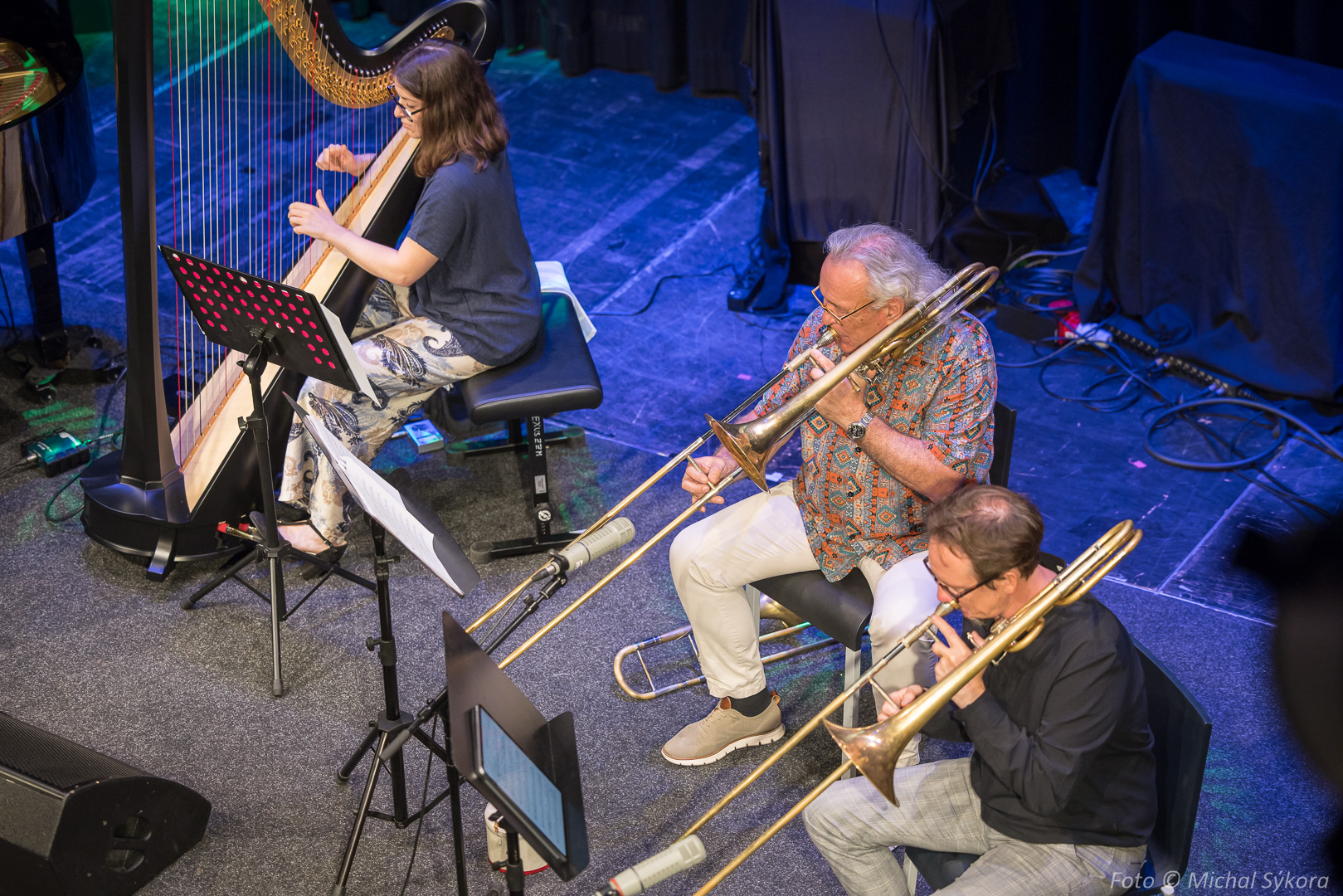
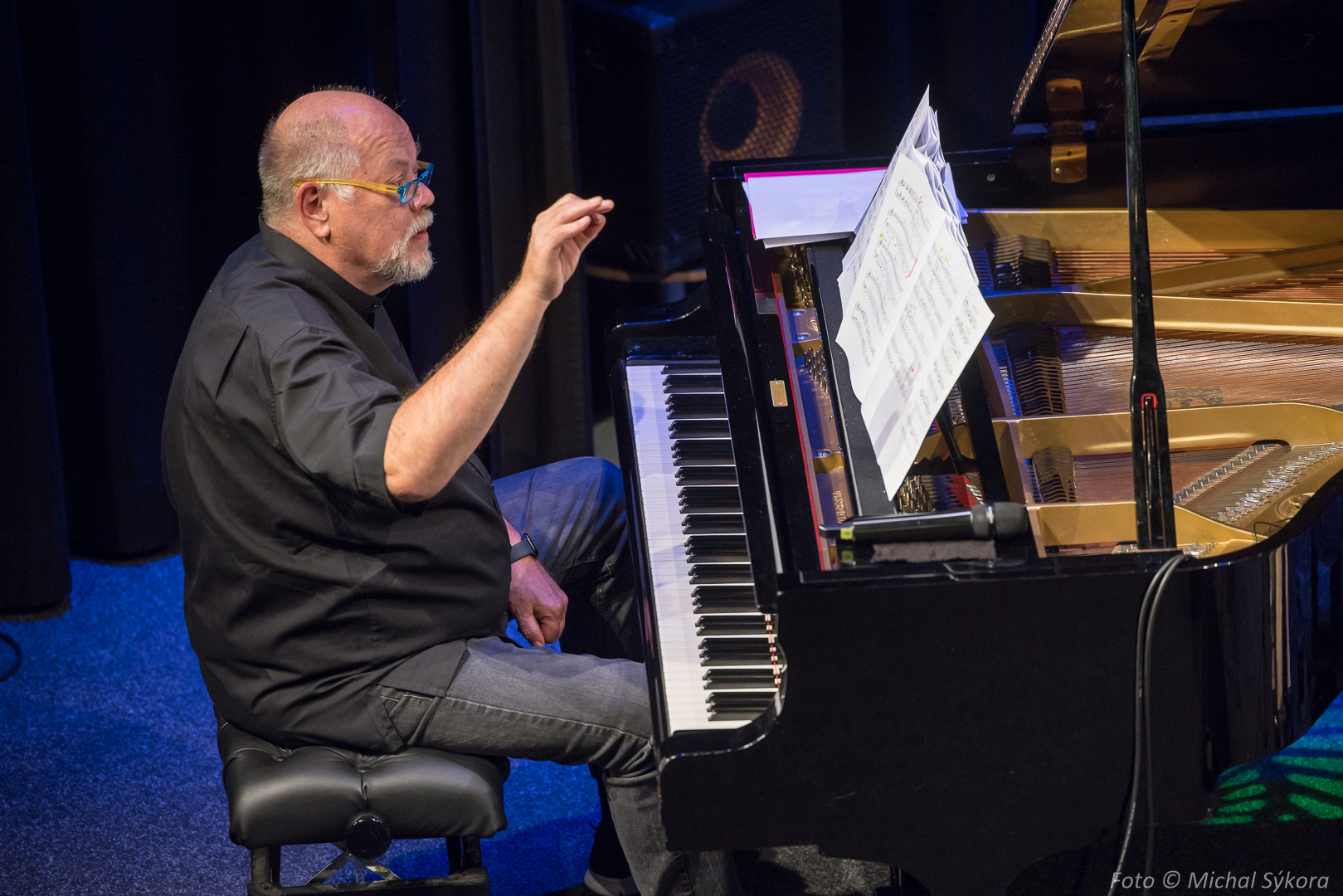
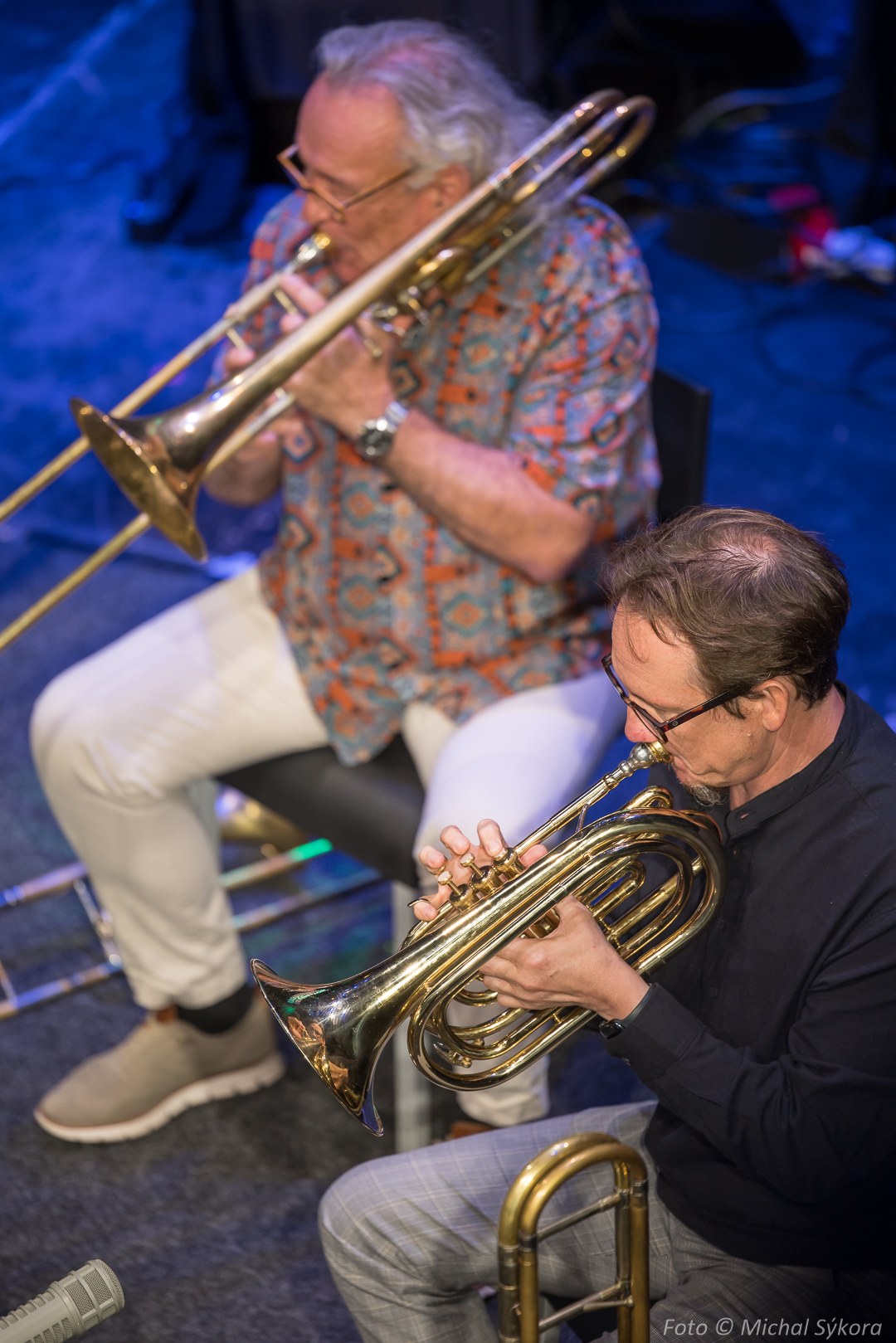
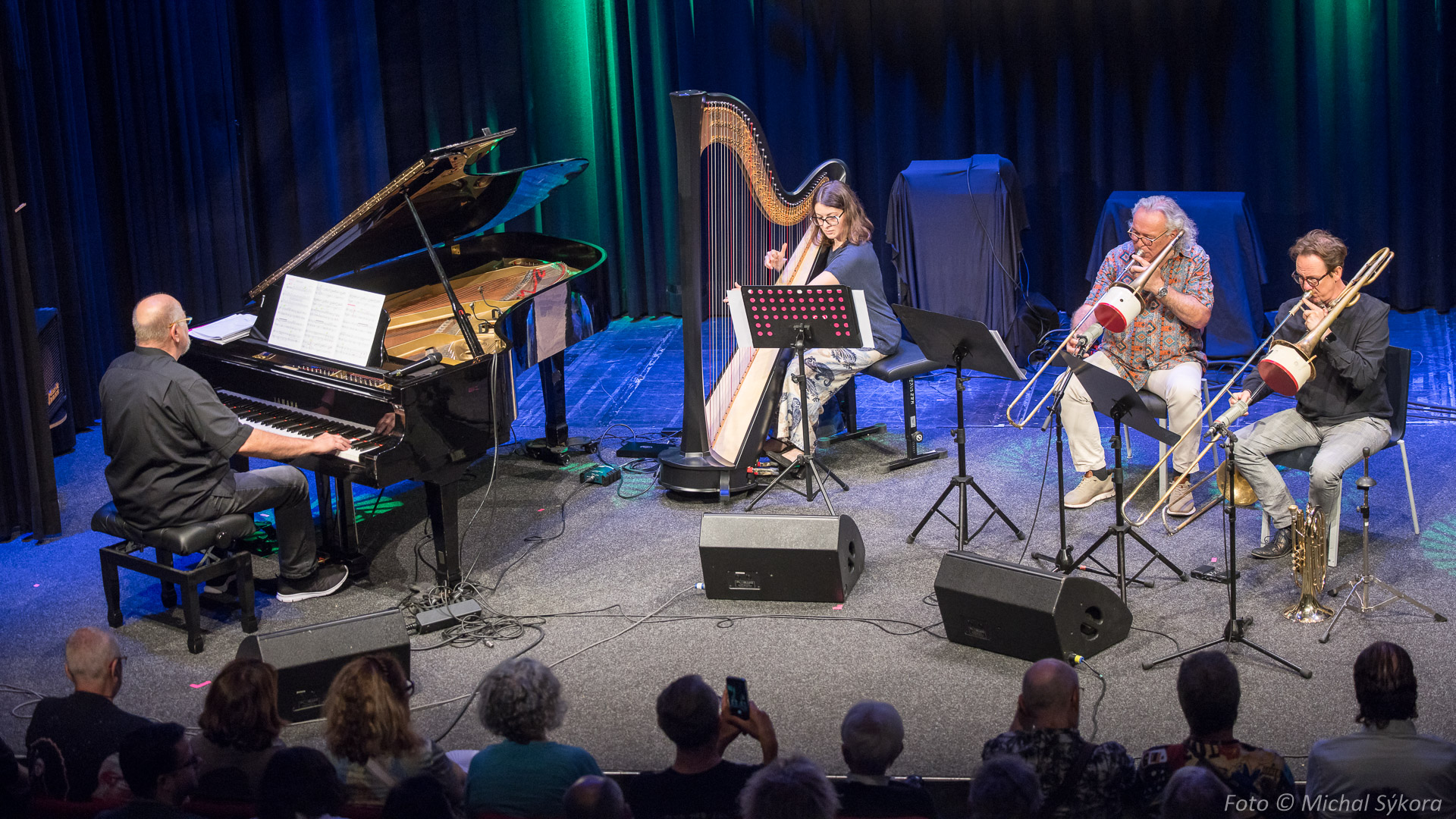
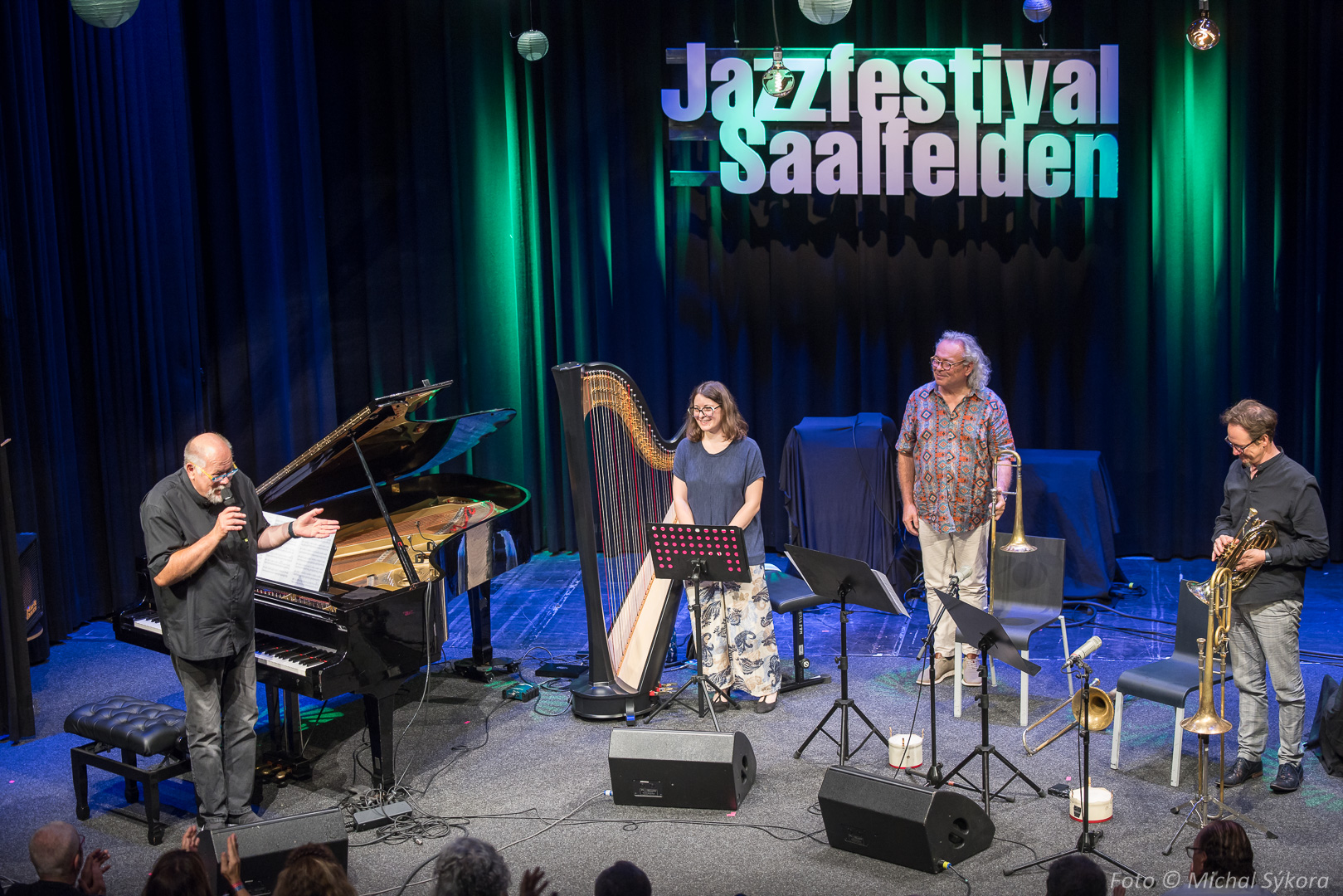
With his characteristic flamboyance, Cech deconstructed Erik Satie’s themes and set them to unconventional metres and colourful arrangements, where academic precision met unrestrained jazz improvisation. The pieces, full of silence, space and delicate bursts of harp, struck a note that was both soothing and provocative, and were a balm to my ears after yesterday’s wilder experiments.

Sauvages Paradis
The next band brought a radical change of atmosphere to the Nexus. French drummer and sound explorer Edward Perraud presented his project Sauvages Paradis, featuring organist and keyboardist Ève Risser, guitarist and bassist Arthur Delaleu, and flautist Delphine Joussein. The opening was completely chaotic before we even began to work our way towards anything more coherent. There was a lot of electronics and effects, a good wall of noise, then a lull again, but ultimately a proper climax – they sounded, in the best sense of the word, like a zeuhl band.
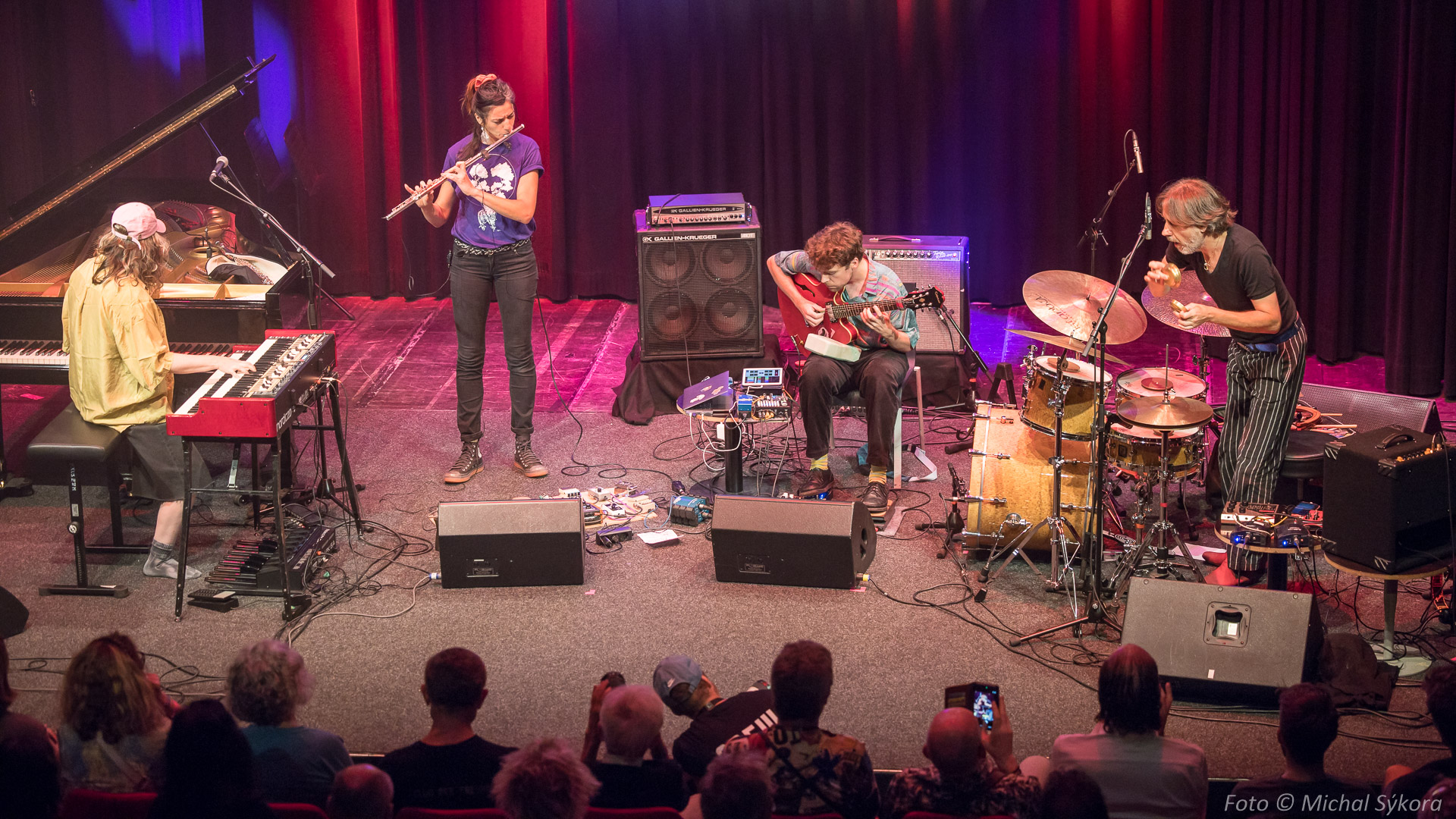
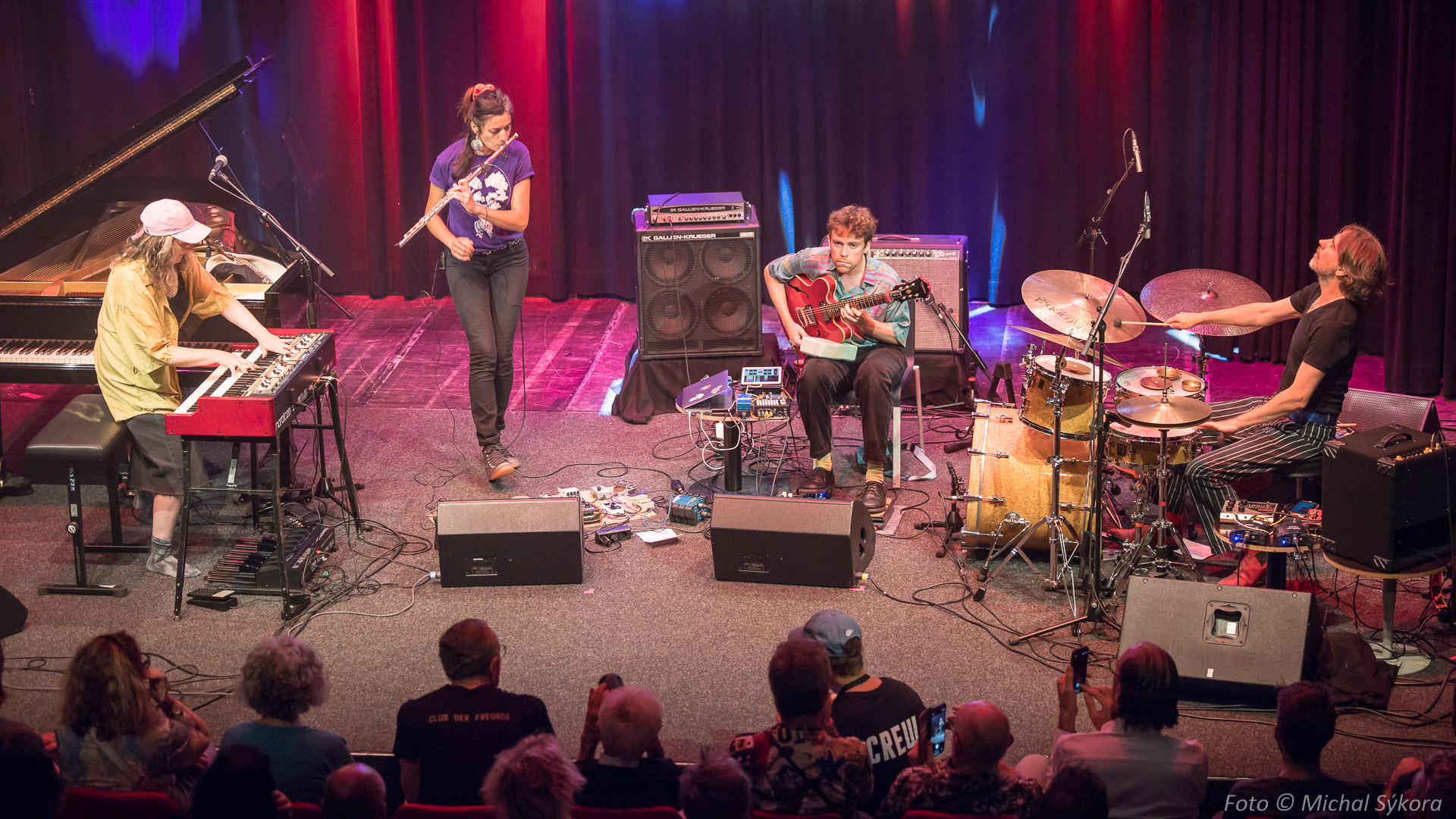
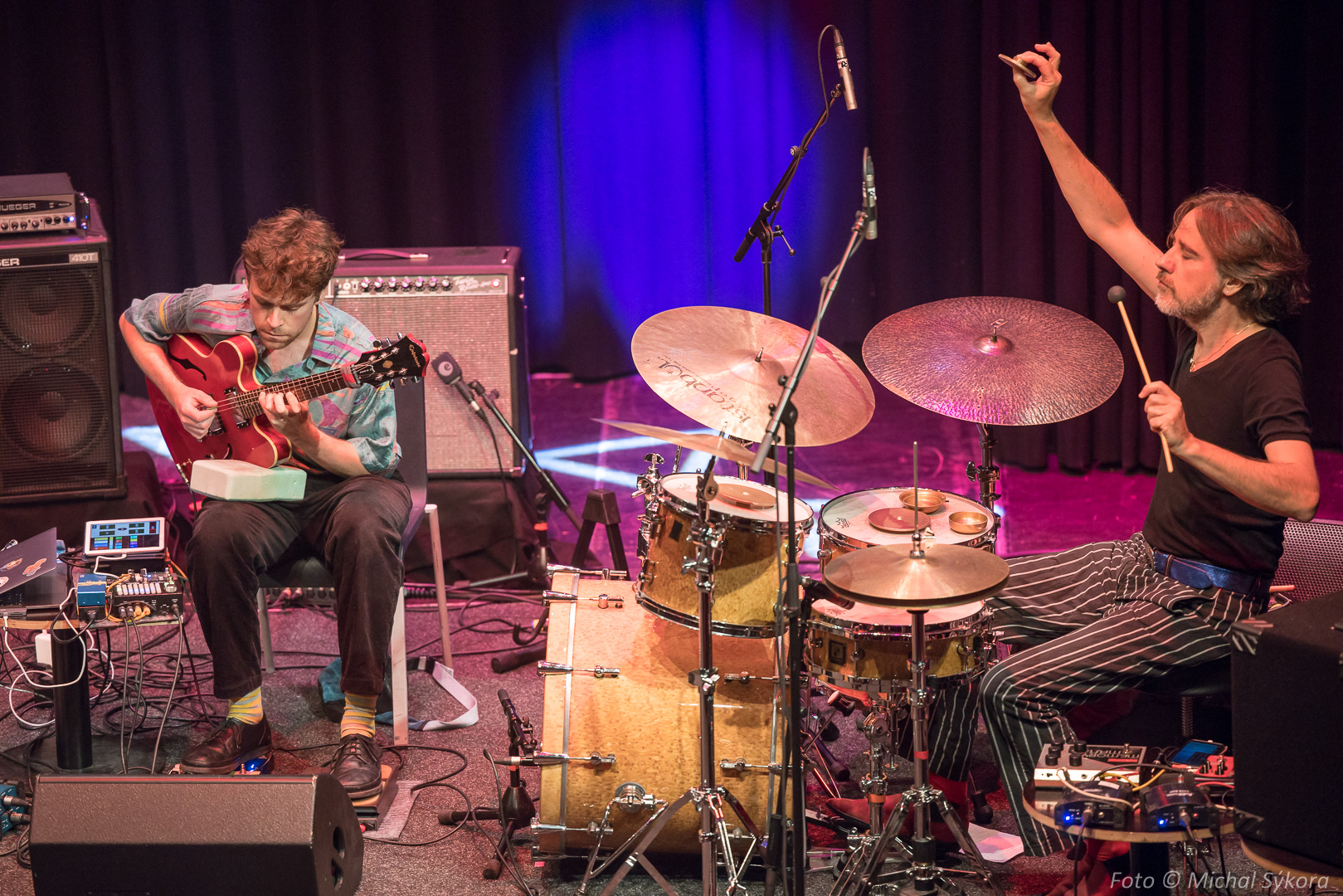
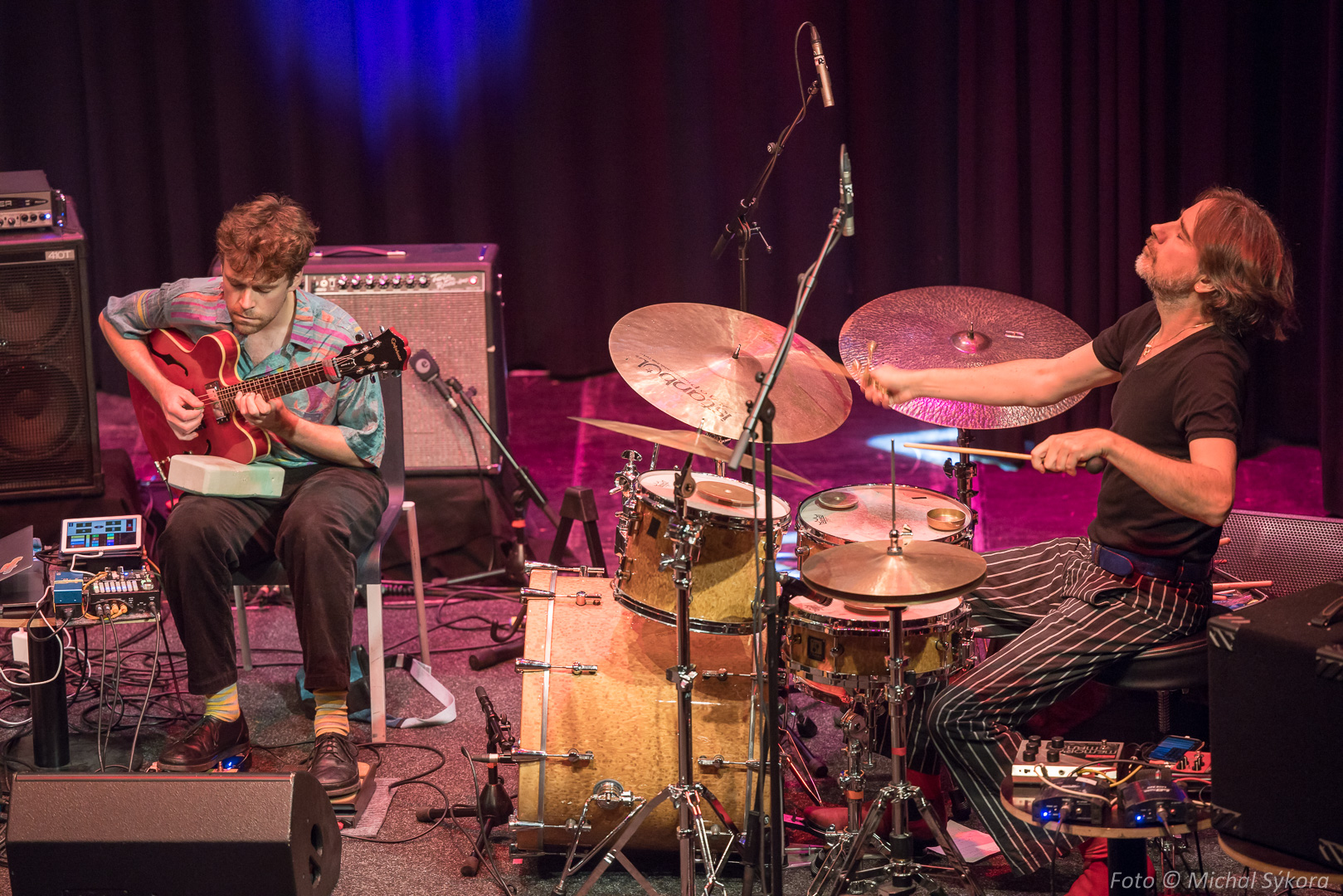
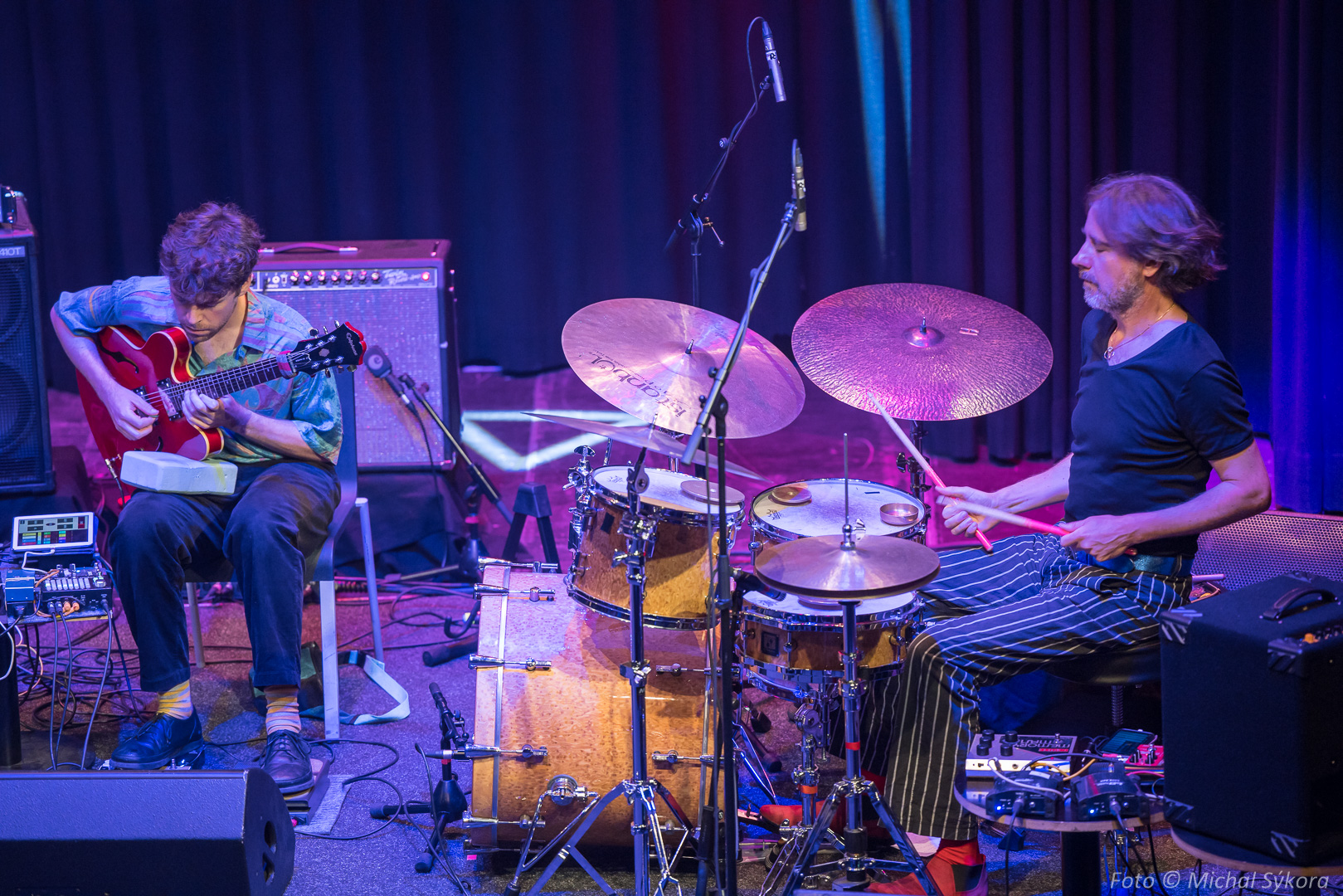
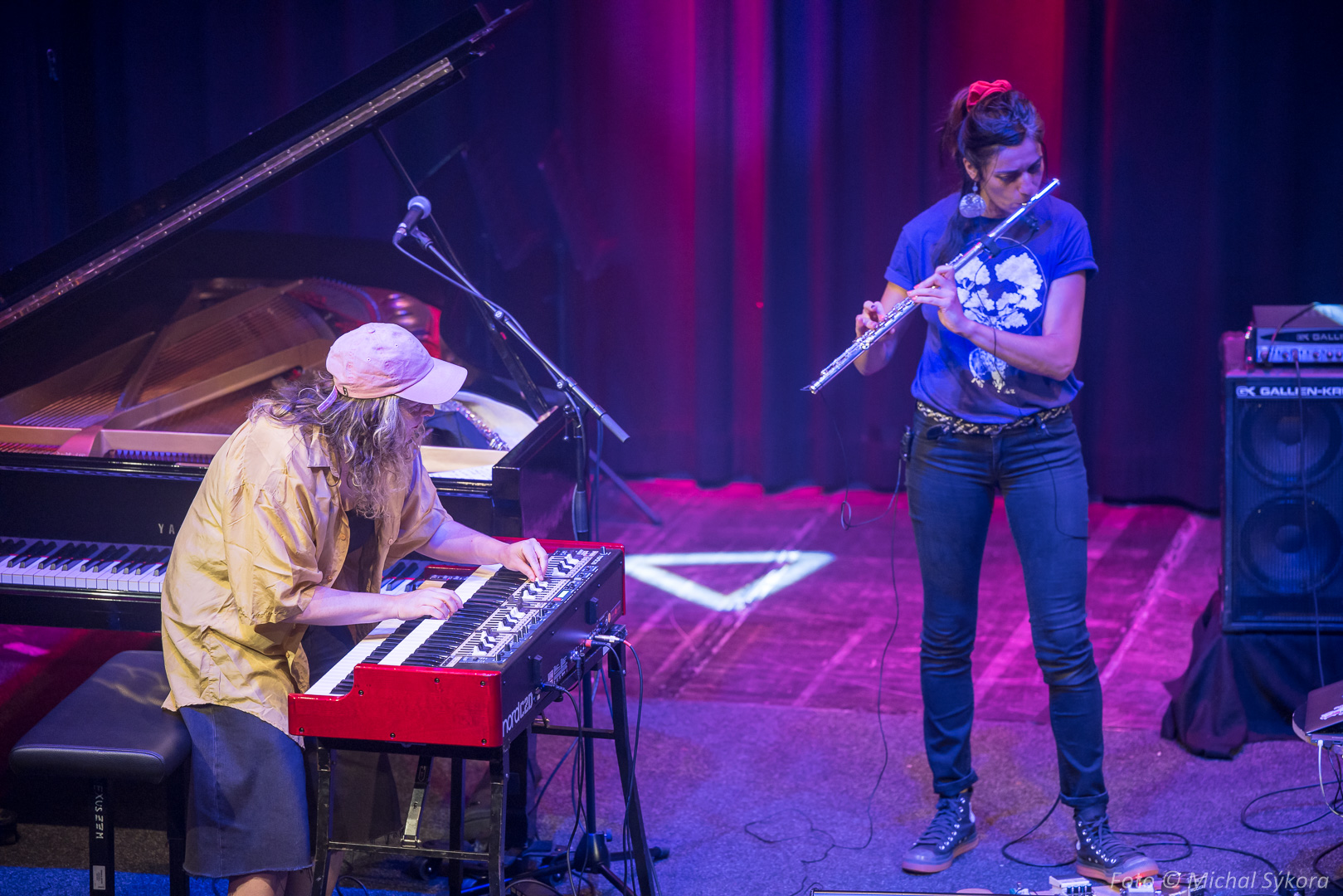
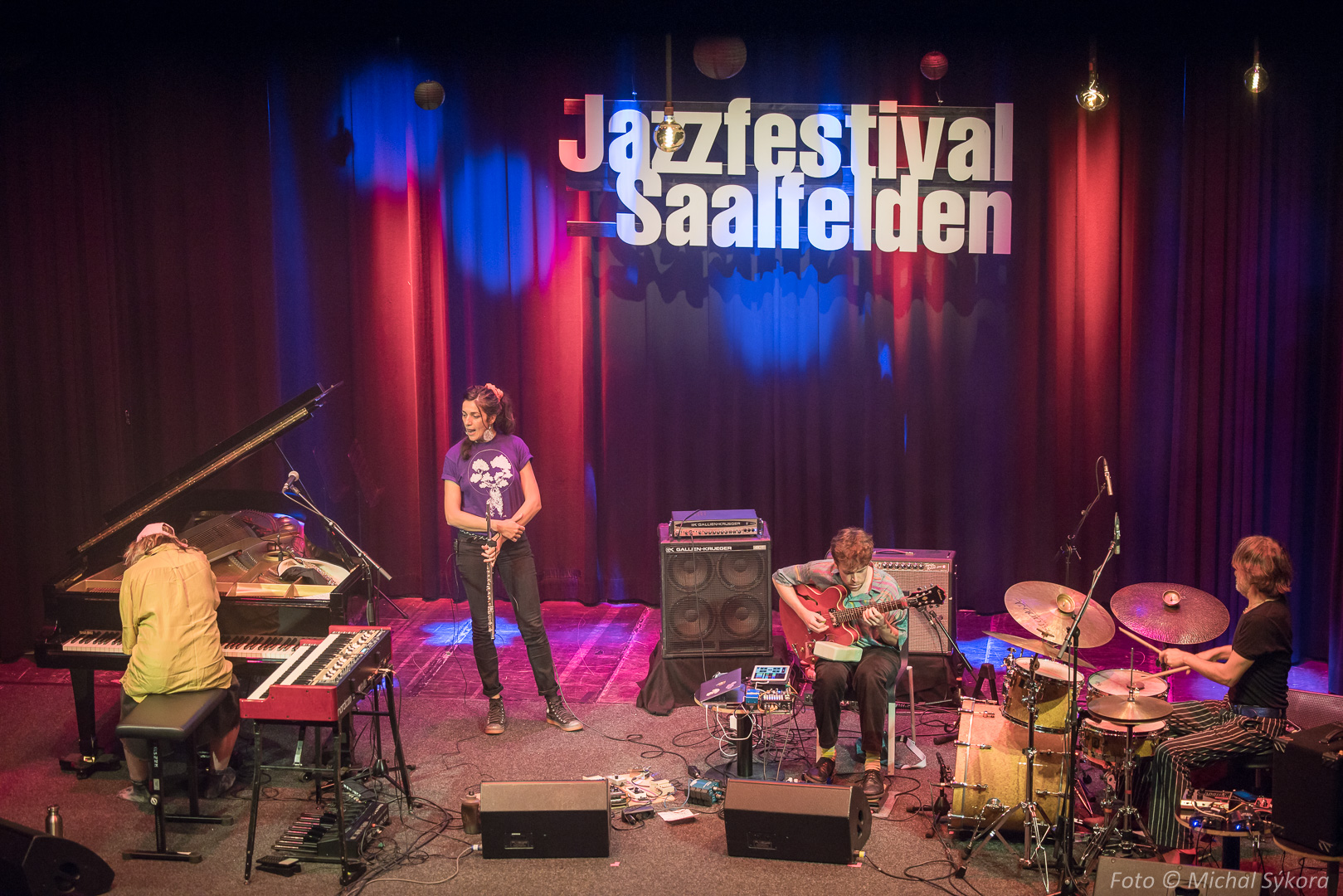
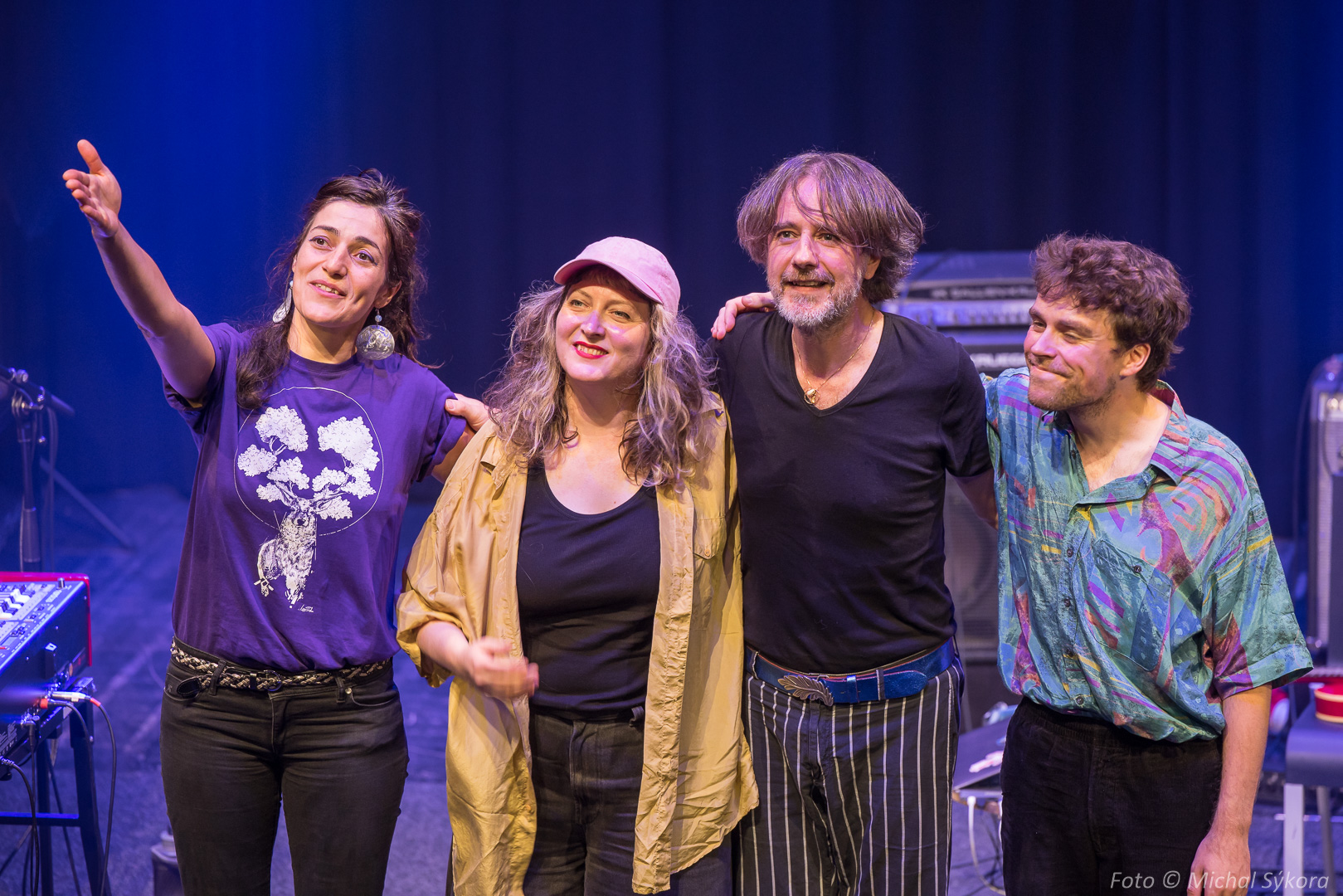
Then, of course, came the breakdown again and the drummer’s self-indulgent fooling about, but the sounds and noises subsequently built up such intensity that it was actually so random it was good. The drummer even picked up a guitar (though that was just more filler) and tried to play it right behind the drums, which didn’t work out too well, as he was trying to do more than was necessary. Just when it looked like it was coming to an end and the audience were getting ready to leave, they rushed back on stage, announcing they’d planned an encore and would play it even if we wanted to leave. I’m glad I stayed – that metal blast at the end absolutely smashed it, as you can see for yourselves at the end of the video clip.

Brique: La danse du béton
We then moved on to the Otto Gruber Halle to see what the organisers in Hradec Králové had in store for us at this year’s Jazz Goes to Town in October. Ève Risser was back on keyboards – the same musician who’d just performed with Sauvages Paradis – joined by Luc Ex on acoustic bass, drummer Francesco Pastacaldi and singer Bianca Iannuzzi.
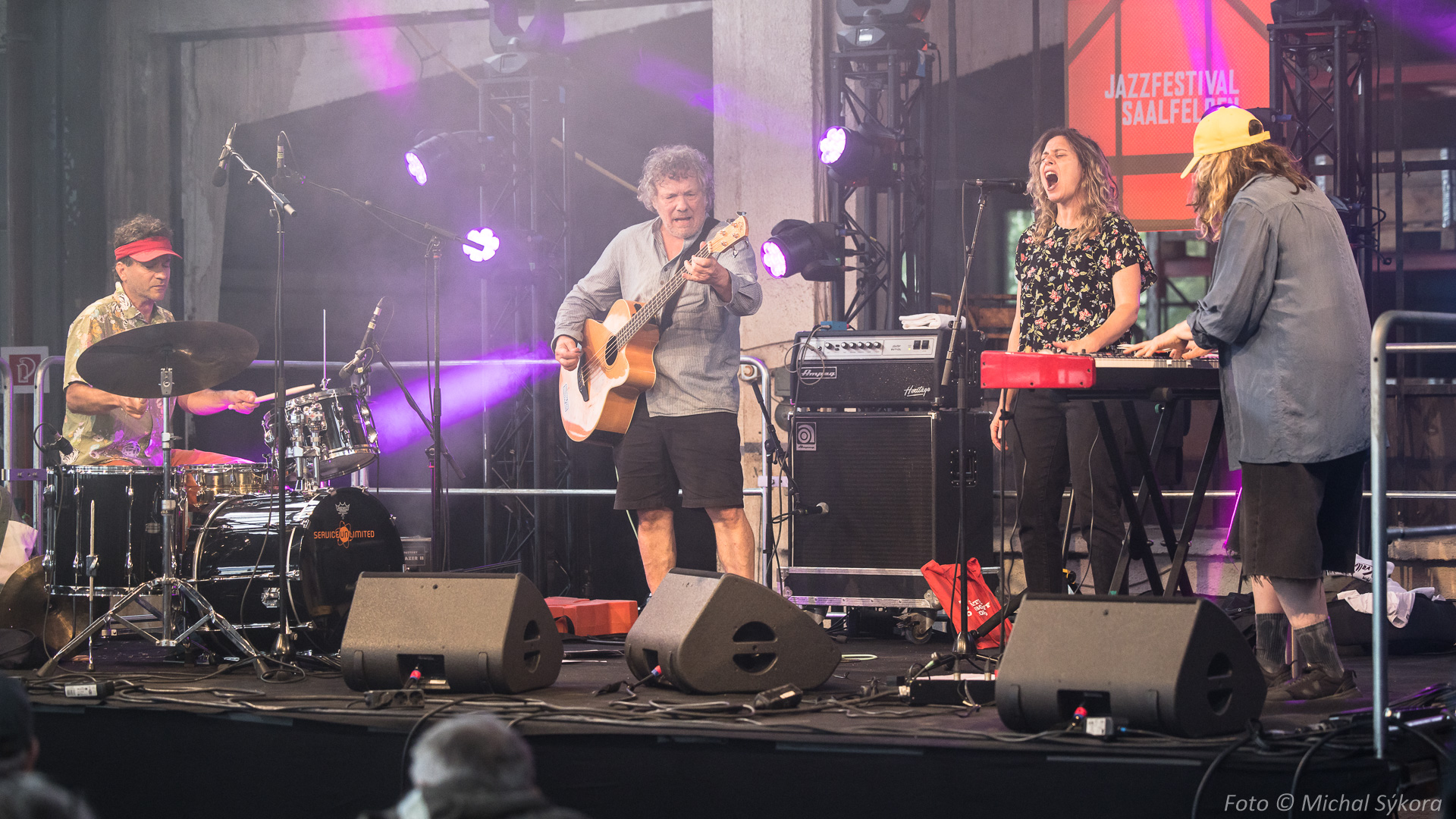
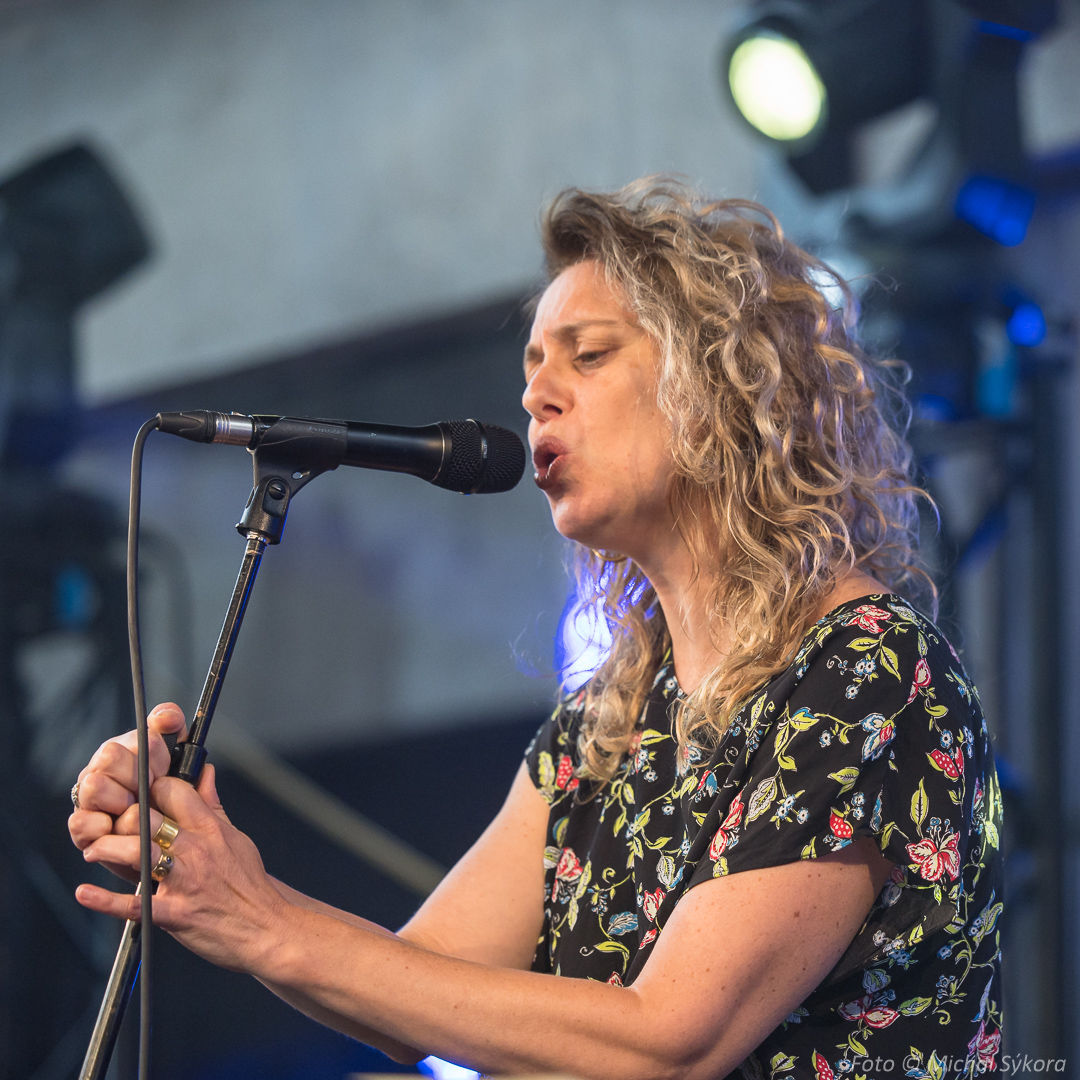
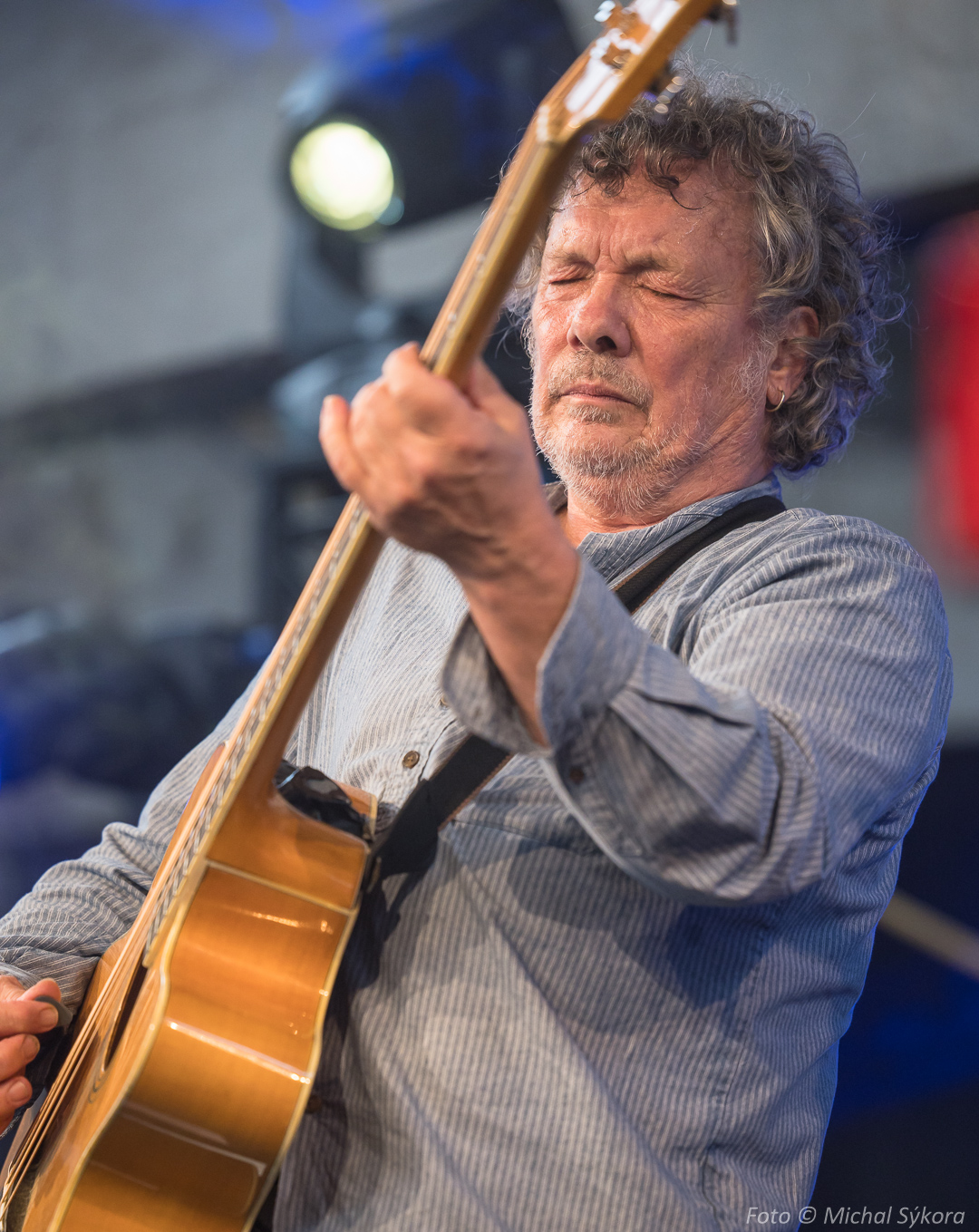
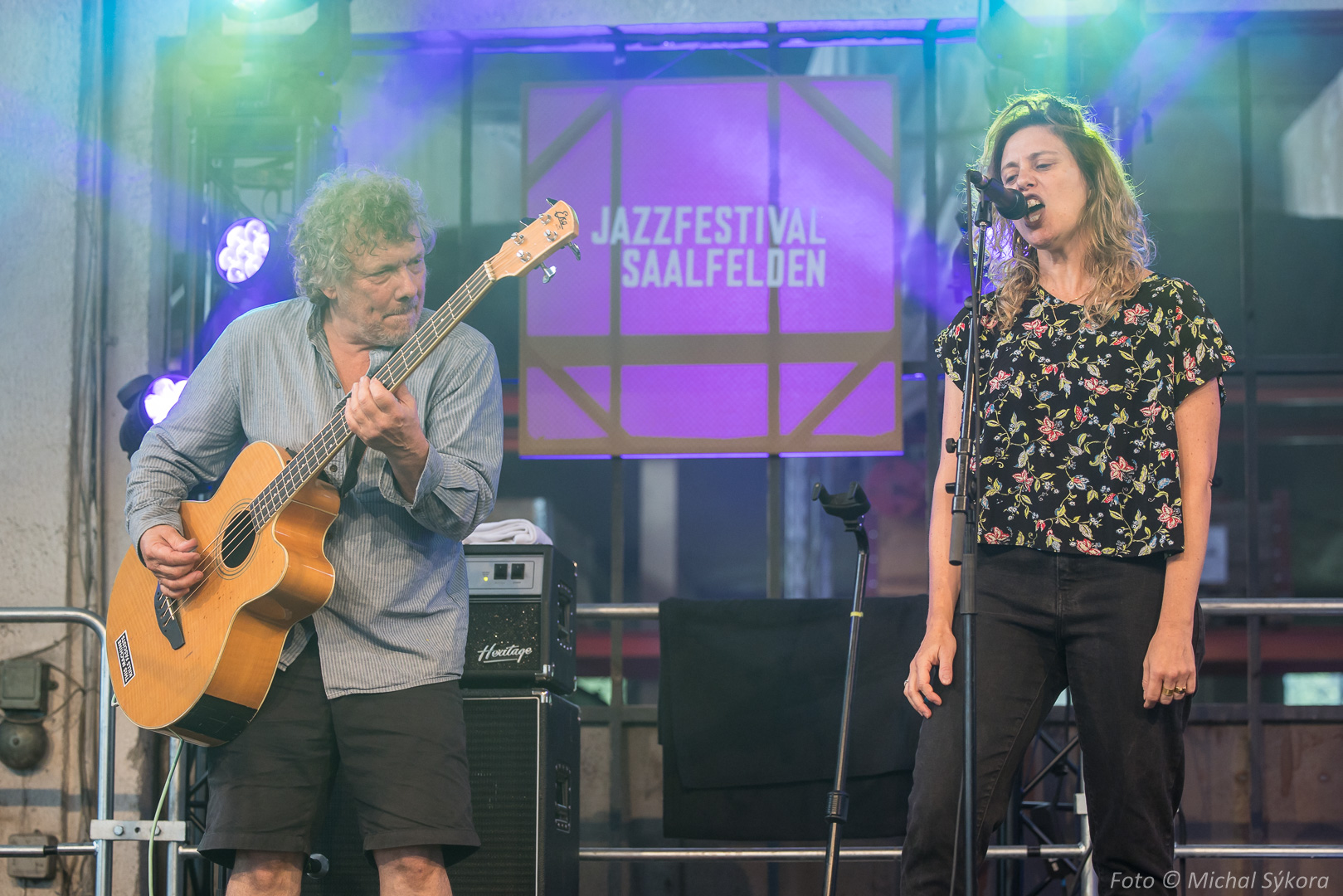
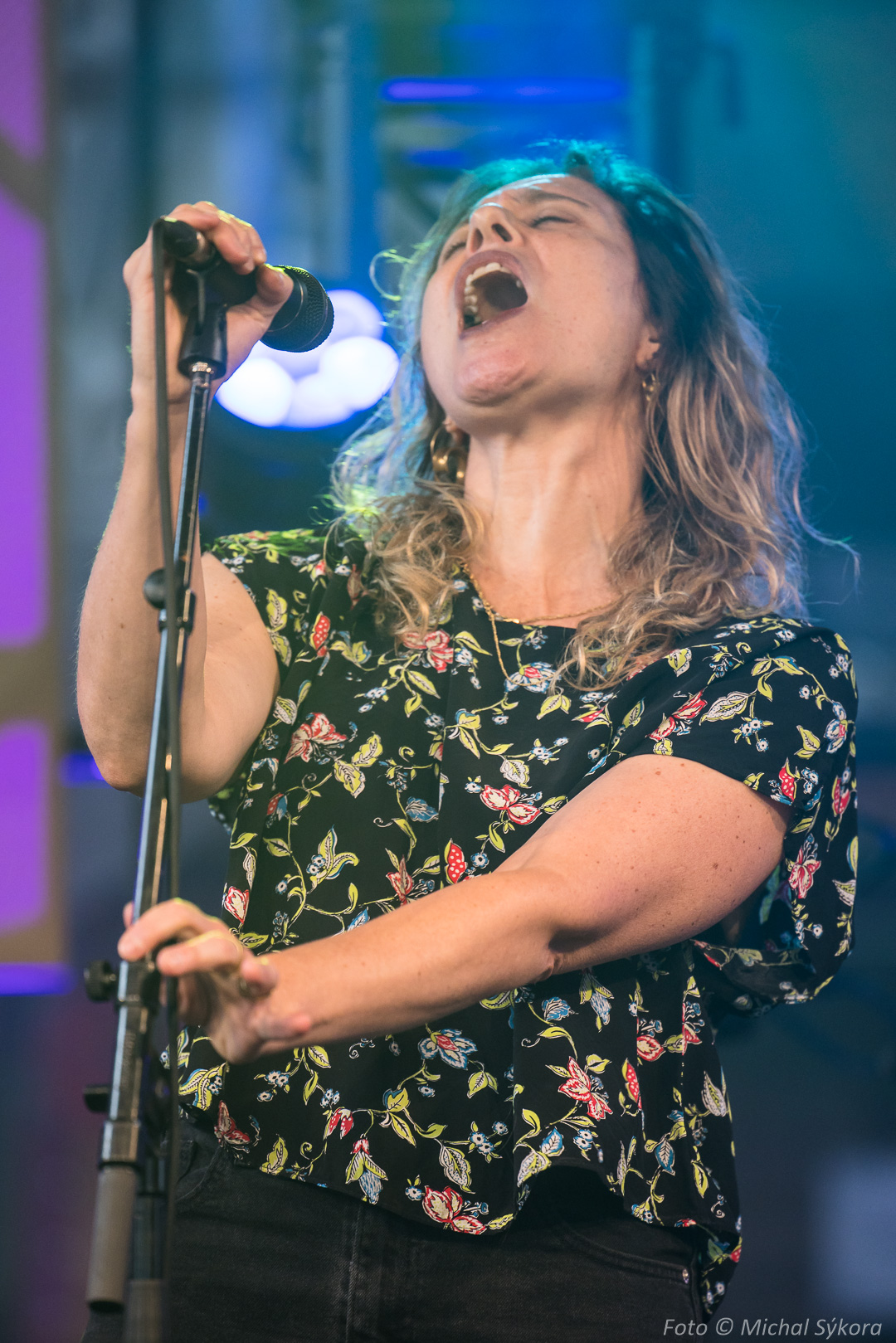
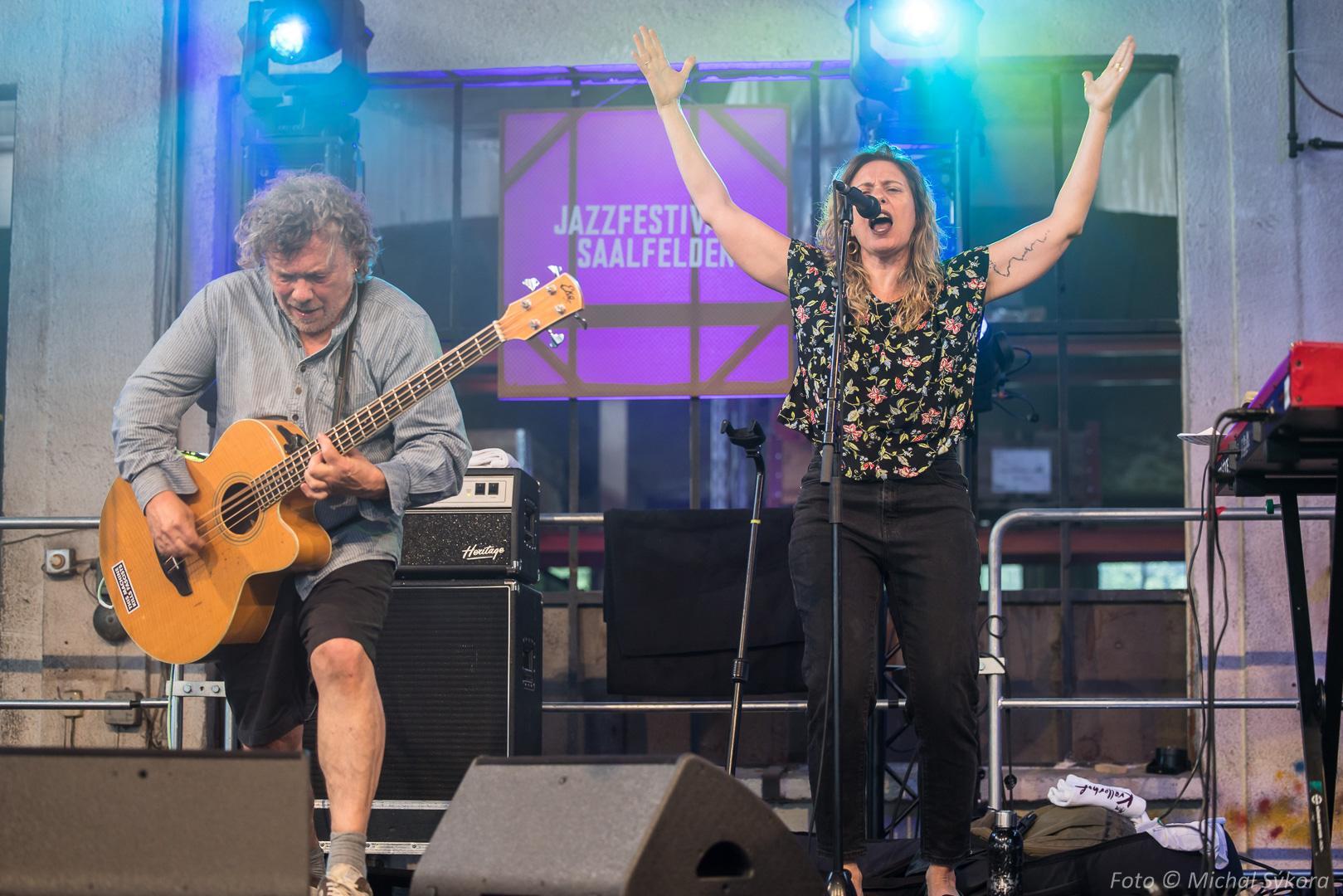
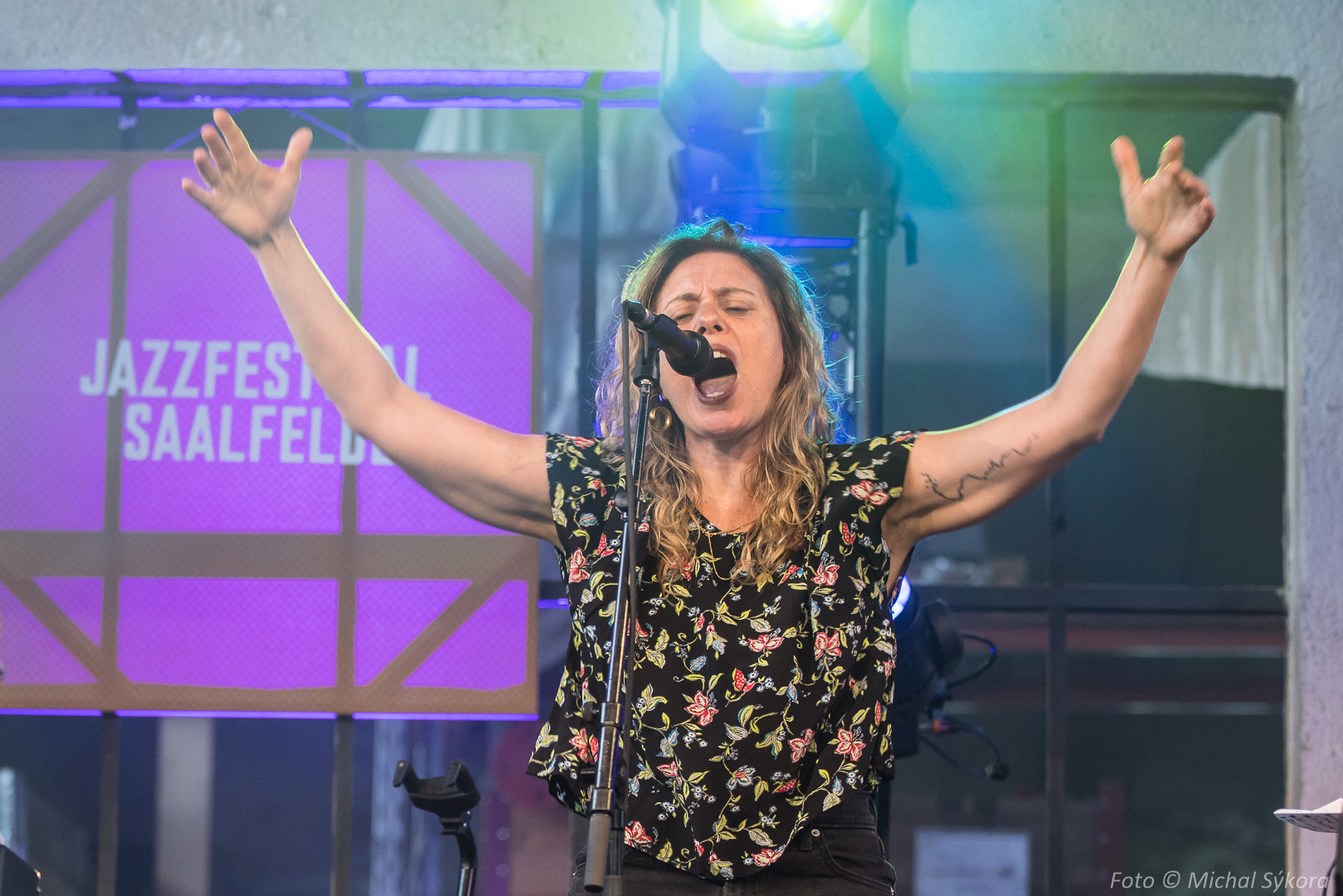
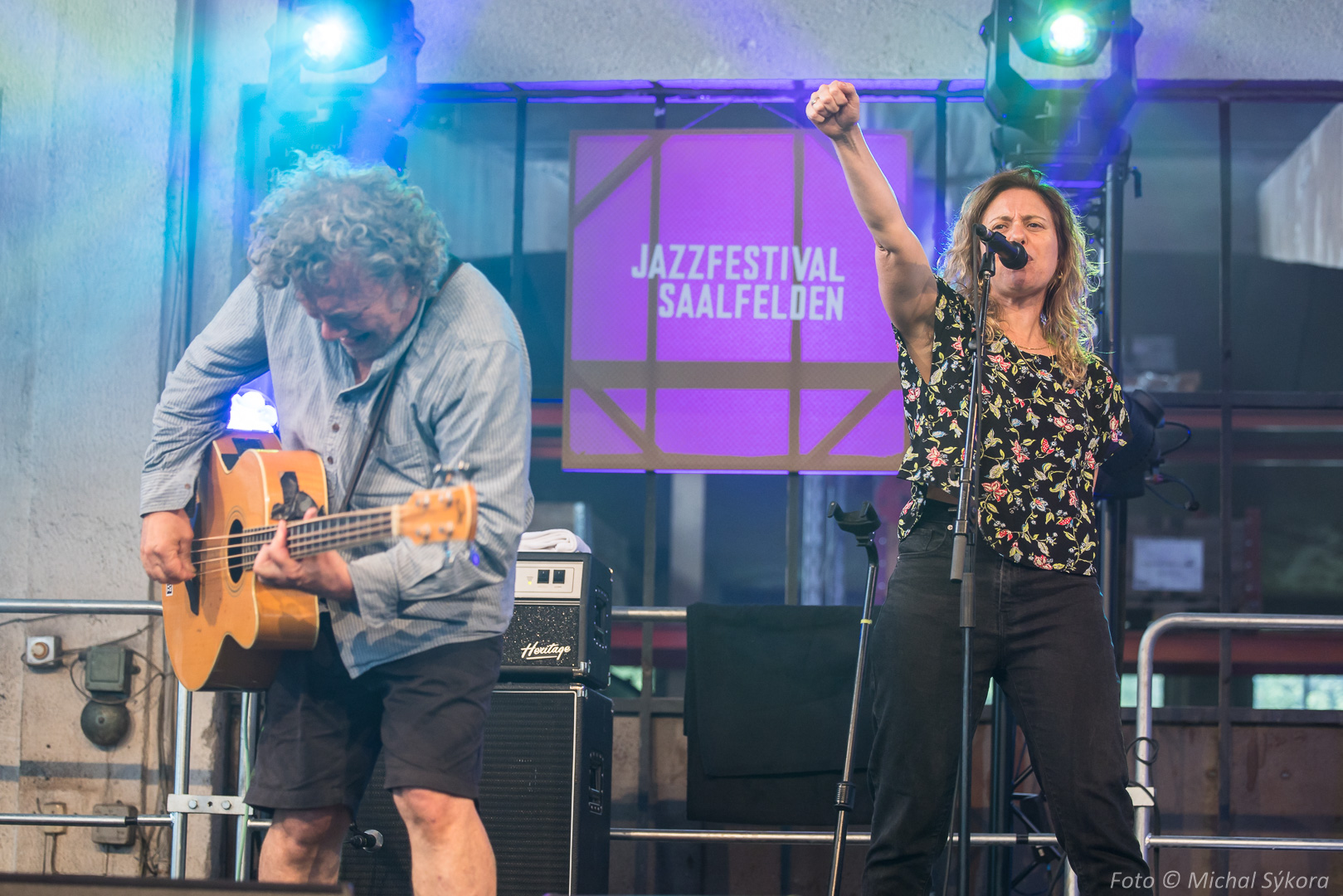
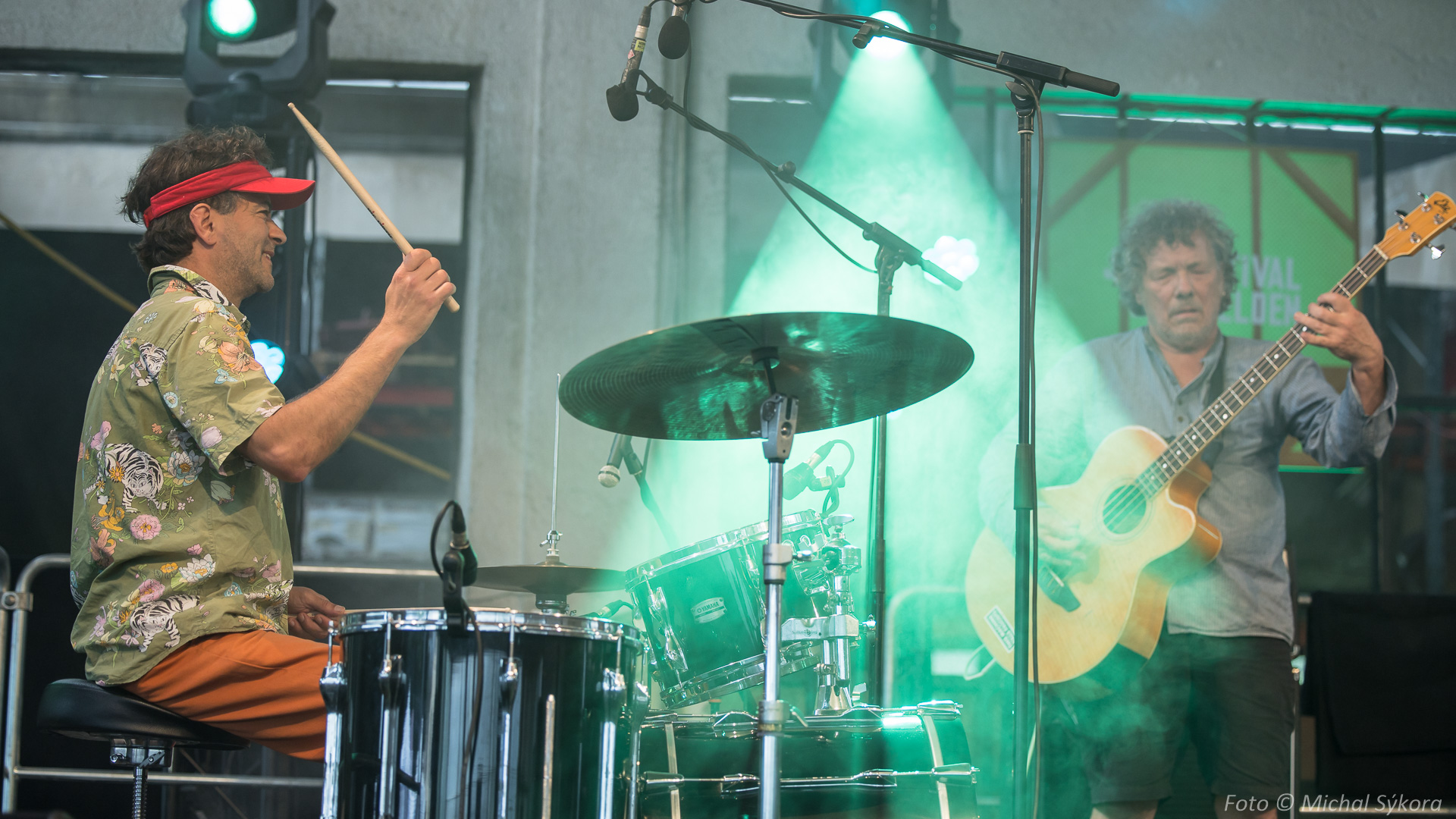
Another such mishmash that reeked heavily of French noise rock, or rather post-punk. The wild passages were driven by the over-emotional Bianca, whose at times almost operatic screeching fitted in well, and their song about a mentally disturbed person in a psychiatric ward somehow perfectly captured the sound of their music as a whole.

Yvonne Moriel: Strange Motion
The official opening of the programme on the main stage at Congress Saalfelden was provided by the Austrian saxophonist and composer Yvonne Moriel, who was commissioned by this year’s festival to write a new composition. For her project Strange Motion, she assembled an impressive line-up: keyboardist Antonis Anissegos, harpist Miriam Adefris, bassist and double bassist Manu Mayr, and a rhythm section comprising no fewer than two drummers – Toma Gouband and Max Andrzejewski. The dual drum setup created a rich rhythmic texture, whilst the harpist added a touch of sweetness to the whole. The very pleasant music was further enhanced by striking lighting and colours, which made the atmosphere stand out even more.


After 40 minutes of playing, Yvonne spoke about how the festival had helped her career in the past and expressed her gratitude for these opportunities. She mentioned that they were performing a new project and compositions for the first time and praised how beautifully everything was coming together. In the final section, they really got into their stride and let loose, then calmed things down again, before bringing the performance to a climax that, whilst predictable, was executed to perfection. A brilliant performance with which Yvonne certainly did not disappoint the organisers.

Henriette Eilertsen Trio: Moder
Norwegian flautist Henriette Eilertsen performed a selection from her trio album Moder on the main stage, accompanied by cellist Joel Ring and drummer Øystein Aarnes Vik. The absence of a traditional bass or piano foundation opened up an unusual acoustic space in which the incredibly intimate interplay between all three musicians really shone through.


The music exuded Nordic delicacy, with its chamber-music-like transparency flowing seamlessly into layered improvisations. I’ll definitely have to explore their work in more detail and am adding them to my list of recommendations. I’m sure this clip will whet your appetite too…

Marta Sánchez Quintet: Before the Bloom
Pianist Marta Sánchez brought her New York-based quintet to Saalfelden, joined by a distinguished guest. Trumpeter Cuong Vu took to the stage alongside her as the quintet’s special guest. The line-up also featured Alex LoRe on alto saxophone, Roman Filiu on tenor saxophone, double bassist Kanoa Mendenhall and drummer Mark Whitfield Jr.


Marta performed exceptionally complex original compositions, full of irregular metrical structures and unexpected harmonic twists, which nevertheless consistently maintained a strong melodic line. Cuong Vu’s electrifying, colourful solos and the dynamic performance of the whole band confirmed that this was one of the highlights of modern acoustic jazz at this year’s festival.
You’re What’s for Dinner
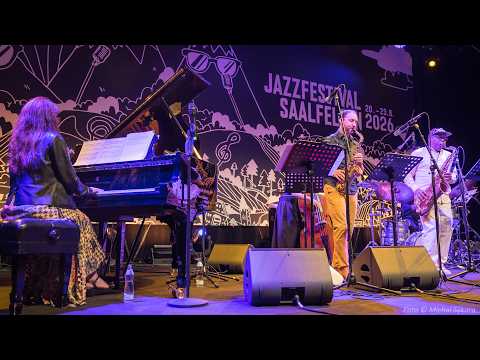
The programme on the main stage concluded with an unplanned last-minute change. Instead of the originally announced duo Andreas Schaerer & Daniel Garcia, the international ensemble You’re What’s for Dinner stepped in due to illness. Drummer Jim Black took charge of the stand-in, hastily putting together an improvised ensemble from festival friends and colleagues present at the venue. Joining him on stage were singer Almut Kühne, guitarist Jonathan Goldberg, saxophonist Chris Speed, vocalist Zanshin, flautist Henriette Eilertsen and bassist Ingebrigt Håker Flaten.


Before the concert, I’d thought to myself that you simply have to see a group thrown together so hastily and improvised like this. Jim Black really went for it right from the start, and it looked very promising. But then the whole thing just seemed to fall apart, with everyone doing their own thing. The result was an absolute deluge of noise that I simply couldn’t take any more. Unfortunately, this hastily cobbled-together all-star band didn’t quite deliver, and as I was already exhausted, it made more sense to head off for a well-deserved rest than to continue subjecting myself to this noise.




Komentáře k článku
Zatím zde není žádná diskuse. Chcete ji začít?