


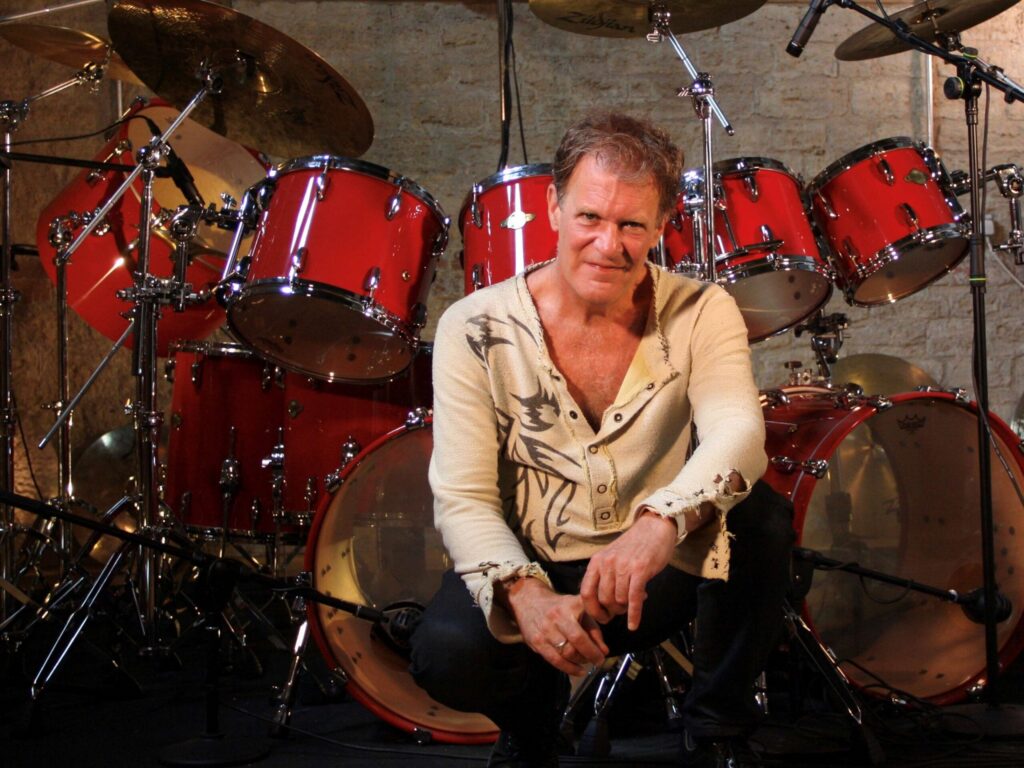
Interview conducted by Miloš Latislav in Autumn 2025.
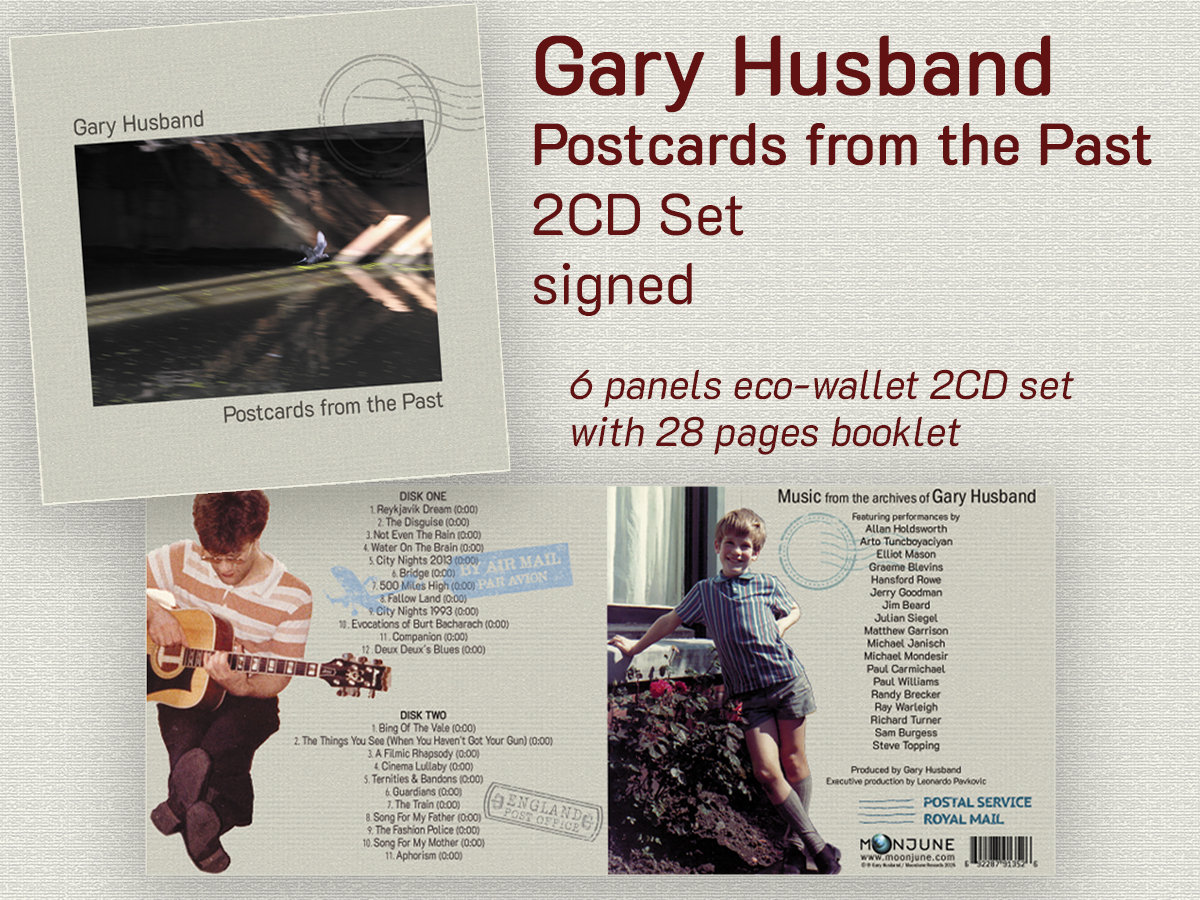
Multi-instrumentalist-composer Gary Husband releases an archival 2CD set Postcards from the Past that contains previously unreleased tracks from 1978 to 2021.
While Leeds-born Gary Husband may have initially made his mark in the ‘80s and ‘90s as a drummer with the likes of Allan Holdsworth, Level 42, Gary Moore and Jack Bruce, he more recently showcased his considerable pianistic skills in the company of John McLaughlin & The 4th Dimension Band, Billy Cobham’s Spectrum 50 and Time Machine bands and Bill Evans & the Vansband All-Stars, as well as on his own recordings as a leader. On Postcards from the Past, a retrospective of studio, demo and live recordings from his personal archives spanning five decades, Husband reveals all those musical aspects and more in this extraordinary 2CD archival set. The following e-mail interview with Gary was made by music journalist Miloš Latislav.
You have musical experience in a wide range from hard rock to very tricky jazz. What were your first musical impressions? At which age?
Well apparently I was trying to pick out melodies on piano as soon as I could reach the keyboard! I started with piano at around 7 years old and began deep classical tuition shortly afterwards, but also always while improvising in my spare time. But the amount of classical repertoire I got introduced to was extensive and amazing. I was also intrigued and inspired by the amount of Brazilian music my father loved and there were always a lot of great singers on the record player at home. Singers were always very influential on me. At the age of around 11 or 12 years I started also trying to get to grips with drums, listening to a vast range of stylists on the instrument in all sorts of musical realms. So the influence of a lot of different kinds of music combined with the two instrument thing going on (becoming my mainstay whilst still pretty young) led to what came afterwards. I have indeed been involved with such a wide range of music ever since starting out in my first professional job as drummer at 16 with the Syd Lawrence Orchestra playing big band swing music of the 1940s and 1950s. So it’s been a big eclectic mix, always! I guess it will always be that way for me. I embrace it all.
You played with many musicians, some of them very gifted and popular in the community of the progressive music scene. Can you name somebody who you regarded as a mentor among them?
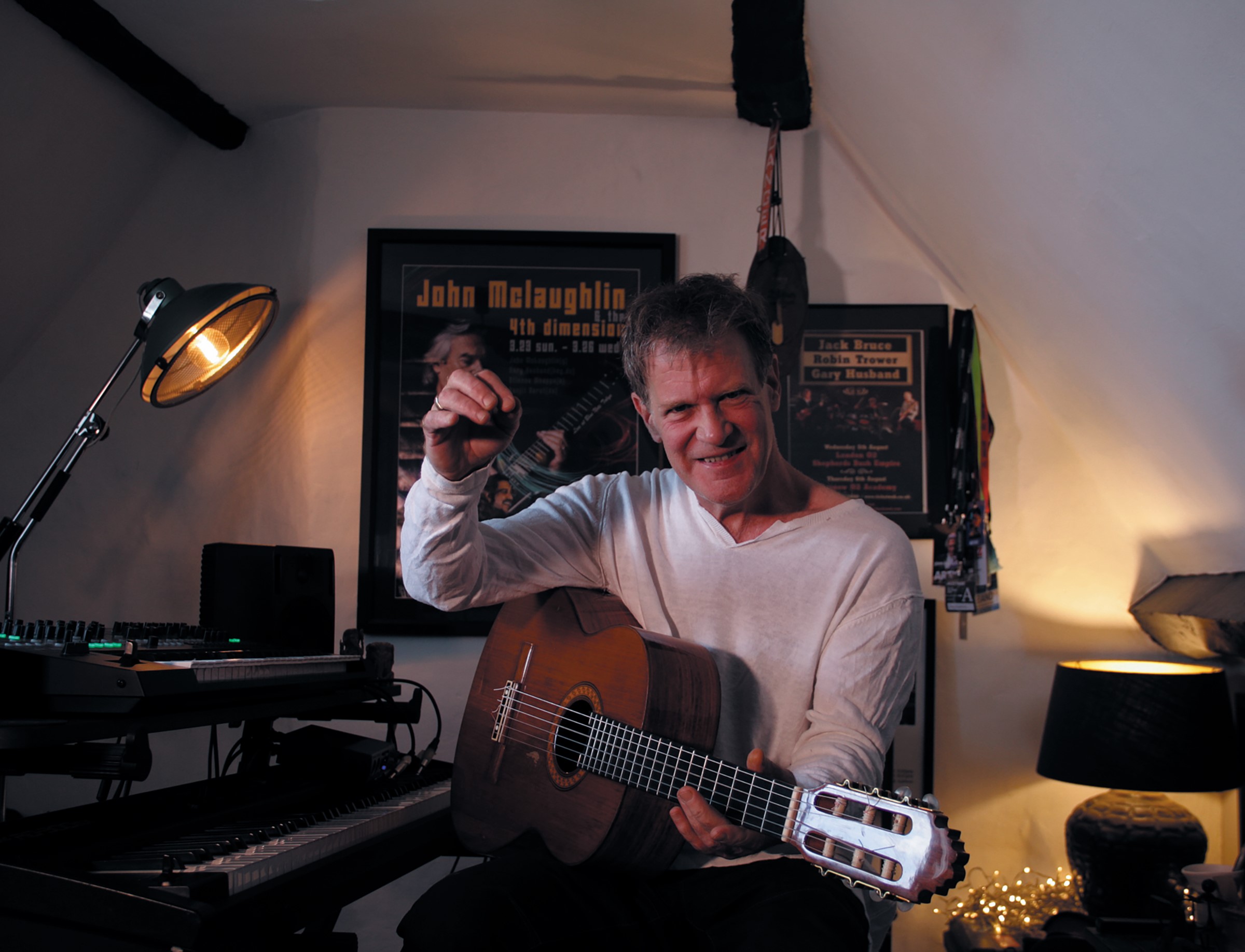
I can say that everybody I have ever listened to, been moved by and all those I have played with have been mentors to me in different ways and to varying extents. A couple of the most notable or important would be Allan Holdsworth – the first one to set me truly free in his music – John McLaughlin, for being the extraordinary leader, powerful influence and for being my all-time favourite guitar player, Jack Bruce – for showing me a way in his completely unique musical conception, and for helping me to understand how to play with a bass player such as him. Also Mark King for believing I could play Level 42 music well, and Syd Lawrence who had unshakable faith I could be a good big band drummer! This list, though, is very, very long.
Do you have a funny story with Allan or John?
Well I remember a soundcheck with John and the 4th Dimension where we were spending some considerable time on the whole form and solos routine of one piece. Later on the show we started the song, only John launched into a solo which was completely out of place to everything we had discussed and rehearsed earlier in the day! His reaction to the somewhat confused look I guess I was giving him at that moment prompted him to come over and yell “Listen, THAT was the soundcheck … THIS is the GIG!”. I loved that!
I think I understand John’s point. Let’s look at Postcards from the Past now. It flows very nicely and fluently. I presume you compiled it all on your own?
Oh yes, I always do. I’m involved in every detail and always oversee everything. Thank you by the way! I’m glad you hear it that way. Making this album, really, has been quite an emotional ride; to delve into music from all this far back in my past like this, particularly since some of it goes back to the 1970s! I mean, there’s stuff on this record even I have not heard since that time! One of them – the demo take of Allan Holdsworth’s The Things I See for instance – was recorded only a short time after I met him – me at the age of 18! Yet I remembered every note of Allan’s, Hanny’s and mine as if it was recorded yesterday! Strange, but true!! That’s only one of the tracks I only got to hear again after a very long time, and those are definitely something the listening public have never heard before! So it’s quite a special and immensely personal release to me in a lot of ways – perhaps the most emotional and personal album I’ve ever released.
During a few listenings (not in whole) I realised that also the sound and mastering is all really in balance, irrespective of the different times, eras and sources they stem from. Also there is the balance between your solo piano/synth/guitar pieces and group recordings. I am particularly amazed by your jazz quartet’s Deux Deux’s Blues and that demo track with Allan Holdsworth, saxist Ray Warleigh and bassist Hansford Rowe. The IOU outtake as well. I always loved Paul Williams’ singing since I heard him on Dick Heckstall-Smith’s album A Story Ended, though I just recently realised that Paul is no more with us. What is your favourite track on Postcards?
I can’t really say I have any favourites as basically they are all very meaningful to me in their own way. I mean, many of my own group formations are there, there a good many tributes on there, a lot of my writing is featured up alongside material that just hasn’t been heard. I think it’s come out very well, and I appreciate you noting the fluidity and consistency in the audio production too, thank you! I work with a great mastering engineer but it was still such a big laborious work to bring into alignment all this vastly different sounding material from all kinds of varying sources, origins and standards of audio quality so that it all sat together and played cohesively as an album. It was so important that we got all that work done to a standard representing the best we could achieve. I’m really proud of the resulting package.
Let’s talk a bit about your solo pieces on the album. I’m finding them being very diverse; perhaps with one my favourite’s being the playful Song for My Mother. Also the piano and vocal piece with Paul Williams on vocals is notable in it’s moodiness. I was also wondering how you approached these piano or keys based tunes with the ones more drums oriented?
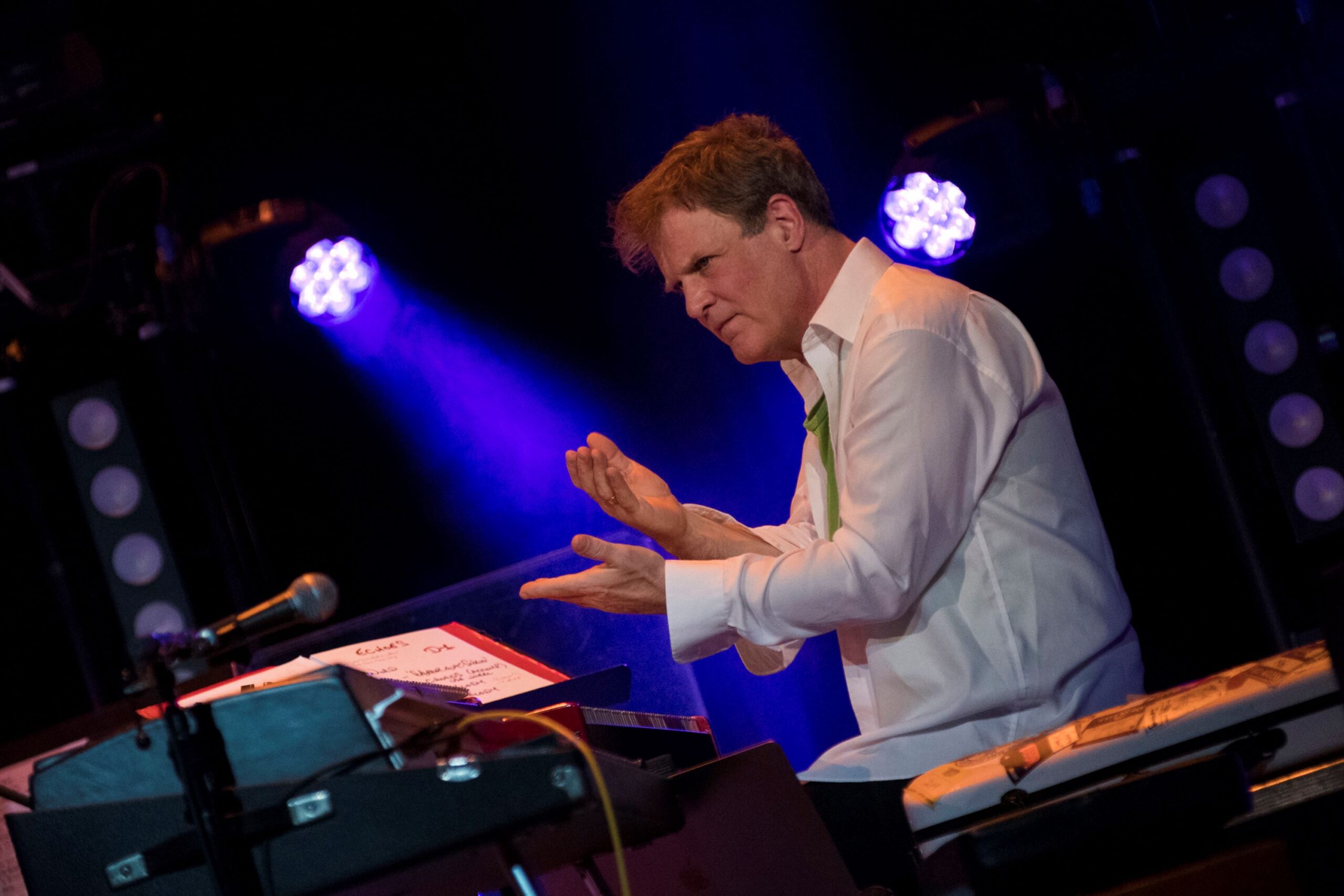
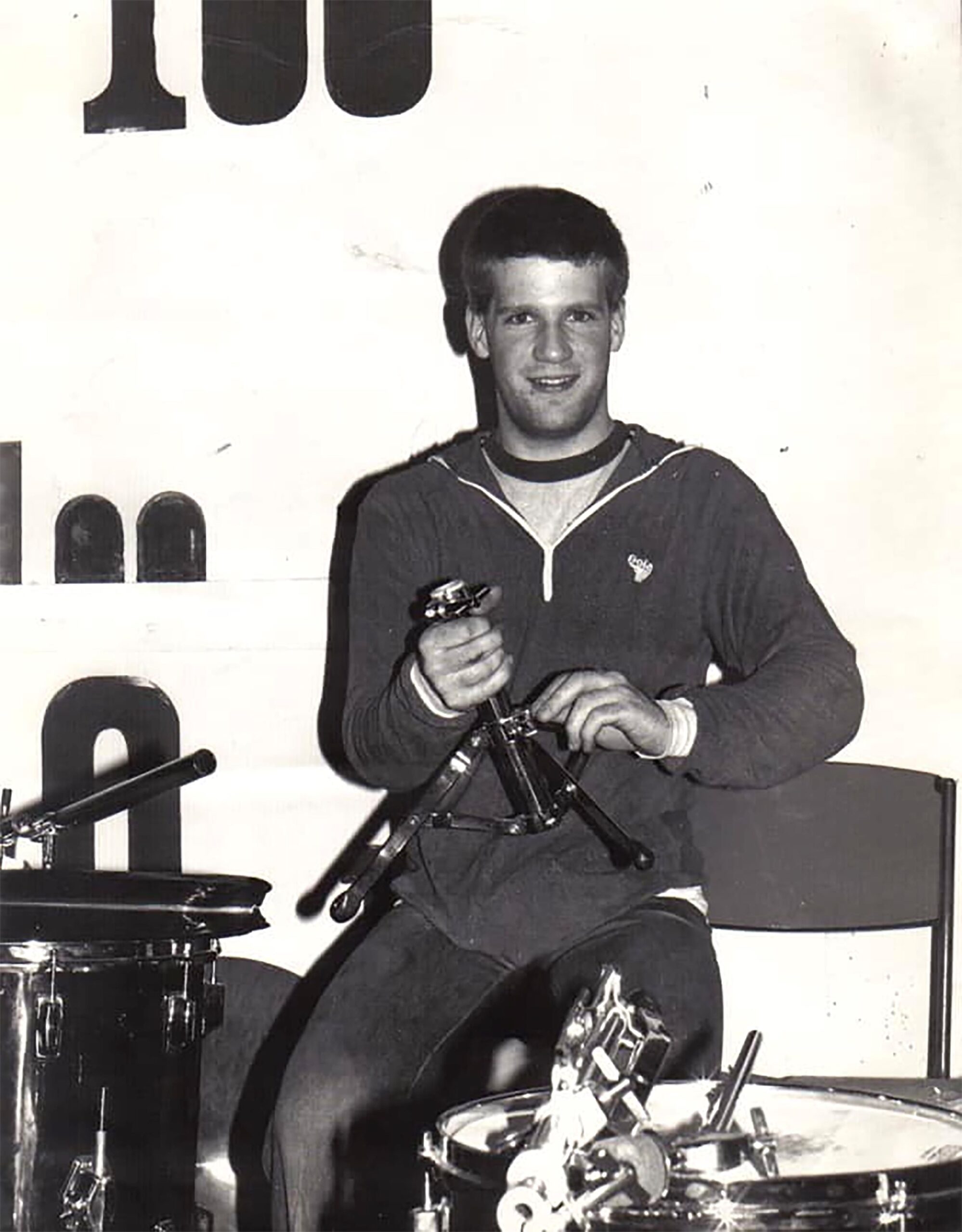
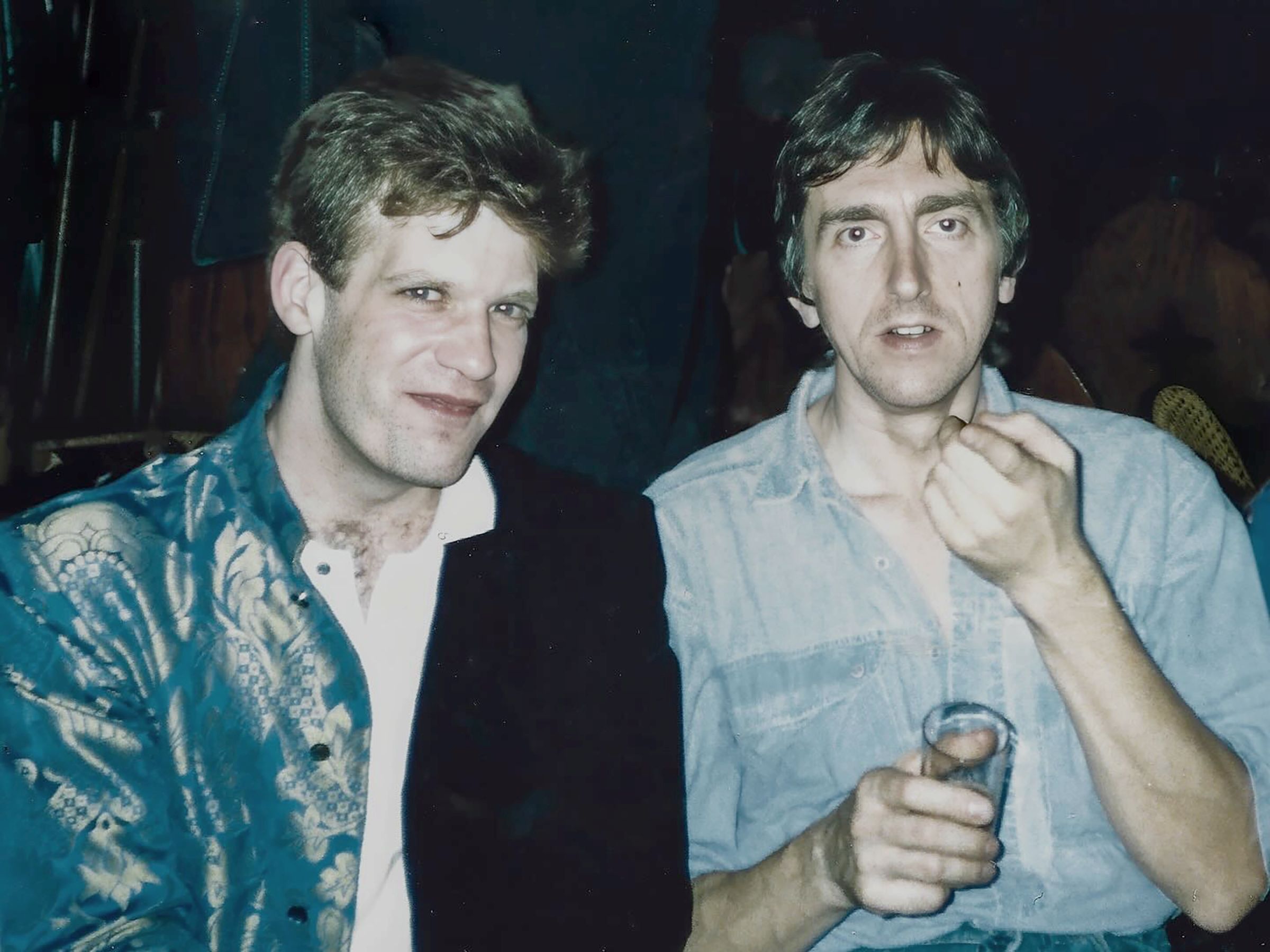
Thank you! Well, that side of things is quite normal for me. I’m used to mixing it up and going between the two instruments fairly effortlessly. The two selections you highlight are actually dedications – one to my mother which was written on guitar, and the one featuring Paul Williams which was written for my father. The latter in fact began as a solo piano piece I’d composed in 1980, which incidentally I used to play on piano during our early Allan Holdsworth IOU debut shows in America back in 1982. Later it transformed into a song since Paul really felt it could really suit being sung. He went about writing lyrics for it and we then began performing it as a duet from then on in the Holdsworth shows. Many to this day remember that piece, and how it served as a nice deviation from the strong, intense, powerful electric set. There is actually another “dedicational” guitar composition on the album entitled Companion – a little short form piece I wrote for my oldest friend (guitarist/composer) Steve Topping. Steve himself is featured on a good few selections included on this album.
Yes, I noticed Steve Topping of course. May I ask you about two guitar heroes you played with; Allan and Gary Moore. They were both playing with drummer Jon Hiseman, Allan Holdsworth in Tempest and Gary in Colosseum II. How were they as people or characters?
Very different. Two very disparate personalities completely, yet both with an extreme admiration for one another. I’ve worked with a good many great guitar players; Robin Trower, Robben Ford, Phil Manzanera, Ulf Wakenius, Jeff Beck, Mike Stern, Nguyên Lê right through to John McLaughlin.
You you were playing with Allan Holdsworth (Tempest, Lifetime, Soft Machine, Gong) and Hansford Rowe (Gong, Gongzilla), which leads me to ask you of some of your views of the so-called Canterbury Scene.
Well interestingly, I never really knew much about the Canterbury Scene as such, and as far as I know, haven’t had anything to do with it personally. Having said that, I’ve probably played with many other people who have been instrumental in it, and loved a lot of music that has stemmed from it! I know, it probably sounds strange in view of the fact I’m English, but there we are.
I understand. I had some proper listenings to the album, and again with other people – as Elton Dean said, you always hear different things with others. I must say all your solo tracks have a lot of range, from ambient to (almost) techno. From the group recordings I appreciate a lot the tracks with Allan & Paul Williams and your jazz bands, but my new favourite is this version of The Things You See. Really proggy tune! I must revisit Holdsworth’s albums from beginning to end.
Yeah … The Things I See! A great piece! That song came to be the opening track on the IOU album – our debut recording with Allan. The version you hear on Postcards however was recorded as just a demo, a year or so before IOU. It has a slightly different arrangement and also has the addition of saxophone on it. I’ve been hoping that it would be a document of great interest to the fans of Allan. For me it’s predominantly a very special memory, and as I said before, it’s the first time it’s ever been available to the public to hear.
In the end, may I ask you about two experiences from your life in music: Jack Bruce and Soft Machine (Legacy).
Sure. Well, Jack Bruce was just a titan!! A truly great, great original, and I loved him very, very much. To play with him was to cultivate a very particular, quite different way on drums to what I’d been used to. It took me some time, but I got there on the Seven Moons album, and when we had that trio together with Robin Trower quite later on in Jack’s life. Every period I had with him was an experience never to be forgotten. With the Soft Machine Legacy band I actually did a Japan tour playing drums (featuring the late, great Keith Tippett on piano), and another one also in Japan playing piano and keys with them (featuring the legendary John Marshall on drums). Both those times were a lot of fun, especially getting to play a good deal of their earlier material as part of the set. It was great!
https://garyhusband.bandcamp.com/album/postcards-from-the-past
— Interview by Miloš Latislav Autumn 2025



Komentáře k článku
Zatím zde není žádná diskuse. Chcete ji začít?